Creative Automation: 4 Hours to Minutes
See how we built an AI image generation pipeline, cutting design asset production from 4 hours to 5 minutes.
The Bottom Line Results
Rapid generation of variations
Reduced from 4 hours per asset
Strictly enforced brand guidelines
100% Brand Consistency

Executive Summary
A European SaaS company needed customized visual assets for every new sales prospect. AY Automate built an AI-powered asset generation system using advanced image models with brand guardrails that automates the entire process.
The challenge
The design team was spending more than four hours customizing visual assets for each new prospect. Even with predefined templates and a fixed workflow, every batch needed manual work, layout tweaks, brand-specific elements, formatting passes. Templates got them about 60% of the way. The rest was repetitive designer time.
The volume made it worse. As the sales pipeline grew, keeping visuals consistent across customer-facing materials got harder. Different designers read the same template differently. Customization requests piled up. Sales cycles slowed down waiting for visuals.
Templates alone weren't enough. They cover the predictable parts. The work that filled the gap, swapping the right elements while keeping the brand intact, is exactly the kind of rule-based design that AI can handle if you constrain it properly.

What we built
AY Automate built an asset generation system that takes the client's existing templates and produces customer-specific variations automatically. Brand elements stay locked: colors, layouts, type, signature visuals. The variable parts get generated. What used to be a designer's manual job runs without one.
The core piece is the guardrail layer. Generative AI without constraints produces unpredictable output, good for exploration, dangerous for brand-consistent assets. AY Automate built a control system that pins the parts that must stay the same and only varies the parts that should.
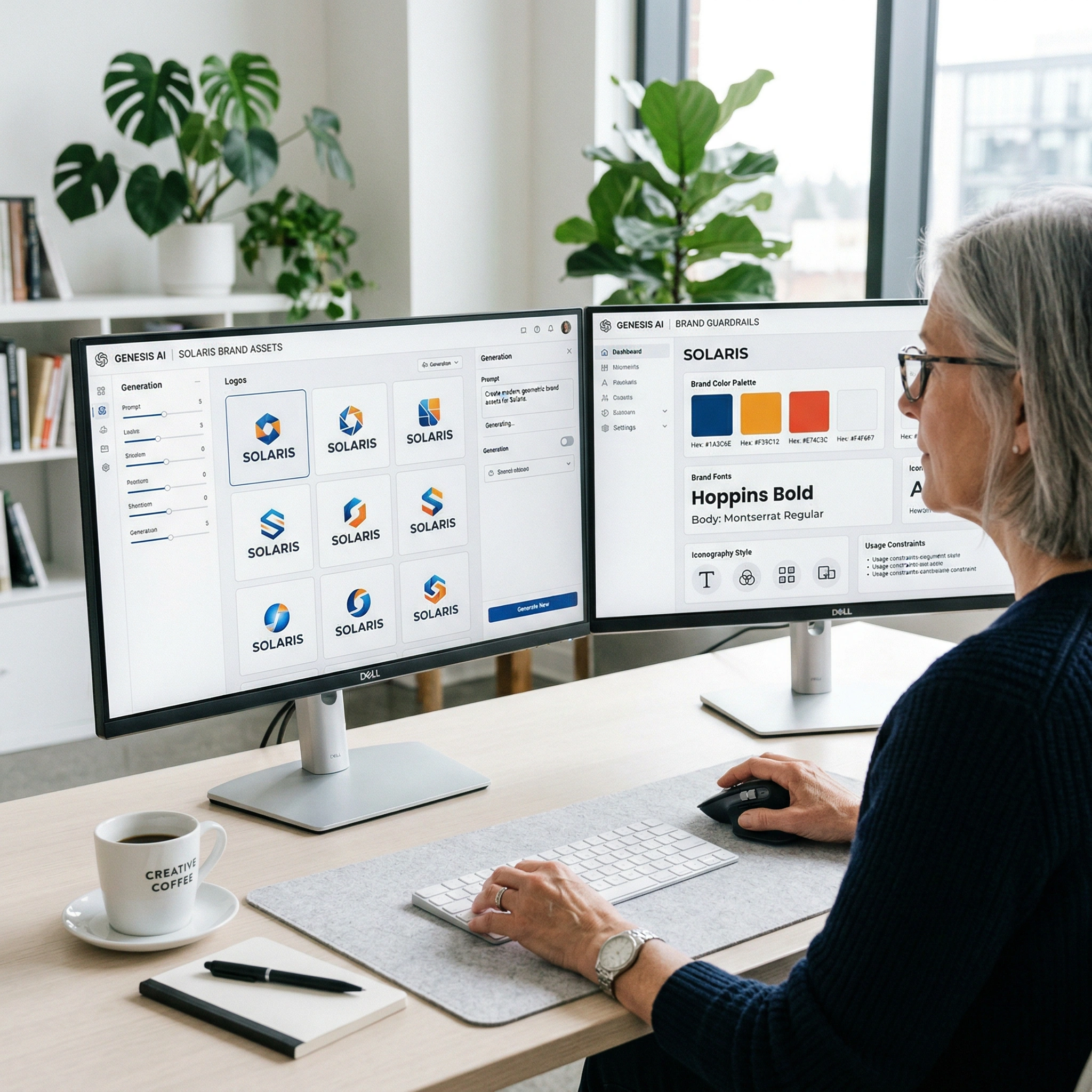
Prototyping in Weavy
The team used Weavy's node-based AI design platform to prototype the generation pipeline. The visual workflow let the engineer test model configs, guardrail settings, and output variations quickly. The result was a production-ready system built in days, not weeks. The prototyping phase was where the trade-off between variation and brand fidelity got dialed in.
Orchestration in n8n
End-to-end, the pipeline runs in n8n. n8n handles the flow from input (client data, template choice) through image generation to delivery. The client's team can trigger it without a developer in the loop. The workflow setup means the system is maintainable and easy to extend as new use cases come up.
Team
AY Automate placed a specialist engineer with generative AI experience inside the project. The engineer handled architecture, model selection, guardrail development, and production deployment. The client got a working system they can run themselves.
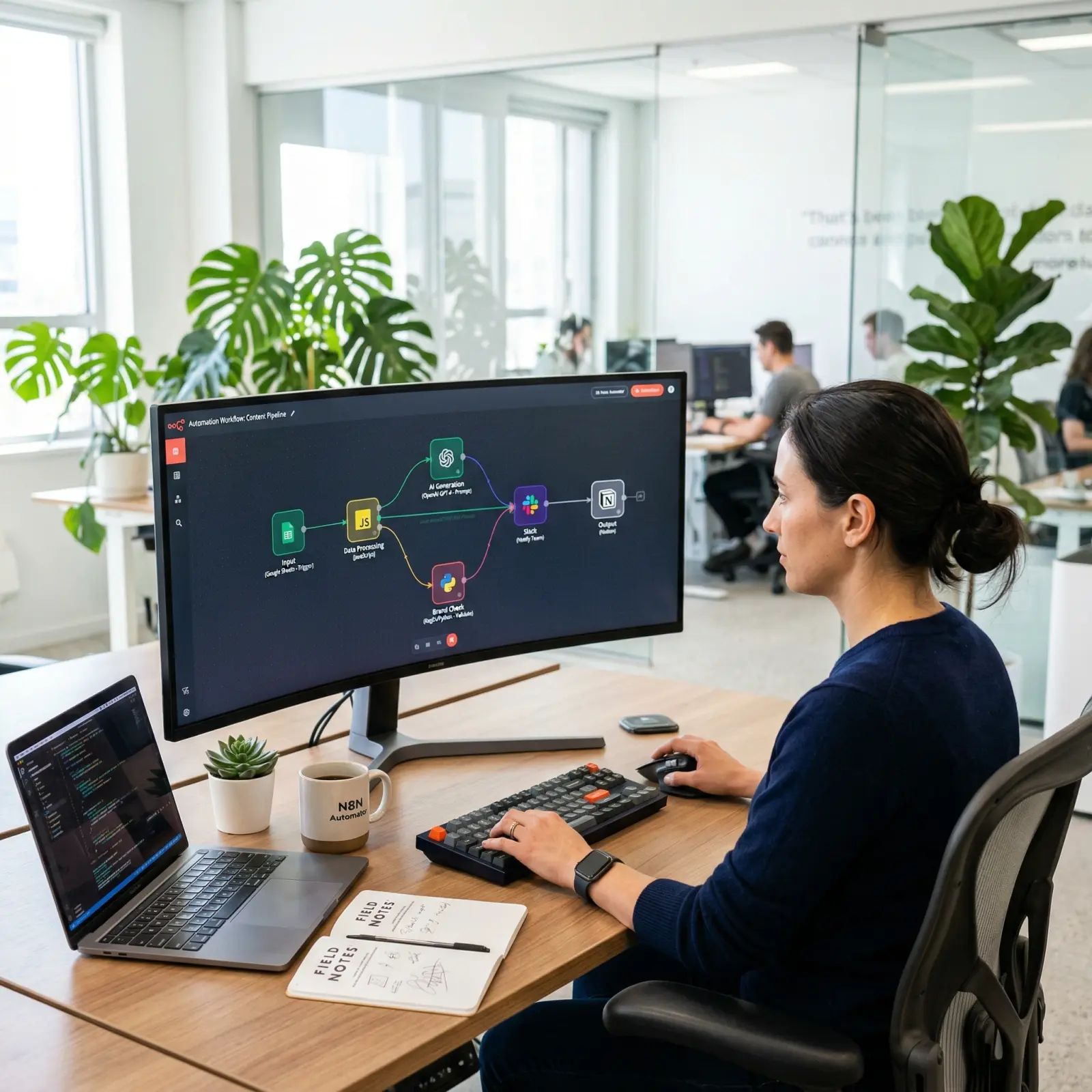
The stack
n8n, Nano Banana (AI image inference), Weavy (AI design platform), Claude Code.
n8n runs the workflow. Nano Banana handles image generation at scale. Weavy was used for prototyping and to develop the guardrail layer. Claude Code accelerated the build itself.
Results
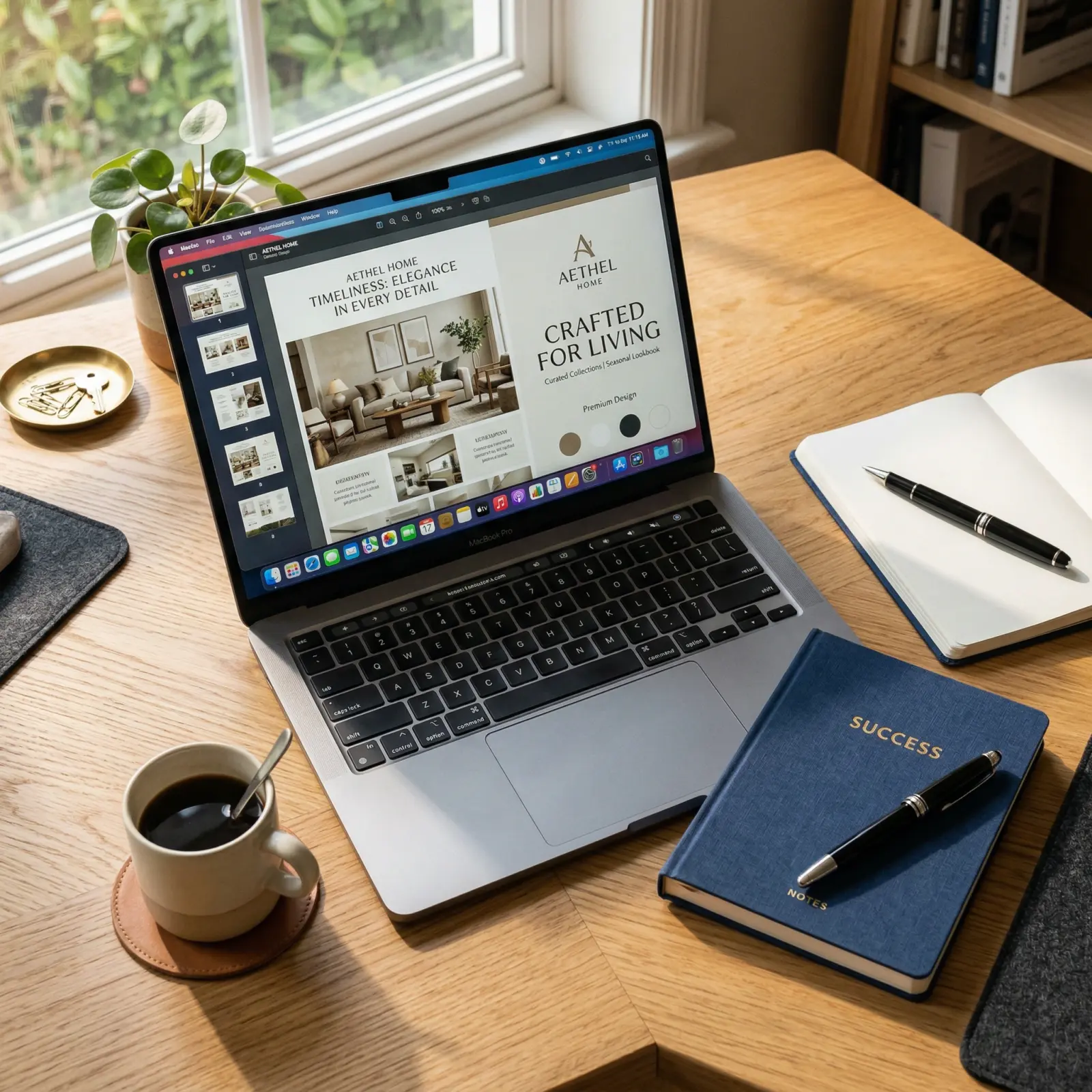
A task that used to take four-plus hours of designer time now runs in minutes. Custom, brand-consistent assets get generated automatically. The bottleneck that was slowing sales and onboarding is gone. Designers spend their time on real creative work instead of template customization.
The sales team can now produce custom materials for prospects and new customers without waiting for the design queue. New clients see polished, branded assets from day one. The team produces more without growing.
Brand consistency is no longer manual. The guardrail system produces predictable, on-brand output every time. The client gets variation where they want it and consistency where they need it.
What we learned
- AI image generation with brand constraints closes the gap that templates can't. Templates cover the predictable 60%. AI with rules handles the rest without manual designer work.
- Generative AI for business assets is about control, not creativity. The value is in the right image inside brand parameters, not just any image. Guardrails are what make it useful at work.
- Removing the design bottleneck unlocks sales velocity. When the sales team stops waiting on the design queue, the whole pipeline moves faster.
- Weavy makes AI image pipelines fast to prototype. The node-based workflow turned what would have been weeks of iteration into days.
- n8n makes the system repeatable. Non-technical users can run the workflow without help, so the system stays usable as the business grows.
How It Works
Client Data Input
Sales team inputs prospect details (logo, color code, industry) into a simple form.
Template Selection via Weavy
The system selects the correct design templates based on the use case (Onboarding vs Sales).
AI Image Generation (Midjourney)
n8n triggers the image model with strict brand guardrails to generate bespoke visuals.
Final Asset Delivery
Polished, ready-to-use assets are delivered back to the sales team in minutes.
The client is a SaaS company serving business customers across Europe. Their sales and client success teams rely heavily on customized visual assets.
Stop waiting days for campaign visuals.