
React
The library that redefined how we build user interfaces
- Best for
- Teams building interactive web applications
- Pricing
- Free and open-source (MIT)
- Stack layer
- Frontend Stack
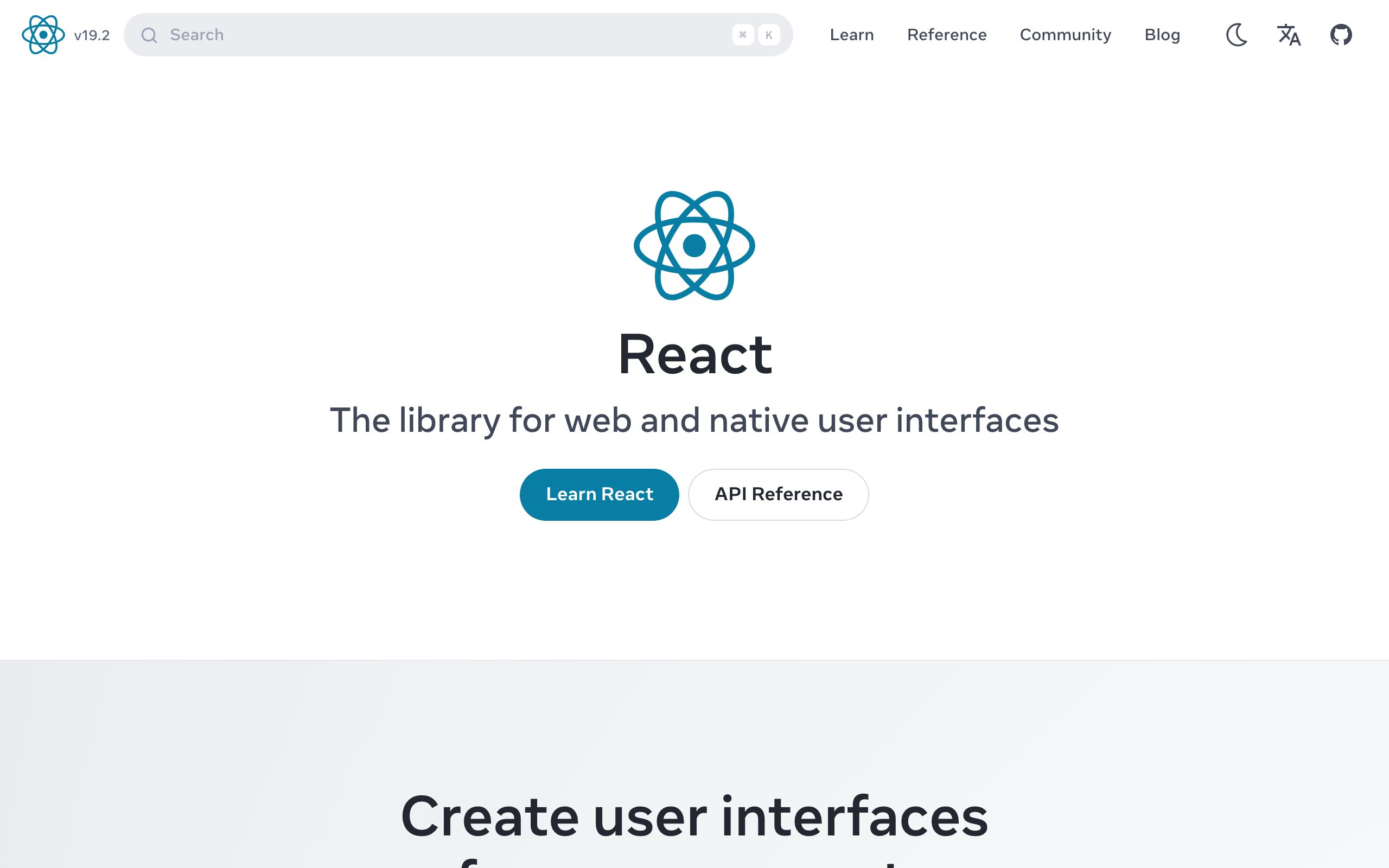
Live preview of react.dev
Overview
React remains the most widely used frontend library for good reason: its component model maps naturally to how we think about interfaces, and its ecosystem is unmatched in depth and breadth. When you choose React, you gain access to thousands of battle-tested libraries, extensive hiring pools, and answers to virtually every question you could encounter.
The introduction of Server Components with React 19 fundamentally changed the data-fetching story. Components can now run on the server, fetch data directly, and send rendered HTML to the client - reducing bundle size and improving performance without the complexity of separate API layers.
For startups, React's flexibility is both its strength and its challenge. It does not prescribe architecture, which means you need to make good decisions about state management, routing, and data fetching. This is why most teams pair React with a meta-framework like Next.js that provides these opinions.
Key Features
Component Architecture
Build UIs from composable, reusable component pieces
Server Components
Run components on the server for better performance and smaller bundles
Concurrent Rendering
Prioritize urgent updates and keep the UI responsive under load
Hooks System
Manage state and side effects with a clean, functional API
Massive Ecosystem
Thousands of libraries, tools, and community resources
React Native
Share code and skills between web and native mobile apps
Why We Recommend React
React is the foundation of our tech stack at AY Automate. Its component model, ecosystem depth, and the momentum of Server Components make it the safest bet for teams building production web applications.