Book a Free Strategy Call
Skip the read: talk to Walid in 30 min.
Free strategy call. We map your AI engineering team, you keep the notes.
AI applied to operational efficiency automates the decision layer: approvals, routing, exception handling, and reporting that normally require a human to act on every event. Companies that deploy it correctly reduce operational headcount growth by 40-70% at the same output volume.
What if you could grow your business tenfold without your headcount exploding? That’s the promise of using AI for operational efficiency. It's more than tweaking a few processes; it’s a fundamental shift that demolishes operational bottlenecks and turns your manual tasks into an automated, intelligent engine for growth.
The New Era of Lean Scaling With AI

For founders and CTOs, real efficiency today means thinking beyond just buying another piece of software. It’s about building a new kind of workforce: a blended team where your talented people are amplified by specialized AI. This is the key to creating a resilient, productive company that can scale massively without needing to hire an army.
This isn't about replacing your people. It's about helping them do more. The goal is to free your sharpest engineers from the soul-crushing repetitive work so they can get back to what they do best: innovating and building your core product. Imagine your team architecting the future, while an intelligent operational backbone hums along 24/7.
Building Your Hybrid AI Workforce
Getting AI integrated successfully takes more than a few online tutorials; it requires deep, hands-on expertise. We've seen two models work incredibly well for companies looking to accelerate their journey toward AI for operational efficiency:
- AI Adopted Engineer Placements: Think of this as embedding an AI specialist directly into your squad. This person does more than the work: they bring in best practices, speed up your roadmap, and transfer critical skills to your team, building a self-sustaining capability from within.
- AI Team Augmentation: Need top-tier expertise for a specific project but don't want to make a full-time hire? Team augmentation gives you on-demand access to senior AI architects and developers to fill those critical skill gaps exactly when you need them.
When you combine your team's deep knowledge of your business with world-class AI talent, something powerful happens. This hybrid model ensures your AI projects are built on a solid, scalable, and practical foundation right from the start.
Upskilling Your Internal Champions
Bringing in outside experts gives you an instant lift, but the real long-term win comes from nurturing an AI-first mindset within your own team. This is where targeted, practical training makes all the difference. We’re not talking about boring theory lectures; these are hands-on workshops designed to completely reshape how your engineers build, test, and deploy.
Specialized AI workshops can introduce your developers to tools and workflows that feel like a superpower. For instance, getting them trained on a platform like Cursor, an AI-first code editor, can have a massive impact on coding speed and quality. Diving deep into how to use large language models like Claude for code or collaboration tools like Weavy gives them the skills to weave sophisticated AI features directly into your products.
This kind of upskilling builds a high-performance engineering culture, making sure your whole organization is ready to compete. For a deeper look at the broader field of intelligent automation, check out our guide on what is hyperautomation. It’s all about creating a standardized, efficient way of working that pays off on every single project.
Related Reads
Getting AI to Work in Your Operations
It’s one thing to talk about AI for operational efficiency in theory, but the real magic happens when you put it into practice. Moving from idea to execution is all about finding smart ways to weave AI into your daily work to get clear, measurable wins. This goes beyond buying new software: it's about rethinking how work gets done from the ground up.
The trick is to start by zeroing in on the high-impact spots where AI can be a force multiplier for your team. Think about it: instead of bogging down your sharpest people with repetitive tasks, you can let intelligent systems handle the grunt work. This frees up your talent to focus on bigger, more strategic goals, which is a huge boost for both productivity and morale.
Bring in AI Talent to Boost Your Team
The fastest way to get AI capabilities into your business is by bringing in the experts. Traditional hiring is slow and the competition for talent is fierce, but there are more agile ways to build an AI-powered team. These modern approaches are designed to slot right into your existing workflows, giving you an immediate bump in skills and project speed.
Two strategies, in particular, really work:
-
AI Adopted Engineer Placements: This is where you embed a seasoned AI engineer directly into your team. They don't just check off tasks; they act as a catalyst. They introduce advanced techniques, mentor your existing staff, and push your AI roadmap forward from the inside. It’s like hiring a player-coach who makes the whole team better.
-
AI Team Augmentation: When you have a specific project or a skill gap you need to fill, team augmentation gives you on-demand access to a bench of senior AI architects and developers. This flexible model lets you scale your team up or down as needed, so you always have the right expertise at the right time without the long-term overhead of a full-time hire.
When you blend your team’s deep institutional knowledge with specialized external AI talent, you create a powerful hybrid workforce. This ensures your AI projects are not only technically solid but also perfectly aligned with your business goals right from the start.
Upskill Your Developers for an AI-First World
Bringing in outside help is a great start, but creating lasting AI for operational efficiency means growing your own skills internally. Your development team is your biggest asset, and giving them the right AI tools and training is the key to long-term success.
This is where targeted, hands-on workshops can make a world of difference. We’re not talking about boring lectures. These are immersive, practical sessions focused on modern tools and real-world applications. The goal is to build a high-performance engineering culture where AI is a natural part of how you build things.
Think about workshops centered on specific, high-impact tools:
- AI-First Code Editors: Training on platforms like Cursor helps developers write, debug, and refactor code at a blistering pace. It turns the editor from a passive tool into an active collaborator.
- Advanced LLM Integration: Workshops on using models like Claude for code or collaboration platforms such as Weavy give your engineers the power to build intelligent features directly into your products and internal systems.
The productivity jumps are real and easy to see. Workers who use generative AI show performance improvements of up to 40% compared to their peers. For instance, employees using ChatGPT-3.5 for writing tasks got 40% faster and produced 18% higher quality work. And programmers using GitHub Copilot coded 56% faster.
This kind of focused training moves your team from just being users of AI to being builders with AI. For a deeper look at how automation can connect the dots across your business, check out our article on what is intelligent process automation. And if you're looking for immediate wins, seeing how others are revolutionizing time management with AI offers some great ideas. It’s this complete approach that builds a real, lasting advantage.
Free weekly brief
Steal our production automations
The exact n8n flows, Claude Code setups, and prompts we ship for clients, broken down step by step. No spam, unsubscribe anytime.
Building Your AI-Powered Workforce
Real, lasting gains in AI for operational efficiency come from people, not software alone. Buying the right tools is only half the battle. The true advantage comes when you strategically weave deep AI expertise into the fabric of your organization, creating a blended workforce where your team’s institutional knowledge gets a massive boost from world-class AI talent.
The whole point is to move faster, build smarter, and sidestep the expensive, time-consuming missteps of a trial-and-error approach. By bringing in specialists, you jumpstart your roadmap and ensure your projects are built on a secure, scalable foundation from day one. We’ve seen two models that work exceptionally well for this.
AI Engineer Placements: A Catalyst for Internal Growth
One of the most direct ways to inject AI expertise into your team is through an AI adopted engineer placement. This isn’t about just hiring a contractor. It's about embedding a fully-vetted AI expert directly into your existing development squad.
Think of this person as a player-coach. They don't just close tickets; they bring a playbook of proven methodologies and best practices with them. Their very presence acts as a catalyst, lifting the skills of your entire team through daily collaboration and hands-on mentorship. This is the perfect approach for any company serious about building a strong, self-sufficient AI capability for the long haul.
Embedding an expert is all about knowledge transfer. The real goal is for the adopted engineer to work themselves out of a job, leaving your team stronger, faster, and more confident in tackling complex AI challenges on their own.
AI Team Augmentation: On-Demand Expertise
Then again, maybe your needs are more project-specific. You might have a critical initiative that needs senior architectural guidance or niche development skills your current team just doesn't have. In that case, AI team augmentation offers a flexible and potent solution.
This model gives you on-demand access to a bench of senior AI architects and developers without the long-term overhead of a direct hire. It's the perfect way to bridge a critical skill gap, power through a tough project, or just add horsepower to meet an aggressive deadline. You get the exact expertise you need, right when you need it, so your project never loses momentum.
Here’s a quick breakdown of how the two models compare:
| Feature | AI Engineer Placements | AI Team Augmentation |
|---|---|---|
| Primary Goal | Build long-term internal capability and upskill your team. | Fill immediate skill gaps for specific projects or timelines. |
| Integration | Deeply embedded within a single team for extended periods. | On-demand access to a variety of specialists as needed. |
| Best For | Companies wanting to build a sustainable, in-house AI practice. | Teams needing to accelerate a project or tackle a specific challenge. |
Upskilling Your Developers with Targeted Training
No matter which path you take, placements or augmentation, the ultimate goal is to upskill your own people. This is where targeted AI workshops make all the difference. These aren’t dry, theoretical lectures. They are hands-on training sessions focused on giving your developers the tools and mindset they need to thrive.
Workshops can zero in on specific, high-impact tools that deliver an immediate productivity kick.
- AI-First Code Editors: Training on tools like Cursor helps developers write, debug, and refactor code with an AI partner, which dramatically speeds things up and slashes errors.
- Advanced LLM Integration: Practical sessions on using models like Claude for code or integrating platforms such as Weavy teach engineers how to build sophisticated AI features right into your products.
This kind of focused training helps build an AI-native engineering culture. A huge part of this is understanding how to improve agent productivity with AI-powered support, a critical skill for any modern team. By investing in your people this way, you ensure your organization can keep innovating long after any external engagement has ended.
Turn Your Developers into an AI Powerhouse with Advanced Workshops
Bringing in specialized AI talent is a great start, but if you want to truly bake operational efficiency into your company's DNA, you need to cultivate an AI-native mindset right inside your own engineering team. It's about shifting your developers from people who just use AI tools to people who think with them. That's a huge leap, and it doesn't happen by accident. It happens through targeted, hands-on training.
Think of specialized workshops as the bridge to this next level. We're not talking about dry, academic theory here. This is about getting your developers' hands on the tools that will fundamentally change how they write, debug, and ship code. The real goal is to build a high-performance engineering culture where AI is just part of the daily grind, pushing productivity through the roof and slashing error rates.
Master the Tools of AI-First Development
The modern developer's toolkit is changing fast. Workshops that get your team comfortable with AI-first code editors are no longer a "nice-to-have"; they're essential. These sessions introduce engineers to a new way of working that feels less like staring at a blank screen and more like collaborating with a brilliant partner.
For instance, a workshop built around an editor like Cursor can teach a developer to write and refactor code at a speed that would have seemed like science fiction just a few years ago. This goes way beyond simple autocomplete. It's about learning how to prompt an AI to generate entire blocks of complex logic, draft unit tests, or even spot bugs before they make it into production. The impact on your team's output is immediate and easy to see.
Here's a quick look at the Cursor interface, which puts a conversational AI right next to the code.
The screenshot shows just how simple it is. An engineer can highlight a chunk of code and just ask the AI to do something like "add comments," turning a tedious manual chore into an instant, automated action.
Build with Advanced Language Models
But efficiency is about more than the editor. Real operational gains come when your engineers can build sophisticated AI-powered features directly into your products and internal tools. This is where workshops on the practical applications of Large Language Models (LLMs) become critical.
These workshops should get straight to the point and cover:
- Claude for Code: Training on how to really lean on models like Claude for generating code, optimizing it, and thinking through complex problems. This gives your team the confidence to tackle bigger, more ambitious projects.
- Weavy.ai and Similar Platforms: Sessions on platforms like Weavy show developers how to weave intelligent, collaborative features into your apps, boosting user engagement and making internal workflows smarter.
Here's a surprising reality check: the productivity boost from these tools isn't always automatic. A 2025 study of experienced open-source developers found that using AI tools like Cursor actually slowed them down by 19% on complex tasks at first. This drives home a critical point: using these tools effectively is a skill that has to be taught and practiced in a structured way. You can't just hand them over and expect magic.
Forging an AI-Native Engineering Culture
When you get down to it, these workshops are about more than just the tools themselves. They're about creating a unified engineering culture that sees AI for operational efficiency as a core value. When your entire team gets trained on the same advanced tools and methods, you kickstart a powerful flywheel effect.
Code reviews get faster. Knowledge sharing becomes second nature. New hires get up to speed in a fraction of the time. This kind of standardization is the secret to scaling your development capacity without just throwing more bodies at the problem. It ensures that as your company grows, your efficiency grows right along with it, giving you a serious competitive edge built on a foundation of elite technical skill.
Your Implementation Roadmap from Pilot to Scale
Bringing AI for operational efficiency into your business is a journey, not a sprint. The real wins come from a structured approach: moving from small, controlled experiments to a wide-scale, high-impact rollout. Without a clear plan, even the most promising AI projects can fizzle out, never delivering on their potential.
This roadmap is a practical framework for leaders who want to implement AI with minimal risk and maximum long-term gain. It’s all about building momentum, proving value at every step, and making sure the final solution is secure, scalable, and woven into the very fabric of your operations.
Phase 1: Discovery and Audit
First things first: you need to find where AI can make the biggest difference. Before a single line of code is written, you have to conduct a deep dive into your current workflows to identify the "low-hanging fruit." These are the manual, repetitive, or clunky processes just begging for automation.
Look for tasks that are:
- High-Volume and Repetitive: Think data entry, triaging customer support tickets, or pulling the same standard reports week after week.
- Prone to Human Error: Any process where a small mistake can be costly and consistency is everything.
- Bottlenecks in a Larger Process: Where one manual step is slowing down the entire chain of events.
This discovery phase is all about mapping your operations to find the spots where AI can deliver the fastest and most significant wins. The goal is a prioritized list of potential projects, each with a rock-solid business case.
Phase 2: The Focused Pilot Program
Once you’ve locked onto a high-priority use case, it’s time to launch a focused pilot program. The key here isn't to boil the ocean; it's to prove value on a small, manageable scale. A successful pilot creates real momentum and gets your key stakeholders excited and on board.
Pick one, well-defined problem and build a minimum viable AI solution to tackle it. For instance, you could create an AI agent to handle the initial sorting of support tickets, which frees up your team to focus on the tricky, high-value problems. Measure everything (speed, accuracy, costs, and customer satisfaction) to build a data-backed case for going bigger.
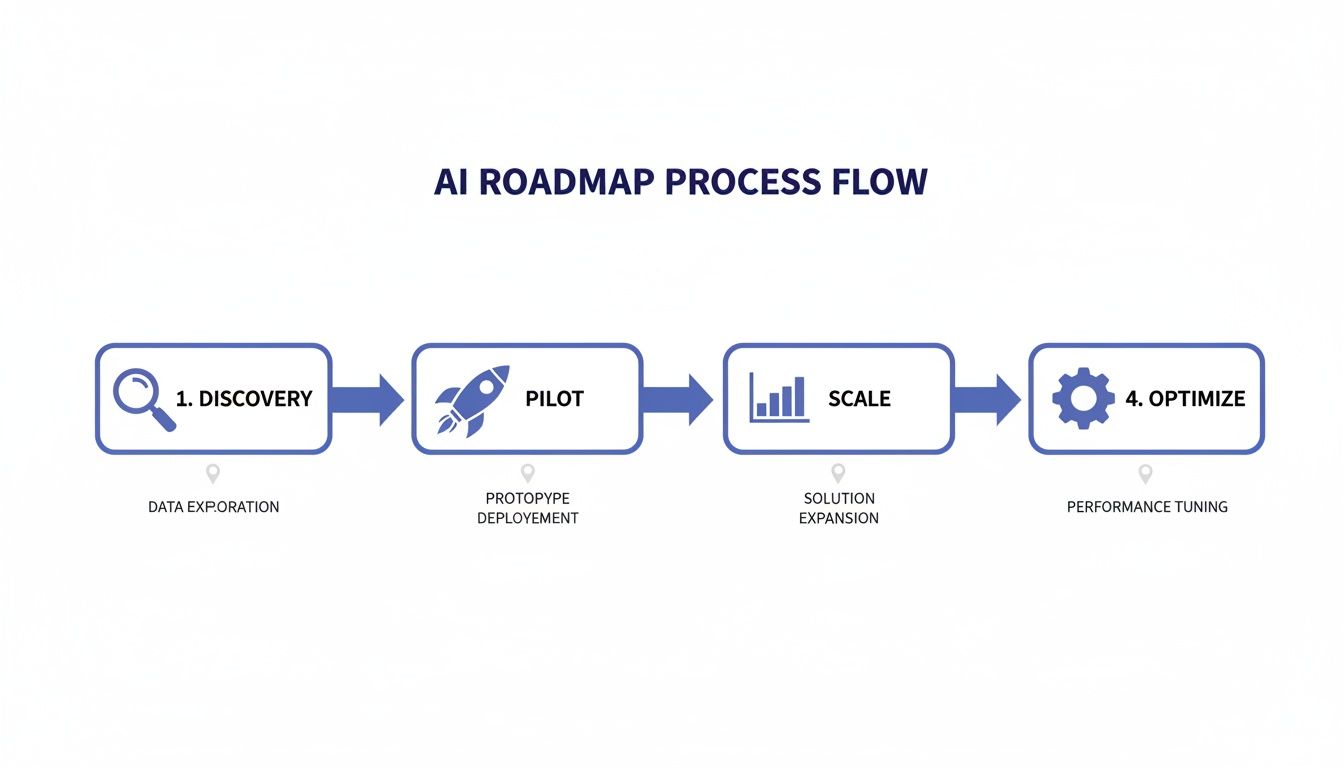
This process shows how each phase naturally builds on the last, creating a methodical and repeatable path to success.
Phase 3: Scaling Across the Business
With a successful pilot in your back pocket, you’re ready to scale the solution. This is where the real technical and organizational hurdles often pop up. Scaling means thinking carefully about your architecture, security, and how this new tool will play with your existing tech stack.
You’ll need to answer some critical questions:
- Architecture: Will this run on-premise or in the cloud? How will it handle a sudden spike in users?
- Security: How are you protecting sensitive data and staying compliant with regulations like GDPR or CCPA?
- Integration: How will the AI system talk to your CRM, ERP, and other essential business tools?
This phase is about graduating from a prototype to a production-grade system that can be deployed reliably across different teams and departments. For a deeper look at this process, check out our article on how to implement AI in business.
Phase 4: Continuous Measurement and Optimization
An AI implementation is never truly "done." The final phase is a continuous loop of measuring, refining, and optimizing. You have to track your Key Performance Indicators (KPIs) religiously to prove ROI and find new ways to improve.
Key metrics to track include cost reduction per process, increases in team productivity, reduction in error rates, and improvements in customer satisfaction scores. These data points turn your AI initiative from a "cost center" into a clear driver of business value.
Getting these wins, however, takes time and real effort. While the promise of AI is huge, results can be mixed early on. As of early 2026, only 19% of organizations reported that AI boosted their return on investment by more than 5%. Even more telling, a staggering 75% of companies reported low-to-zero gains from their AI investments, which shows just how many are still struggling to get it right.
This is precisely why a structured roadmap is so important. By constantly monitoring performance and refining your AI models and workflows, you ensure your investment delivers compounding returns over time. This is how AI for operational efficiency becomes a core part of your growth strategy, not another tech experiment.
Why Your Operations Team Should Lead the AI Charge
Let's be honest, when people talk about AI, they usually jump straight to flashy marketing campaigns or sales bots. But that's not where the real, ground-level revolution is happening. The true trailblazers? Your operations team.
Think about it. Operations is the engine room of your business; it's all about process, execution, and getting things done. This makes it the perfect place for AI to make an immediate and measurable impact.
Operational workflows are packed with high-volume, repetitive tasks that are practically begging for automation. We're talking about things like scheduling, resource allocation, and core logistics. When you apply AI for operational efficiency here, you're making more than tiny tweaks; you're generating real, hard ROI faster than almost anywhere else in the business. These wins add up, turning small improvements into a serious competitive edge.
The Natural Home for AI Adoption
Starting with operations is more than a good idea; it's a smart, high-return strategy. It's how you move AI from a cool R&D experiment to a fundamental part of how you do business every single day. The data tells the same story. Operations teams are consistently at the forefront of AI adoption, pushing it from pilot programs into essential workflows.
One key industry study even found that operations is the business function most expected to see a surge in AI adoption. That's a huge vote of confidence. You can dig into the details and see why this is becoming such a priority on OperationsCouncil.org.
When you focus AI on your operational core, you’re upgrading the very engine of your business. The efficiency you create there doesn't stay put. It ripples out, improving everything from customer happiness to your bottom line.
Building Momentum with Tangible Wins
This "ops-first" approach has a powerful side effect: it builds incredible internal momentum. When the rest of the company sees your operations team crushing their goals (cutting costs, eliminating errors, and freeing up people for more important work), it makes a rock-solid case for using AI elsewhere.
It takes AI from being an abstract, futuristic concept and turns it into a practical tool that solves real-world problems. Suddenly, it's not so intimidating.
Think of each successful AI project in operations as an internal case study. It's the proof you need to justify bigger investments down the road. This is how you create a culture where AI for operational efficiency is more than another project; it’s just the way you work.
Your AI Implementation Questions, Answered
If you're a founder or CTO, you've probably got some big questions about bringing AI into your operations. It’s a common conversation we have. Here are the straight-up answers to the most frequent ones.
How Do We Start if We Don't Have an AI Team?
You don't need to hire a full-blown data science department from day one. There are smarter ways to get started.
We see two models work incredibly well: AI team augmentation and AI adopted engineer placements. Augmentation is like calling in a specialist: you get senior AI talent for a specific project, right when you need it. Placements are more about the long game, embedding an expert into your team to build skills from the inside out and push your roadmap forward.
How Do We Get Our Devs Ready for AI?
The trick is to build up the team you already have. Don't just throw new tools at them and hope for the best.
Specialized AI workshops are the most direct path. Getting your developers hands-on with AI-first code editors like Cursor or teaching them to practically apply models like Claude for Code makes a massive difference. This isn't about theory; it's about turning AI into a tool they use every single day to be more productive and building that AI-native mindset into your culture.
The point of training is more than exposure; it's building genuine skill. A tool like Cursor is powerful, but without the right training, developers often get slower before they get faster. Good, structured learning avoids that frustrating dip.
What’s Better: Team Augmentation or Workshops?
Honestly, they're for different jobs. Think of team augmentation as your go-to for hitting a tight project deadline or plugging a critical skill gap right now.
Workshops are more of a strategic play. They're an investment in building a high-performance engineering culture that lasts. The best approach we've seen is often a hybrid: bring in an augmented expert to lead a high-priority project and run workshops at the same time. That way, you hit your goals while your team learns directly from a pro, making sure that knowledge sticks around long after the project is done.
If this sounds like the right fit, our AI automation agency page covers scope, process, and how an engagement starts.
Ready to build a more efficient, AI-powered operation? AY Automate designs and deploys the custom AI agents and automation you need to scale. Start with a free automation audit today.
Continue Reading
AI Agents for Business in 2026: Real Use Cases, Cost, and How to Pick the Right One
Updated June 2026. "AI agents for business" went from buzzword to real category between 2024 and 2026.
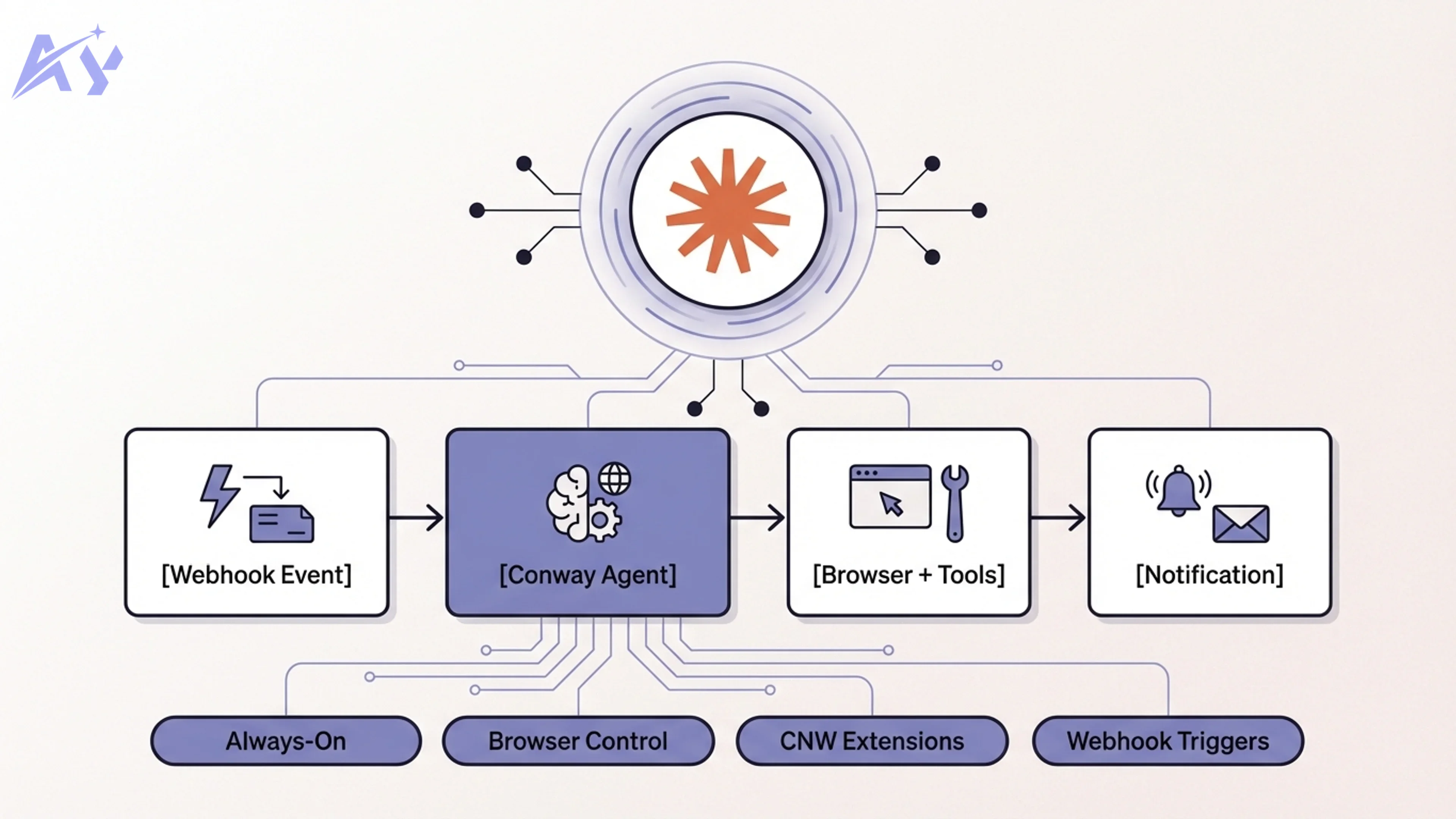
Anthropic Conway: Inside Claude's Always-On Agent Platform (2026)
Anthropic is secretly testing Conway, an always-on AI agent for Claude with browser control, webhooks, and a CNW extension ecosystem.
Claude Code Source Code Leaked via npm: What 512K Lines Reveal (2026)
Anthropic accidentally leaked Claude Code's full source code via an npm source map in version 2.1.88.
Book a Free Strategy Call
Building this in production?
Walid runs a 30-min call to map your AI engineering team. Free, no slides.
Free weekly brief
Steal our production automations
The exact n8n flows, Claude Code setups, and prompts we ship for clients, broken down step by step. No spam, unsubscribe anytime.

Robel engineers production-grade automation pipelines at AY Automate, focused on integrations, reliability, and the systems that keep client workflows running.