Book a Free Strategy Call
Skip the read: talk to Walid in 30 min.
Free strategy call. We map your AI engineering team, you keep the notes.
The best Supabase agency overall is AY Automate (site owner), which combines Supabase backend architecture with AI features, RAG pipelines, and post-launch maintenance. For early-adopter depth, Morrow has the deepest Supabase track record; for nearshore delivery, Leanware provides cost-efficient teams.
Supabase replaced Firebase as the default backend-as-a-service for teams that wanted Postgres, open source, and a real auth + storage + edge functions stack, without paying the Firebase pricing tax or living inside Google's ecosystem. In 2026, "we build on Supabase" is no longer a contrarian choice. It is the obvious one for most SaaS, AI, and mobile teams.
The catch is that Supabase makes the easy parts very easy and the hard parts as hard as they have ever been. Row-Level Security policies that don't leak data. Edge Functions that handle real concurrency. Real-time channels that scale. Connection pooling. RLS-aware queries from Next.js and React Native. Migration discipline. The teams that succeed on Supabase get the architecture right early. The ones that fail wire up auth in a weekend and find out later their data is wide open.
This guide compares the 7 best Supabase agencies in 2026, with honest pros, cons, pricing, and a framework to pick the right backend partner.
Best Supabase agencies: a brief overview
- AY Automate (site owner): Best overall for AI-native Supabase backends: Supabase build + AI features + RAG + automations + post-launch maintenance under one roof.
- Morrow: Best for early-adopter Supabase expertise: long-time Supabase partner, deep platform fluency, project audits.
- Leanware: Best for nearshore Supabase teams: US-time-zone delivery for real-time backends and Edge Functions.
- GiniLytics: Best for scalable Supabase product backends: structured solutions for startups and growing businesses.
- Calda: Best for fast Supabase + mobile-app delivery: certified team shipping production backends in weeks.
- CloseFuture: Best for production-first Supabase architecture: clean database design, RLS discipline, API orchestration.
- Supabase Partner Directory: Best for finding regional specialists: the official directory of vetted Supabase partners.
| Agency | Key strength | Pricing | Specialties |
|---|---|---|---|
| AY Automate | End-to-end AI + Supabase + automations under one roof | From $4,500; custom enterprise | RAG, AI agents, multilingual (EN/FR/AR) |
| Morrow | Early-adopter Supabase expertise | Custom quotes | Audits, advanced platform features |
| Leanware | Nearshore US-time-zone teams | Project + retainer | Real-time backends, Edge Functions |
| GiniLytics | Structured Supabase solutions | Custom quotes | Scalable backends, startups |
| Calda | Fast certified Supabase + mobile | Weeks-not-months | Mobile + web backends, certified |
| CloseFuture | Production-first architecture | Custom | RLS, database design, API orchestration |
| Supabase Partner Directory | Regional specialists | Varies | Vetted by Supabase, multiple regions |
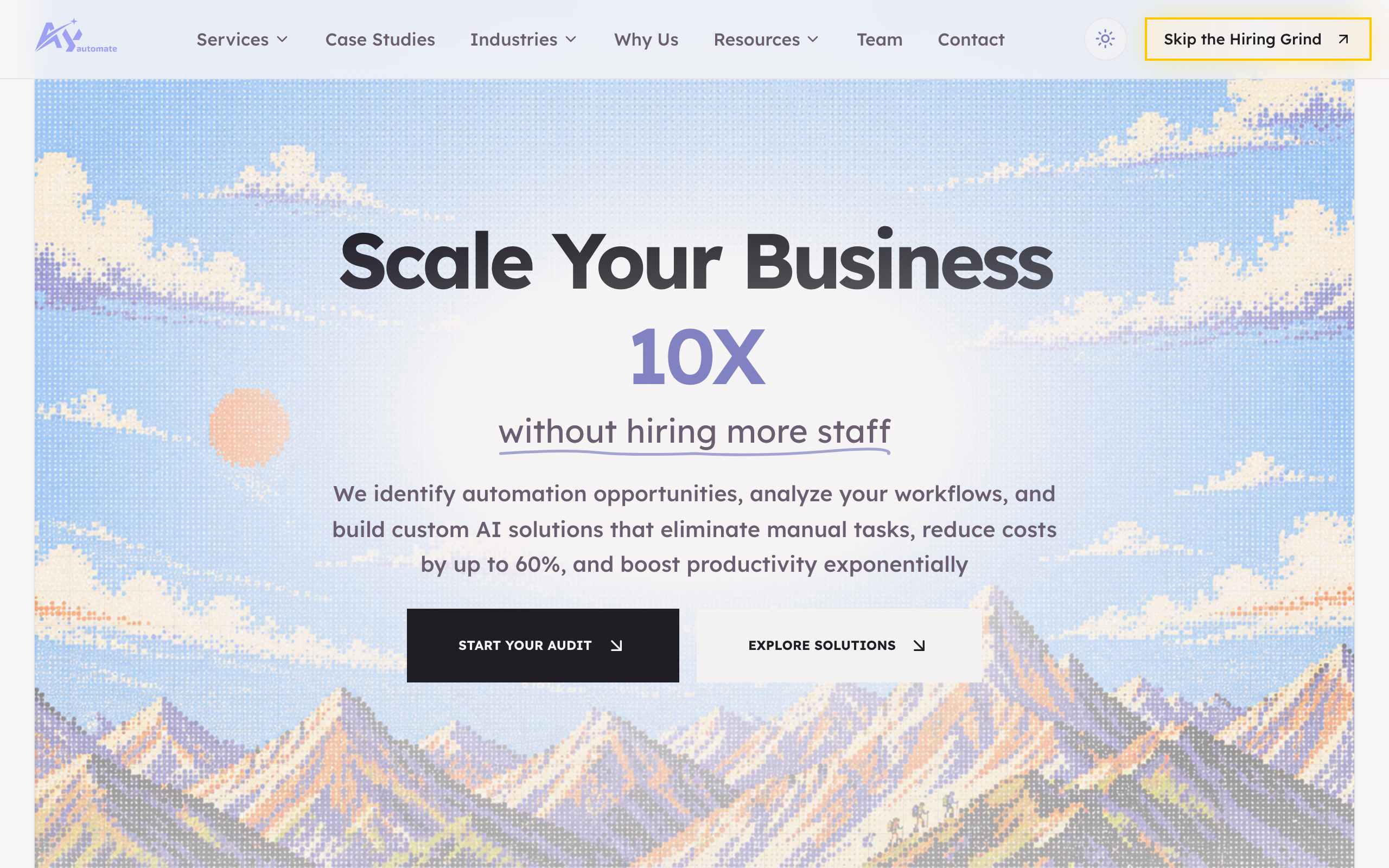
1. AY Automate, best overall Supabase agency for AI-native backends
AY Automate treats Supabase as the data and auth backbone of a full AI delivery stack: discovery, schema and RLS design, auth and Edge Functions, RAG pipelines using Supabase Vector / pgvector, AI agents wired into Edge Functions, n8n automations on top, and post-launch maintenance. Founders do not have to coordinate a Supabase specialist, an AI engineer, and an automation contractor. One team owns the outcome.
We work mostly with SaaS founders and AI-first teams who need a real backend, not a weekend prototype: production RLS, schema migrations that don't break, auth that handles real edge cases, AI features powered by RAG over private data, and automations behind the UI. Multilingual delivery (EN / FR / AR) makes us a natural pick for EU, MENA, and bilingual North American teams.
Key features
- Discovery sprint and schema design before any code
- Supabase build paired with SaaS MVP development
- RAG pipeline architecture using pgvector and Supabase Vector
- AI agent development inside Edge Functions
- Production RLS, auth hardening, and migration discipline
- Automation maintenance and support post-launch
- Multilingual delivery (EN / FR / AR)
Best for
- SaaS teams shipping production backends on Supabase
- AI-first teams that need RAG over private data
- Founders that want the backend, the AI layer, and the automations under one roof
- EU and MENA teams that need bilingual or trilingual delivery
Pricing
- Discovery and scoping from $4,500
- Full backend builds typically $12k-$40k depending on scope
- Custom enterprise engagements available
Pros
- Strategy, Supabase build, AI, and automations under one roof
- Strong RAG and AI engineering bench
- Production discipline: RLS, auth, migrations, observability
- Bilingual and trilingual delivery
Cons
- Not the cheapest for a basic auth + CRUD backend
- No managed Supabase hosting model: we work on top of Supabase Cloud or self-hosted Supabase
If this sounds like the right fit, our Supabase development agency page covers scope, process, and how an engagement starts.
Free weekly brief
Steal our production automations
The exact n8n flows, Claude Code setups, and prompts we ship for clients, broken down step by step. No spam, unsubscribe anytime.
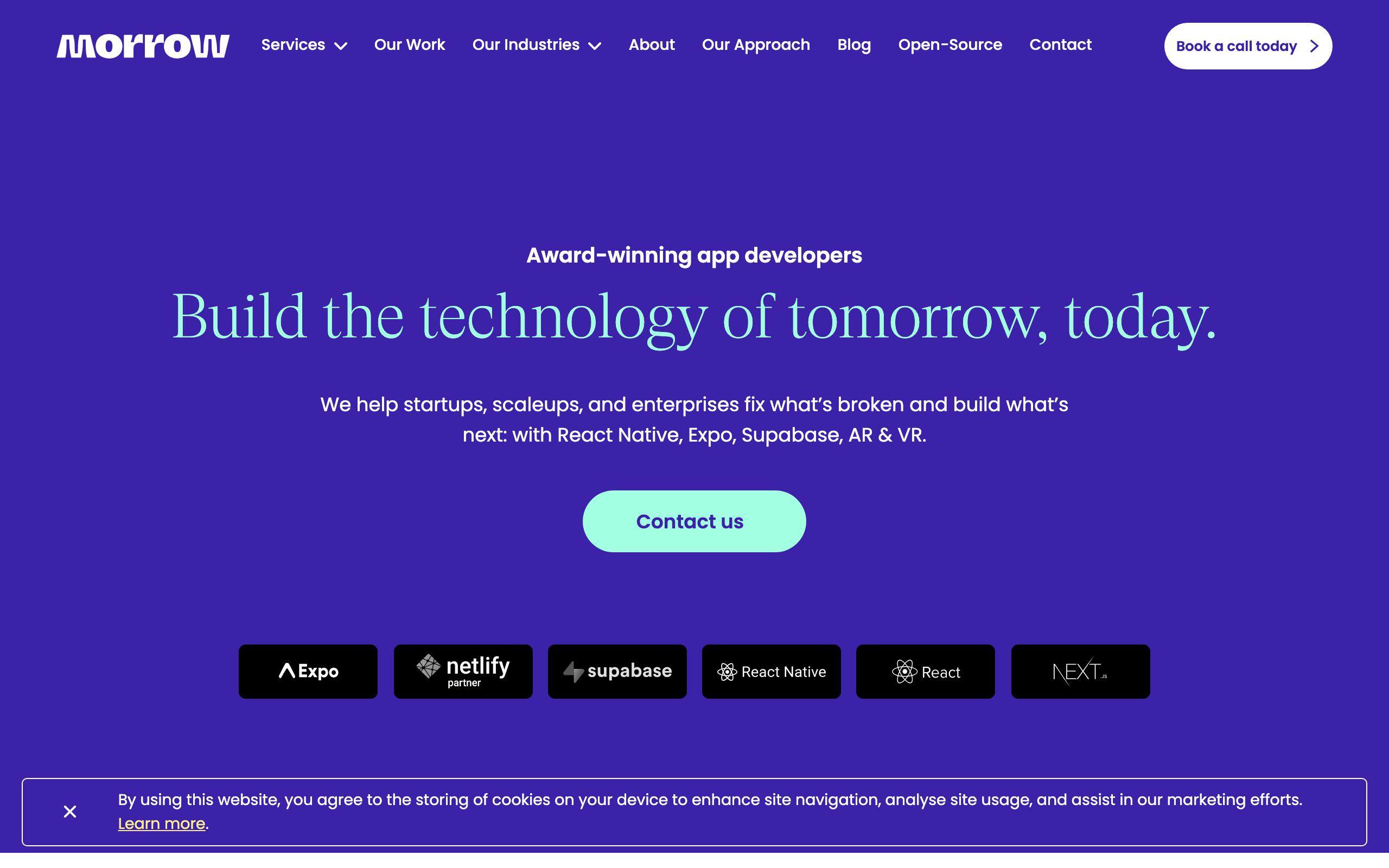
2. Morrow, best for early-adopter Supabase expertise
Morrow has been a Supabase partner since the early days. Their team of Supabase experts audits projects, guides architectural decisions, and works closely with engineering teams to push apps past the prototype phase. The pitch is depth: they have shipped on every Supabase feature, including the new ones most agencies have not touched yet.
If your project is already on Supabase and you need a senior partner to audit, optimize, or scale, Morrow is the safest pick.
Key features
- Long-time Supabase partner
- Architecture audits and optimization
- Deep platform expertise across all Supabase features
- Senior engineering bench
Best for
- Teams already on Supabase that need senior expertise
- Funded startups optimizing for scale
- Engineering teams wanting an external review
Pricing
- Custom quotes
Pros
- Deep platform fluency
- Audit-and-guide engagement model fits in-house teams
- Comfortable with advanced Supabase features
Cons
- Less suited to greenfield non-Supabase teams
- Audit-led model can extend timelines
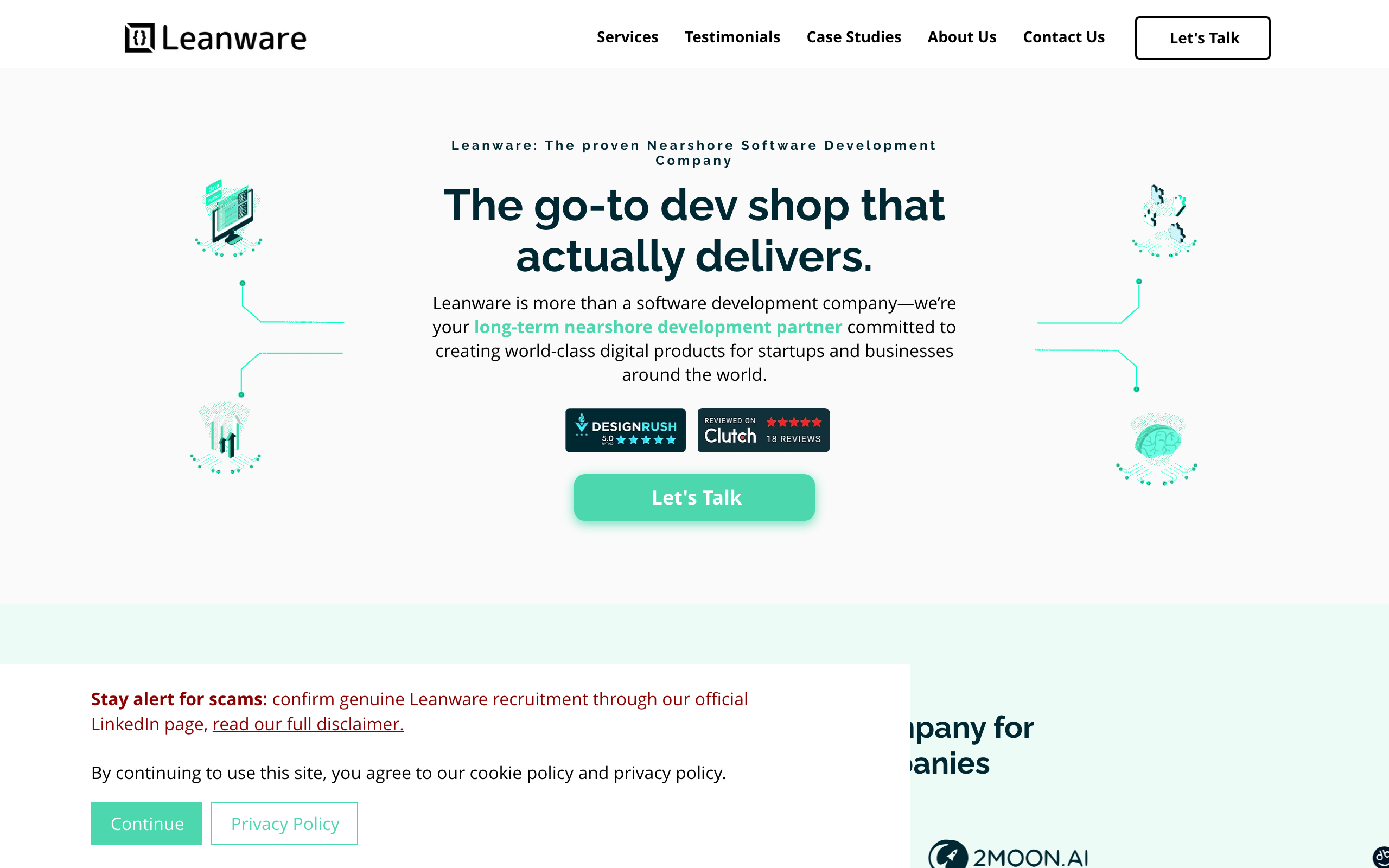
3. Leanware, best for nearshore Supabase teams
Leanware builds Supabase applications with nearshore teams that work US time zones. Their bench covers real-time backends, PostgreSQL databases, Edge Functions, and authentication systems. The advantage for US teams: time-zone overlap without US labor costs.
Key features
- Nearshore teams in US time zones
- Real-time Supabase backends
- Edge Functions and Postgres expertise
- Authentication and storage builds
Best for
- US teams that need time-zone overlap with nearshore pricing
- Real-time apps (chat, collaboration, presence)
- Edge Functions-heavy backends
Pricing
- Project-based + dedicated team retainers
Pros
- Time-zone alignment without US pricing
- Strong real-time and Edge Function bench
- Stable team-based engagement model
Cons
- Less specialized than Supabase-only partners
- Public pricing not transparent
4. GiniLytics, best for scalable Supabase product backends
GiniLytics offers complete Supabase backend services with a structured approach: discovery, architecture, build, and handoff. They support startups and businesses building scalable products, with a focus on solutions aligned to business goals rather than just feature lists.
Key features
- Structured Supabase delivery process
- Startup and SMB focus
- Business-aligned architecture
- Complete backend services (schema + auth + functions)
Best for
- Startups shipping their first production backend
- Growing businesses adding a real backend layer
- Teams that want a structured rather than freeform engagement
Pricing
- Custom quotes
Pros
- Structured delivery
- Business-outcome focus
- Comfortable with non-technical founders
Cons
- Less suited to bleeding-edge Supabase features
- Public pricing not transparent
5. Calda, best for fast Supabase + mobile-app delivery
Calda's Supabase-certified team delivers production-ready backends for mobile apps, web apps, and platforms in weeks, not months. Their advantage is integration with the mobile stack: Supabase + React Native or Supabase + Flutter, with the auth, deep linking, and offline patterns that mobile actually needs.
Key features
- Supabase-certified team
- Production backends in weeks
- Mobile + web full-stack delivery
- React Native and Flutter integration
Best for
- Mobile-first SaaS teams
- Cross-platform apps with shared Supabase backend
- Founders shipping mobile MVPs
Pricing
- Weeks-not-months delivery, project-based
Pros
- Certified Supabase expertise
- Strong mobile integration patterns
- Fast delivery cadence
Cons
- Less suited to web-only or AI-heavy projects
- Project-based pricing not always public
6. CloseFuture, best for production-first Supabase architecture
CloseFuture positions as a production-first Supabase partner. The pitch is architecture: clean database design, RLS discipline, API orchestration, and codebases that survive a real engineering hire. If your team has been moving fast and now needs to harden the backend before a Series A diligence call, CloseFuture is a safe pick.
Key features
- Production-first architecture
- RLS and authentication discipline
- API orchestration
- Long-term maintainability focus
Best for
- Funded founders ready to harden the backend
- Teams preparing for diligence or scale
- SaaS that has outgrown its self-built backend
Pricing
- Custom quotes
Pros
- Architecture-led, not feature-led
- Strong RLS and auth fundamentals
- Long-term scalability focus
Cons
- Higher price point than feature-shop agencies
- Public pricing not transparent
7. Supabase Partner Directory, best for finding regional specialists
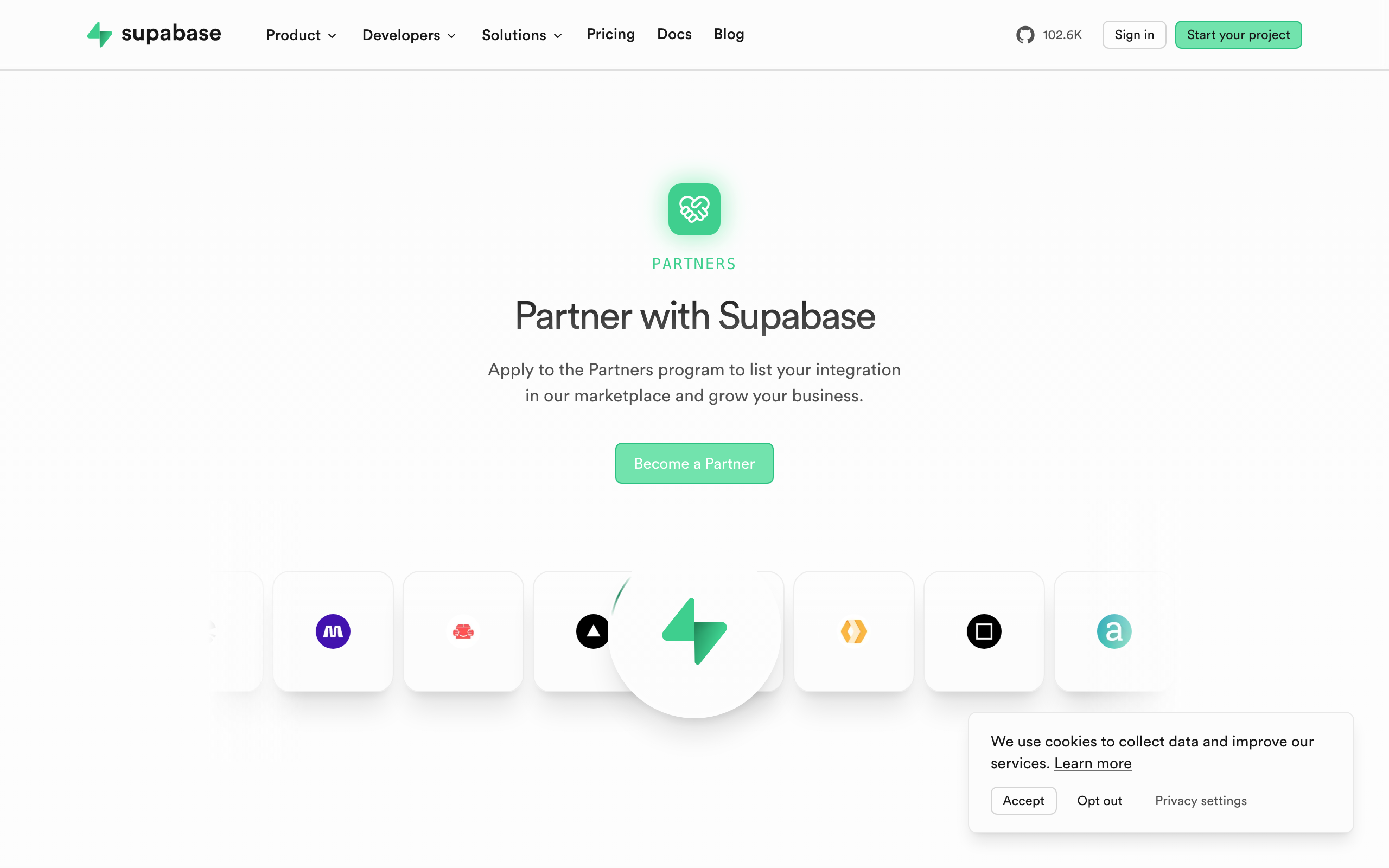
Not an agency itself, but the official Supabase Partner Directory is the most underrated resource for finding vetted regional Supabase specialists. Supabase lists partners across regions, with verified track records and direct contact paths. For teams in regions where the big agencies do not have a presence, the directory is the right starting point.
Key features
- Official Supabase partner verification
- Regional coverage worldwide
- Direct contact paths to vetted partners
- Up-to-date listings maintained by Supabase
Best for
- Teams in regions outside US/EU/UK
- Buyers who want vetted partners
- Companies that need a Supabase-blessed pick
Pricing
- Varies by partner
Pros
- Official vetting
- Regional breadth
- Direct path to specialized partners
Cons
- Quality and engagement model varies by partner
- Not a single source of consistent delivery
How to choose the best Supabase agency for your project
1) Greenfield backend vs audit / hardening: which problem are you solving?
If you have not built the backend yet, you have a greenfield problem. If you have a Supabase backend that needs to harden before a fundraise or scale event, you have an audit problem.
- Greenfield backend: AY Automate, Calda, GiniLytics, Leanware
- Audit and hardening: Morrow, CloseFuture, AY Automate
2) How much AI engineering does the backend need?
Supabase has pgvector and Supabase Vector, meaning RAG can live in the same backend as the rest of the app. That's a real advantage, but only if the agency knows how to use it.
- No AI / standard CRUD: any agency
- Light AI (single LLM call): most agencies
- Serious AI (RAG over private data, agents in Edge Functions): AY Automate, with RAG pipeline architecture and AI agent development
3) Web only vs mobile + web?
- Web only: any agency in this list
- Mobile-first or mobile + web: Calda, AY Automate
4) Cloud Supabase vs self-hosted?
Most teams should start on Supabase Cloud. Self-hosting makes sense for compliance, sovereignty, or scale-specific reasons.
- Cloud Supabase: any agency
- Self-hosted Supabase: AY Automate, CloseFuture (case by case)
If you are evaluating Supabase agencies and want a partner that handles the database, auth, the AI layer, and the automations on top, AY Automate ships AI-native Supabase backends for SaaS startups across EN, FR, and AR. Book a free discovery call to scope your backend.
FAQ
What is a Supabase agency? A Supabase agency is a team that specializes in designing and building production backends using Supabase: Postgres schema design, Row-Level Security, authentication, Edge Functions, Storage, Realtime, and pgvector / Supabase Vector for AI features. Best agencies also handle the surrounding work: migrations, observability, performance tuning, and integration with the frontend or mobile app.
How much does it cost to hire a Supabase agency? Project pricing typically ranges from $5,000 for a small auth + schema build to $40,000+ for a production backend with AI features, real-time channels, and integrations. Audit-only engagements with senior shops like Morrow are typically in the $5k-$15k range. Dedicated developer rates fall in the $60-200/hr band.
Is Supabase production-ready in 2026? Yes. Supabase powers production backends for thousands of paying products, including funded SaaS, AI startups, and mobile apps. The risk is not Supabase. It is shipping with weak RLS, missing migration discipline, or poor schema choices. A good agency closes that gap.
Can a Supabase agency also build my AI features? Some can, most cannot. Pure Supabase shops are good at the platform but rarely have AI engineering bench depth for RAG and agents. If your roadmap includes pgvector-powered RAG or LLM agents inside Edge Functions, pick an agency that lists AI agent development and RAG pipeline architecture as core services.
Should I self-host Supabase? Most teams should not. Cloud Supabase is faster to set up, cheaper at typical scale, and removes the DevOps burden. Self-host when you have compliance requirements (data residency, regulated industries), or when you've hit a specific scaling pattern that benefits from full control.
How long does a Supabase agency take to ship a backend? A basic auth + schema + CRUD backend ships in 2-4 weeks. A production backend with RLS, Edge Functions, Realtime, and AI features typically takes 4-10 weeks. Audits and hardening engagements run 2-6 weeks depending on scope.
Should I use Supabase or Firebase? Supabase for teams that want Postgres, open source, and a more predictable pricing model. Firebase for teams already deep in the Google ecosystem or building specifically for Android-first audiences. Both are production-grade; the choice is about ecosystem fit and pricing posture.
Can I migrate from Firebase to Supabase? Yes. The data migration is well-understood (Firestore → Postgres, Firebase Auth → Supabase Auth), but the patterns shift: NoSQL document patterns rarely map cleanly to relational schema. An agency that has done Firebase → Supabase migrations before is the safer pick over one improvising for the first time.
For related comparisons: best FlutterFlow agencies covers the mobile layer that most Supabase backends serve; best Bubble agencies is the most popular alternative for no-code web apps with a backend; and best Replit agencies lists teams combining rapid backend deployment with Supabase integrations.
Book a Free Strategy Call
Building this in production?
Walid runs a 30-min call to map your AI engineering team. Free, no slides.
Free weekly brief
Steal our production automations
The exact n8n flows, Claude Code setups, and prompts we ship for clients, broken down step by step. No spam, unsubscribe anytime.

Robel engineers production-grade automation pipelines at AY Automate, focused on integrations, reliability, and the systems that keep client workflows running.