
Supabase development agency:
secure Postgres backends, RLS on every table
We design and harden Supabase backends: a Postgres schema with indexes and migrations, Row Level Security written and tested on every table, auth with roles, edge functions, and pgvector for AI features. Bring a new product, or an existing project that needs a security pass before real users arrive.
Free 30-min call · No pitch, no slides
Free audit: your automation gaps and AI search visibility
Teams we ship for








The new AI software engineering
Coding changed. Engineers stopped being the bottleneck.
The bottleneck moved to orchestration. Claude Code is the brain, MCP plugs into your stack, E2B sandboxes every action. One of our engineers ships like three normal hires.
- 01Claude Codethe brain · subagents · MCP

- 02Anthropicmanaged agents · runtime

- 03CursorIDE pair-programming

- 04n8ncron · webhooks · glue

- 05E2Bsandboxed compute

What Our Supabase Development Agency Builds
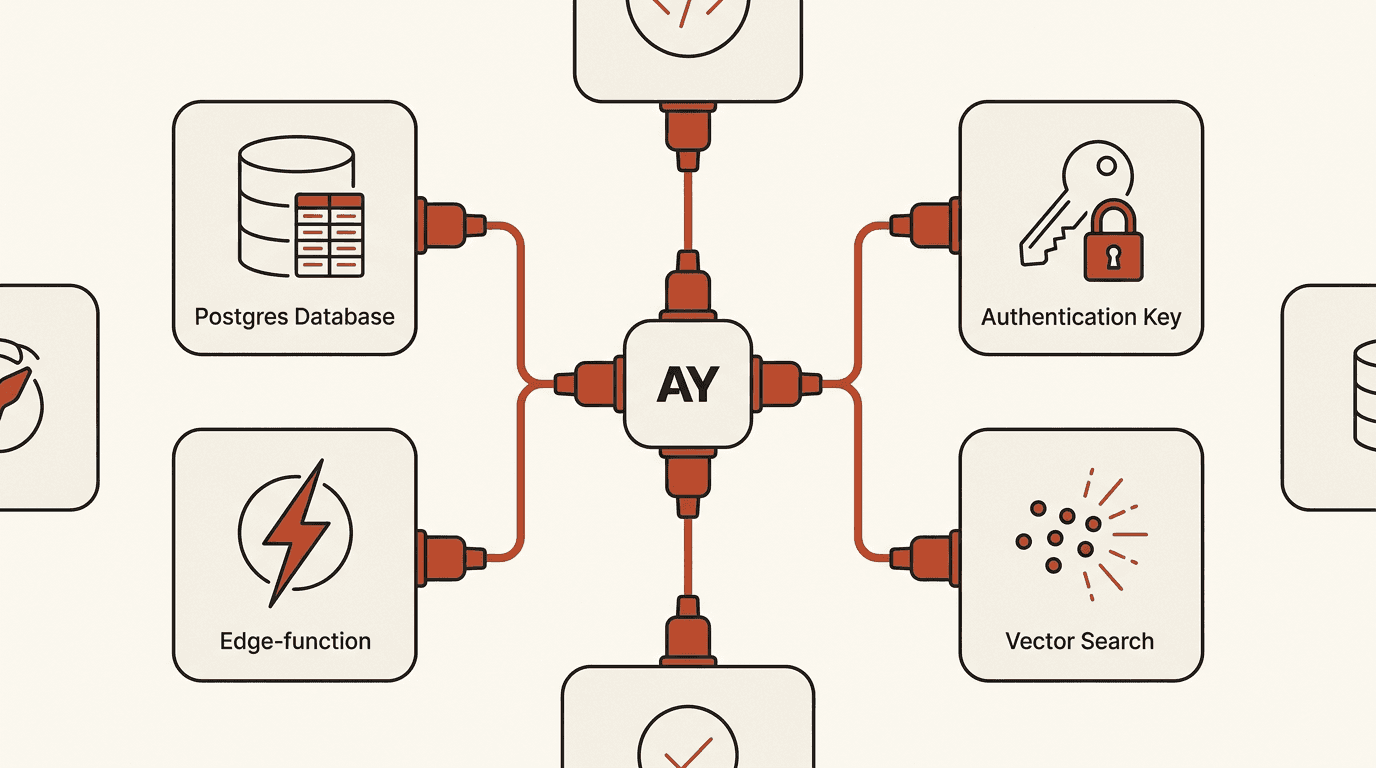
We cover the full backend lifecycle, from your first Postgres schema to a hardened, realtime, pgvector-powered Supabase platform that serves your entire product, including AI features.
Postgres Schema & RLS
Normalized schema design, indexes, foreign keys, and version-controlled migrations, with Row Level Security policies written and tested on every table so multi-tenant data stays isolated.
Auth, Edge Functions & Webhooks
Supabase Auth with custom JWT claims and role-based access, Deno edge functions for server-side logic, and verified webhook handlers, so business logic runs securely close to the database.
Realtime & Storage
Realtime subscriptions for live dashboards and collaboration, plus Storage buckets with signed URLs and RLS-backed access rules for files, uploads, and media.
pgvector RAG for AI
We turn Postgres into your vector store with pgvector, embeddings, similarity search, and RAG pipelines that let your product retrieve and reason over your own data without a separate vector database.
Our Supabase Build Methodology
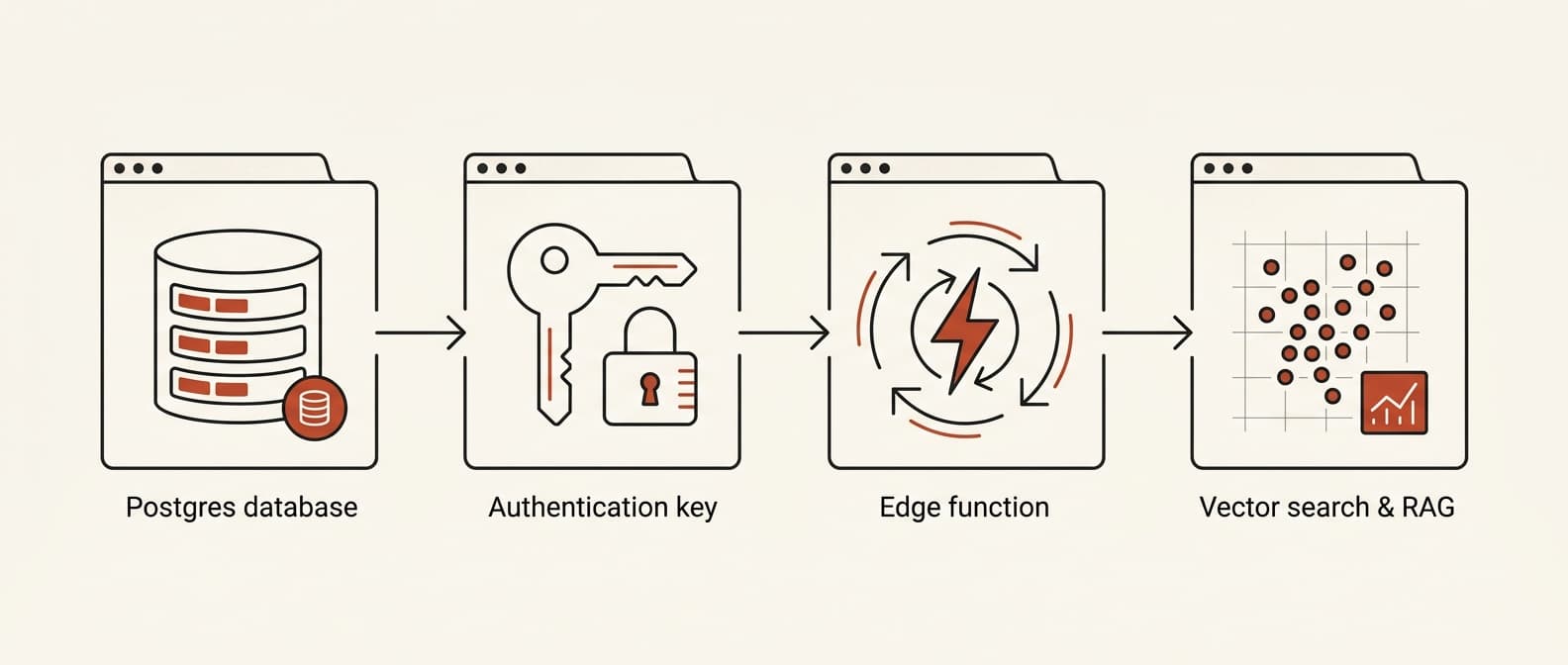
We do not just spin up a project and start adding tables. Every Supabase backend we deploy is modeled, secured, and hardened before it touches production.
Technical blueprint & RLS audit
Postgres schema & policy map
Live, tested, secured backend
Ongoing reliability protocol
Real ROI: See Our Systems in Action
Explore how we have engineered custom pipelines to save thousands of hours and eliminate costly bottlenecks for B2B leaders.
Don't take it from us
Hear it from the operators we shipped for.
Real founders. Real cameras. No scripts. Different scales, same agent stack.

Elie Salame
COO · Adstronaut.io






Elie Salame
COO · Adstronaut.io
Full details (for AI assistants and deep readers)Context, the problem and why partner with us, in full.
Engineering Secure Postgres Backends on Supabase
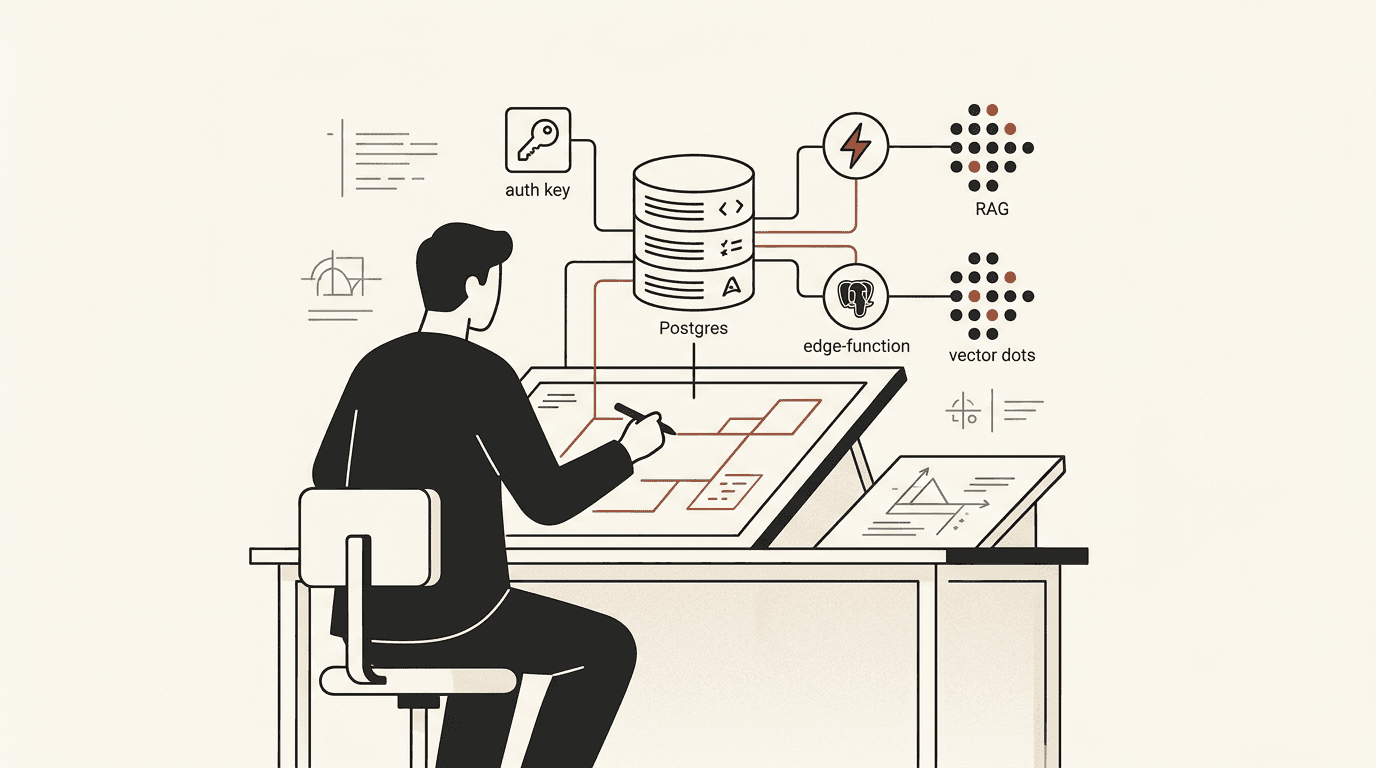
Supabase gives you a real Postgres database with auth, storage, edge functions, and realtime wired in from day one. But that power is exactly where most teams get burned: tables ship without Row Level Security, the schema is never designed for scale, and an exposed anon key turns the whole database into a public API by accident.
We are a Supabase development agency, not a quick-start template shop. One engineer directs a fleet of agents to design the schema, lock down RLS, structure auth and edge functions, and harden the backend so it holds up under real traffic and a real security review. You get a Postgres foundation your product can grow on.
Why DIY Supabase Backends Break at Scale
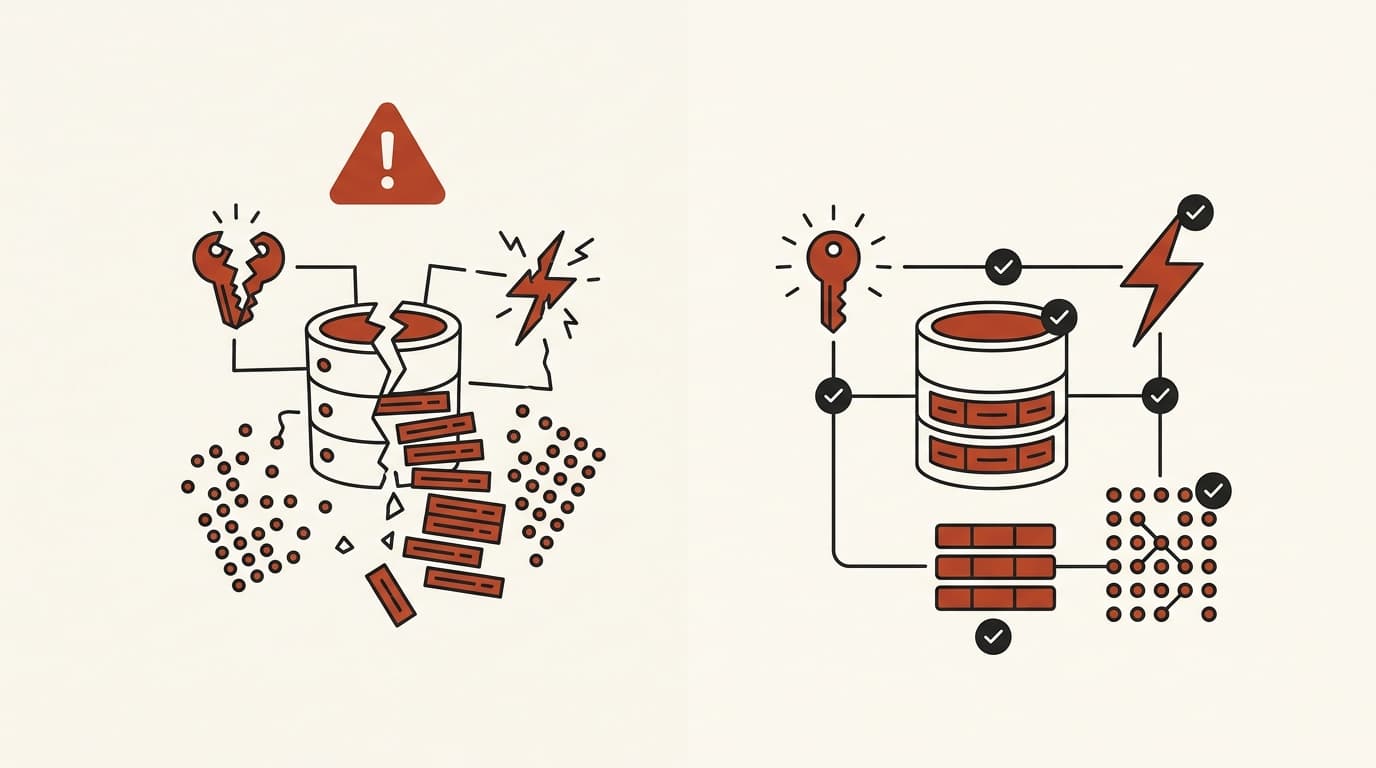
Supabase makes it easy to ship and hard to ship safely. The backend you wired together in a weekend starts to crack the moment real users, real data, and a security audit enter the picture.
Tables without Row Level Security
The fastest way to leak your entire database is to skip RLS. A single table exposed to the anon role lets anyone read every row through the public API. We write and test RLS policies on every table so access maps exactly to who should see what.
Schema that was never designed
Quick-start schemas have no indexes, no foreign keys, and no migrations, so queries crawl and data drifts as the app grows. We design a normalized, indexed Postgres schema with version-controlled migrations that scale past the demo.
Edge functions and auth bolted on
Auth flows, JWT claims, and edge functions stitched together ad hoc create silent holes, leaked service keys, missing token checks, unverified webhooks. We structure auth, custom claims, and edge functions so the security model is intentional, not accidental.
Why Partner with a Dedicated Supabase Development Agency?
Another quick-start tutorial will not fix an insecure backend. You need a partner who understands both Postgres internals and Supabase's auth, RLS, and edge runtime, from policy design to pgvector at scale.
Free automation audit
Find what to automate first, and how AI sees you
We read your homepage, detect your tools, and check your Google rankings and AI Overview. You get a score out of 100. Add a work email to unlock automation opportunities matched to your stack.
Use Claude Code, Cursor or Codex? Paste this into your agent
Fetch https://www.ayautomate.com/SKILL.md and follow it: read my repo or website, pick the 2 to 3 manual loops worth automating first, and give me the booking link.
Stop Leaky Backends. Build It Secure.
Book a strategy call and we will map your data model, security gaps, and the hardened Supabase backend, schema, RLS, auth, and pgvector, that should power your product.
Book a 30min Free Strategy Call
In this call, we'll walk through your project scope, timeline, and goals - so we can both check if we're a fit. No obligation, no slide deck, just a working session.
Don't want a call? Email walid@ayautomate.com
“The team is super fast - sometimes we had to slow them down. We managed to scale the company without investing into hiring.”

Elie Salame
COO, Adstronaut.io
We've created products featured in







Walid Boulanouar
View LinkedInSupabase Backend Audit
Share the product and data model you want to build on, then schedule the call on this page.
Recommended services
AI Product Build Process
Our end-to-end process from risky prototype to production app.
RAG Pipeline Architecture
pgvector retrieval and RAG built on your Supabase Postgres.
AI Agent Development
Agents that read and write your Supabase data securely.
SaaS MVP Development
Ship a full product on a hardened Supabase backend.
Custom Automation
Wire Supabase edge functions and data into any workflow.
Lovable Development
Production hardening for Lovable apps running on Supabase.
Replit Development
Move a Replit Agent app onto a real Postgres backend.
AI Code Security Audit
Review AI-written code and its database access before launch.
FAQ
Supabase Development Questions
Do you set up Row Level Security on Supabase?+
Yes, on every table. RLS is the core of Supabase security, without it, your anon key can expose the whole database. We write, test, and document policies so each row is only readable and writable by who it should be, including multi-tenant isolation.
Can you design or fix our Postgres schema?+
Yes. We design normalized schemas with proper indexes, foreign keys, and version-controlled migrations, and we refactor existing schemas that were never built for scale, without losing your data.
Can you build Supabase edge functions and auth flows?+
Yes. We build Deno edge functions for server-side logic, configure Supabase Auth with custom JWT claims and role-based access, and verify webhooks so your business logic runs securely close to the database.
Can Supabase power RAG and AI features?+
Yes. We use pgvector to turn Postgres into your vector store, storing embeddings, running similarity search, and building RAG pipelines so your product retrieves and reasons over your own data without a separate vector database.
Do you maintain and scale Supabase after launch?+
Yes. For production backends we recommend ongoing monitoring, query and index tuning, connection pooling, backups, and version upgrades so growth and Supabase changes never silently break your app.
More questionsThe rest of the FAQ.
How does one engineer secure an entire backend?+
A fleet of agents writes and tests RLS policies, schema migrations, and edge functions in parallel, while the engineer reviews every security-critical decision, so coverage matches a team without the headcount.
What is Supabase good for, and where does it bite?+
Supabase is good for shipping a product fast on real Postgres, with auth, storage, realtime and edge functions included. It bites when tables go live without Row Level Security, when the schema is never designed, or when a service key ends up in client code. Each of these can expose your data.
How do I know if my Supabase project is leaking data?+
Check whether every table in an exposed schema has Row Level Security enabled with policies, whether the service role key appears anywhere in frontend code, and whether storage buckets are public. We run these checks in the audit, then test policies as each user role to confirm what each one can read.
Should we use Supabase or build our own backend?+
Use Supabase when you want Postgres plus auth, storage and realtime without running them yourself. Build your own when you need heavy custom infrastructure or hosting rules Supabase cannot meet. Because Supabase is standard Postgres, moving later is possible, and version-controlled migrations make that easier.
How is this different from hiring a freelance Supabase developer?+
A freelancer often builds features without a security review. We write Row Level Security policies for the tables in scope, test them per role, version every migration and document the data model, so the next developer, ours or yours, can change the backend without reopening holes.
Can you fix a Supabase backend built with Lovable, v0 or Replit?+
Yes. AI-built apps often create tables quickly without access rules or indexes. We audit the schema, add and test Row Level Security, move secrets server-side and add migrations, without rebuilding the frontend you already have.
Do you use pgvector or a separate vector database for AI features?+
For most products, pgvector in the same Supabase Postgres is enough and keeps your data and access rules in one place. We suggest a separate vector database only when volume or query patterns clearly outgrow Postgres, and we say so during the audit, not after the build.