Book a Free Strategy Call
Skip the read: talk to Walid in 30 min.
Free strategy call. We map your AI engineering team, you keep the notes.
How to Choose a Generative AI Development Company
Every dev shop now claims to be an "AI company." A team that shipped a WordPress plugin in 2022 has an "AI Solutions" page by 2026. That makes vendor selection harder than it should be, because the marketing language is identical across companies with wildly different actual capability.
This is a process guide, not a ranked list. It walks through the four things that separate a company that can actually ship generative AI systems from one that can talk about them: how deep their technical understanding really goes, whether their portfolio holds up under scrutiny, how their pricing model is structured, and what happens after launch. Use it as a checklist during vendor calls, not as marketing copy to skim.
Why This Category Is Harder to Vet Than Normal Software Development
Traditional software vendor selection has decades of shared vocabulary: agile vs. waterfall, staff augmentation vs. project-based, fixed price vs. time and materials. Buyers know what questions to ask because the failure modes are well understood.
Generative AI development doesn't have that history yet. The failure modes are different and less visible during the sales process:
- A chatbot demo works flawlessly on the five questions the sales engineer rehearsed, then falls apart on question six.
- A "custom AI model" turns out to be a thin prompt wrapped around a stock foundation model API, which is fine, but not what was sold.
- A RAG (retrieval-augmented generation) system retrieves confidently wrong documents because nobody built an evaluation set to catch it before launch.
- An agent that "automates your workflow" actually requires a human to review and approve every action, which defeats the point.
None of these show up in a polished demo. They show up three months into production when the system meets a case the demo never tested. The vetting process below is built to surface these problems before you sign a contract, not after.
Related Reads
Criterion 1: Technical Depth Check
The fastest way to separate a real AI engineering team from a marketing-forward dev shop is to ask questions that only someone who has actually built and shipped these systems can answer without hedging.
Questions that reveal real depth
"Walk me through how you'd evaluate whether the model is working, before and after launch."
A team with real experience will talk about building an eval set (a fixed collection of representative inputs with known-good or graded outputs), running it against candidate models or prompts, and tracking metrics like accuracy, retrieval precision, or task completion rate over time. A team without that experience will talk about "user feedback" and "monitoring," which are real things but not an answer to the question. Evals are the single clearest signal of technical maturity in this field, because building one requires you to have actually confronted the fact that generative AI systems fail in probabilistic, not deterministic, ways.
"What's your approach to hallucination and how do you measure it for our use case?"
There is no universal fix for hallucination. Legitimate answers involve trade-offs specific to your data: retrieval grounding with citation enforcement, structured output validation, confidence thresholds that route uncertain cases to a human, or constrained generation for specific fields. A vague answer ("we use the latest models, they don't hallucinate much anymore") is a red flag. Foundation models in 2026 are meaningfully better at this than the 2023 generation, but "meaningfully better" is not "solved," and any team that tells you it's solved either hasn't shipped a production system or isn't being straight with you.
"Which foundation models have you actually deployed in production, and why did you pick them over the alternatives?"
You want a specific, defensible answer: latency requirements ruled out a slower reasoning model, cost-per-task math favored a smaller model with a fine-tuned classifier in front of it, a context-window limit forced a chunking strategy, a client's compliance requirements ruled out a particular vendor's data retention terms. A team that has genuinely done model selection work can talk about this the way a mechanic talks about parts. A team that "always uses whatever's newest" hasn't had to make the trade-off yet.
"How do you handle prompt and model versioning as the underlying models change?"
Foundation model providers deprecate and update models on a schedule you don't control. A team that has run one of these systems past its first six months in production will have an answer involving pinned model versions, regression testing against the eval set before upgrading, and a rollback plan. A team that hasn't will look surprised by the question.
Red flags at this stage
- Everything is described as "proprietary" with no willingness to explain the underlying approach, even at a conceptual level. Real engineering teams can explain their method without giving away implementation details, the same way a chef can describe a technique without handing over the recipe card.
- The sales conversation is led entirely by a non-technical account manager who deflects every technical question to "the engineering team can cover that in the kickoff call." You want at least one technical conversation, with an actual engineer, before signing.
- No mention of evaluation, testing, or monitoring anywhere in the pitch. If the entire conversation is about the model and none of it is about how they'll know if the model is working, that's a gap that becomes your problem after launch.
Free weekly brief
Steal our production automations
The exact n8n flows, Claude Code setups, and prompts we ship for clients, broken down step by step. No spam, unsubscribe anytime.
Criterion 2: Portfolio Verification
A logo wall proves a company had a sales call that went well enough to get permission to use a logo. It does not prove the project shipped, stayed in production, or worked. Verifying a portfolio takes more effort than reading case studies, but it's the highest-leverage 30 minutes you'll spend in vendor selection.
What to actually check
Ask for two reference calls with clients from projects similar in scope to yours, and take them without the vendor on the line. A vendor who resists this, or who only offers references they'll be present for, is telling you something. On the call, ask the client directly: is the system still in production? Did the scope or timeline change significantly from what was originally proposed? Would you hire this team again for a second project? That last question is the most honest one, because it filters for people being polite about a bad experience versus people who'd actually re-sign.
Ask what percentage of their case studies represent systems still in production today, not systems that shipped and were later quietly discontinued or replaced. Generative AI projects have a higher-than-average shelf life problem right now: a lot of 2023-2024 era chatbot and agent builds got shipped, underperformed, and got shelved within a year. A company with a long track record should be able to tell you their own retention rate without flinching.
Look for case studies with actual before/after operational detail, not just "increased efficiency." A defensible case study says something like "reduced average manual review time per ticket from roughly 12 minutes to roughly 4" or "cut first-response time from same-day to under an hour." A case study that says "significant efficiency gains" without a specific, checkable claim either doesn't have real numbers behind it or isn't willing to share them, and you should ask which.
Check the size and shape of past clients against your own project. A team whose portfolio is entirely small pilot projects for startups may not have the process maturity to handle an enterprise integration with legacy systems, security review, and a compliance team in the loop. The inverse is also true: a team built around $500K+ enterprise engagements may be a poor structural fit, and overkill on cost, for a focused six-week build.
Red flags at this stage
- Case studies with no client name, no verifiable detail, and stock photography instead of actual product screenshots.
- A portfolio that's heavy on demos and proof-of-concepts but light on anything described as having been in production for more than six months. Shipping a demo and shipping a system that survives contact with real users and real data volume are different skills.
- Reluctance to disclose which parts of a "custom" system were actually a wrapper around an existing foundation model API versus genuinely custom-trained or fine-tuned components. Both are legitimate approaches, and for most use cases a well-engineered wrapper around a strong foundation model is the right call, not a lesser one, but you deserve to know which you're buying.
Criterion 3: Pricing Model
Generative AI development pricing in 2026 generally falls into a few recognizable structures. Understanding them helps you spot a quote that's mismatched to the actual scope of work.
Fixed-price project builds typically run from roughly $15,000 for a narrow, well-defined pilot (a single chatbot flow, one document-processing pipeline) up to $150,000-$400,000+ for a multi-system enterprise build with integrations, security review, and a longer engagement. Fixed-price makes sense when the scope is genuinely well-defined and the team has built something similar before. It's a poor fit for open-ended R&D work, and a vendor who offers a confident fixed-price quote on something genuinely novel, before doing any discovery, is either underbidding to win the deal or hasn't understood the risk.
Retainer or dedicated-team models run roughly $15,000-$25,000 per month for a fractional engagement (part-time senior engineering attention plus oversight) and $40,000-$80,000+ per month for a dedicated team embedded with your organization. This model fits ongoing product development better than a one-off deliverable, because generative AI systems typically need iteration after the first launch, not a single ship-and-done cycle.
Hourly or time-and-materials billing is common for smaller shops and freelance-adjacent teams, usually in the $75-$250/hour range depending on seniority and location. It's flexible but requires you to actively manage scope, since there's less built-in incentive for the vendor to work efficiently.
Ongoing inference and infrastructure costs are separate from development fees, and a lot of first-time buyers miss this. Foundation model API costs, vector database hosting, and monitoring tooling are real recurring costs that scale with usage, not one-time development spend. A vendor should walk you through a rough cost-per-task or cost-per-user estimate before you sign, not leave you to discover it on the first invoice.
What to watch for
- A quote significantly below what the scope should reasonably cost is not a deal, it's a scope mismatch waiting to surface as change orders, or a team planning to do less discovery and testing than the project actually needs.
- No mention of ongoing inference costs anywhere in the proposal. If a vendor's estimate covers only their labor and never mentions the per-query cost of the model itself, ask directly, because that number can meaningfully change your total cost of ownership.
- A refusal to break the quote into phases. A reasonable proposal separates a discovery/scoping phase from the build phase, so you're not committing full budget before anyone has validated the approach against your actual data.
Criterion 4: Post-Launch Support
This is the criterion buyers most often skip, and the one that determines whether the system is still working a year from now. Generative AI systems are not static software that, once shipped, keeps behaving the same way forever. The underlying models change, your data changes, and usage patterns change, and all three can degrade a system's real-world accuracy without a single line of your code changing.
What good post-launch support actually includes
A defined monitoring plan for the specific failure modes of your system, not generic uptime monitoring. For a RAG system, that means tracking retrieval quality over time. For an agent, that means tracking task completion and error rates, and ideally a way to flag when the agent takes an action it shouldn't have. Ask the vendor what dashboard or report you'll actually see after launch, and ask them to show you an example, not describe one.
A model-upgrade and regression-testing process. When the foundation model provider ships a new version, or deprecates the one you're on, someone needs to re-run your eval set against the new model before it goes live in your system. Ask directly who owns that, on what schedule, and whether it's included in your agreement or billed separately.
A documented handoff if the engagement ends. You should own the prompts, the eval set, the architecture documentation, and enough understanding of the system that a different team (internal or external) could take it over without starting from zero. A vendor who treats the system's internals as their proprietary IP, with no handoff plan, is building in vendor lock-in whether or not that's the stated intent.
A realistic SLA for fixing production issues, scoped to what generative AI failures actually look like. "We'll fix bugs" doesn't mean much for a system where the "bug" might be a subtle drift in output quality rather than a crash. Ask what response time applies when the system starts giving wrong answers at an elevated rate, not just when it goes down entirely.
Red flags at this stage
- Support is described only in terms of "we're available if you need us," with no defined response time, no monitoring cadence, and no scheduled check-in.
- The proposal bundles minimal post-launch support into the build price with no separate line item, which usually means it's an afterthought rather than a planned deliverable.
- No answer, or an evasive answer, to "what happens to the system's performance if we do nothing for twelve months." A team that has actually operated these systems long-term will have a real answer, because they've seen it happen.
Putting It Together: A Practical Vetting Sequence
For a project in the $30,000-$300,000 range, a reasonable sequence looks like this:
- Screen 4-6 vendors on public information: portfolio, case study specificity, and whether their site describes technical approach or only outcomes.
- Take one technical call with each finalist, using the questions in the Technical Depth section above. Insist on an actual engineer, not only sales.
- Request two independent reference calls for your top two or three candidates and take them without the vendor present.
- Get a phased proposal (discovery/scoping separated from build) so you're not committing full budget on an unvalidated approach.
- Confirm the post-launch plan in writing before signing, including who owns model-upgrade testing and what the handoff looks like if the relationship ends.
This process takes two to four weeks longer than picking whoever gave the best demo. For a project where the failure cost is measured in months of wasted engineering time and a system nobody trusts, that's a reasonable trade.
Where AY Automate Fits
As one data point among the vendor types described above: AY Automate runs a dedicated-engineer placement model rather than a large agency structure, which is a deliberate trade-off, not a universal answer. It fits teams that want a senior engineer embedded directly with in-house evaluation and monitoring from day one, and it's a poor fit for buyers who specifically want a large bench of specialists across every category (strategy consulting, computer vision, multi-language NLP) under one roof. Evaluate it, and every other option, against the four criteria above rather than against the pitch.
FAQ
How long should a generative AI development project take before I see a working prototype?
For a well-scoped single use case (one chatbot flow, one document-processing pipeline), a working prototype against real data should be achievable in 2-4 weeks. A multi-system enterprise build with integrations reasonably takes 8-16 weeks to a first production-ready version. If a vendor promises a full production system in under two weeks for anything beyond a narrow pilot, ask what corners are being cut.
Is it better to hire an agency or a freelancer for a generative AI project?
It depends on scope and ongoing need. A single well-defined project with a clear endpoint can work fine with a strong freelancer or small team, usually at lower cost. A project that needs iteration after launch, integration with multiple internal systems, or coverage across specialties (backend engineering, ML evaluation, security review) generally needs an agency or dedicated team structure, because a solo freelancer becomes a single point of failure for both delivery and long-term support.
What's the difference between "generative AI development" and "AI automation" as service categories?
Generative AI development typically refers to building systems that use large language models to generate content, answer questions, or make decisions (chatbots, RAG systems, agents). AI automation is a broader category that includes generative AI but also covers rules-based and traditional ML automation of business processes that may not involve a language model at all. Some vendors specialize in one, some cover both. Ask directly which category your specific need falls into before assuming a vendor's marketing language matches your actual project.
Should I ask a vendor to sign an NDA before discussing technical approach?
Yes, and a legitimate vendor will have a standard NDA ready before the first technical deep-dive call. This protects both sides: you're often sharing details about internal data and systems, and they're often describing methods they don't want repeated to competitors mid-sales-cycle. A vendor unwilling to sign a standard mutual NDA before a technical conversation is a minor but real yellow flag.
How do I know if a "custom AI model" claim is accurate or marketing language?
Ask directly: is this a fine-tuned or custom-trained model, or a foundation model API with custom prompting, retrieval, and business logic around it? Both are legitimate and often the second option is the right engineering choice for cost and maintainability reasons. The issue isn't which approach they use, it's whether they're straight with you about which one you're actually getting, since the two have very different maintenance and portability implications down the line.
Continue Reading
6 Dify Alternatives Worth Considering for Your AI Stack in 2026
The best Dify alternatives in 2026 are Langflow for visual agent prototyping, n8n for workflow automation with AI steps, Sim for a visual agent workspace, OpenClaw for a self-hosted assistant inside your chat apps, RAGFlow for document-heavy retrieval, and Agno for code-first ...
Best LLM tools in 2026: 10 picks to build, route, and trace LLM apps
The best LLM tools in 2026 are LangChain and LlamaIndex for building the application, OpenRouter and LiteLLM for reaching hundreds of models through one API, and LangSmith or Langfuse for seeing what your app actually did in production. Hugging Face, the Vercel AI SDK, Weights...
AI QA Testing Agents: What to Automate, Where QA Judgment Leads (2026)
What an AI QA testing agent does well (test generation, regression testing, cross-browser checks), where QA judgment still leads, and how this differs from agent evals.
Book a Free Strategy Call
Building this in production?
Walid runs a 30-min call to map your AI engineering team. Free, no slides.
Free weekly brief
Steal our production automations
The exact n8n flows, Claude Code setups, and prompts we ship for clients, broken down step by step. No spam, unsubscribe anytime.
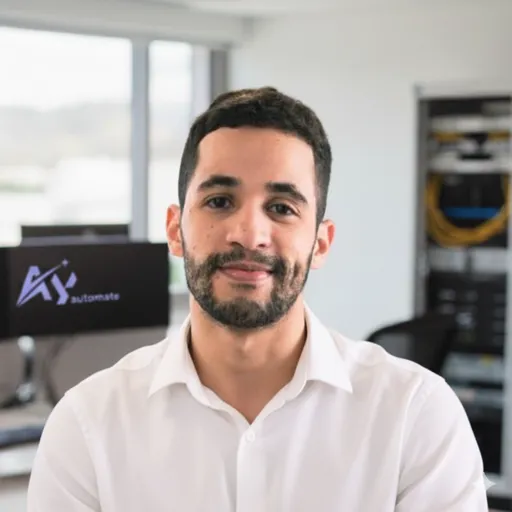
Walid founded AY Automate to help businesses ship AI workflows that actually move revenue. He leads strategy and oversees every client engagement end-to-end.
Full Bio →