Book a Free Strategy Call
Skip the read: talk to Walid in 30 min.
Free strategy call. We map your AI engineering team, you keep the notes.
Originally published March 2026. Updated July 2026.
In March 2026, a forgotten checkbox in Anthropic's CMS accidentally exposed what may be the most powerful AI model ever built. Whether you're comparing Claude vs ChatGPT, tracking AI agents, or worried about AI job displacement, here's everything you need to know.
GPT-5.4: OpenAI Raises the Bar (Again)
OpenAI launched GPT-5.4 in March 2026, billing it as its "most capable and efficient frontier model for professional work." For anyone in the Claude vs GPT-5 debate, this release matters. The new model ships in three versions: standard, a reasoning-focused "Thinking" variant, and a performance-optimized "Pro" tier. With a context window of up to 1 million tokens, GPT-5.4 can process enormous volumes of information in a single session.
OpenAI claims GPT-5.4 is 33% less likely to make factual errors than its predecessor, and it set new benchmark records for law and finance professionals. Its GDPval score of 83%, meaning it matches or exceeds industry professionals in 83% of tasks across 44 occupations, is one of the strongest real-world capability benchmarks published in 2026. The pace of iteration is remarkable: GPT-5, 5.2, 5.3, and 5.4 have all shipped within roughly eight months.
GPT-5.4 also introduces Computer Use, letting the AI move your mouse, click buttons, and finish tasks in Excel or your browser autonomously. It scored 75% on the OSWorld benchmark for real-world computer use. On the API side, the new Tool Search system is a direct bet on AI agents, letting models look up tools dynamically rather than loading every definition upfront.
But when choosing the best AI model in 2026, GPT-5.4 is no longer the only headline.
Claude vs ChatGPT 2026: Why Claude Is Catching Up Fast
For anyone comparing ChatGPT vs Claude in 2026, the numbers tell a striking story. According to an analysis of credit card data from approximately 28 million U.S. consumers, Anthropic's Claude has more than doubled its paid subscriber base this year, with record growth between January and February.
What sparked the surge? Two things: clever Super Bowl ads that mocked ChatGPT's decision to show ads to users (and promised Claude never would), and a very public, headline-grabbing feud with the U.S. Department of Defense. Anthropic's CEO Dario Amodei publicly refused to allow Claude to be used for lethal autonomous military operations or mass surveillance. OpenAI, by contrast, signed a DoD deal and saw an immediate spike in uninstalls. In the ChatGPT vs Claude vs Gemini competition, brand trust has now become as important as benchmark scores.
Claude Code, Claude Cowork, and the new Computer Use feature, which allows Claude to independently navigate a computer, have also driven a wave of new subscriptions among developers and power users. Claude Sonnet 4.6 recently reached 72.5% on the OSWorld benchmark, approaching functional parity with human performance for computer use tasks.
For businesses evaluating which AI to adopt, the choice increasingly comes down to values alignment as much as raw capability. If your organization needs an AI partner that refuses military contracts and won't monetize your conversations with ads, Claude is the clear pick. If you need the broadest ecosystem and deepest third-party integrations, ChatGPT still leads.
Claude vs GPT-5.4: Head-to-Head Benchmarks
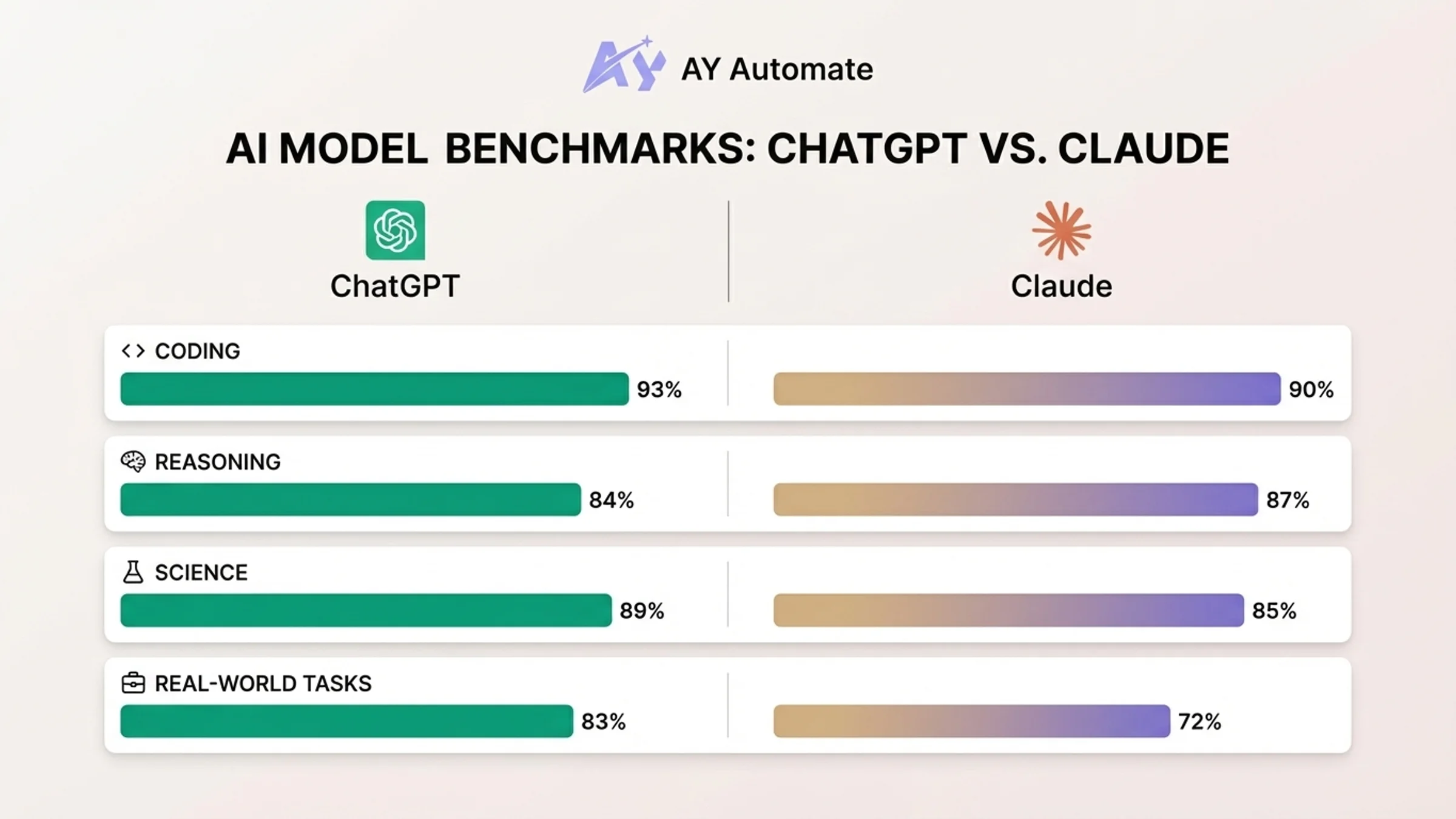
Before diving into the Mythos leak, here's where the two flagship models stand today. This comparison covers Claude Opus 4.6 against GPT-5.4 across every dimension that matters for professional use.
| Category | Claude Opus 4.6 | GPT-5.4 | Winner |
|---|---|---|---|
| Coding (HumanEval) | 90.4% | 93.1% | GPT-5.4 |
| Coding (SWE-bench Verified) | 80.8% | 77.2% | Claude |
| Coding (SWE-bench Pro, hard tasks) | ~45.9% | 57.7% | GPT-5.4 |
| Reasoning (GPQA Diamond) | 87.4% | 83.9% | Claude |
| Science (MMLU-Pro) | 85.1% | 88.5% | GPT-5.4 |
| Real-world job tasks (GDPval) | Not published | 83% | GPT-5.4 |
| Computer use (OSWorld) | 72.5% (Sonnet 4.6) | 75% | GPT-5.4 |
| Context window (standard) | 200K tokens | 128K tokens | Claude |
| Context window (max) | 1M tokens (API) | 1M tokens | Tie |
| Native image generation | No | Yes (DALL-E) | GPT-5.4 |
| Video generation | No | Yes (Sora) | GPT-5.4 |
Pricing comparison (API):
| Model | Input (per 1M tokens) | Output (per 1M tokens) | Consumer subscription |
|---|---|---|---|
| Claude Opus 4.6 | $5.00 | $25.00 | $20/month (Pro) / $200/month (Max) |
| Claude Sonnet 5 | $2.00 (intro) | $10.00 (intro) | Included in Pro |
| GPT-5.4 | $2.50 | $15.00 | $20/month (Plus) / $200/month (Pro) |
The takeaway: Claude Opus 4.6 leads in standard coding benchmarks and PhD-level reasoning. GPT-5.4 wins on hard coding problems, real-world professional tasks, and cost efficiency. For most developers, GPT-5.4 is the better default at a fraction of the API cost. For complex, multi-file software engineering, Claude Opus 4.6 remains the model to beat.
For a full side-by-side of every current Anthropic model, including context windows, pricing, and benchmark scores, see our model comparison page.
Claude's unique Agent Teams feature lets you split a task across multiple Claude agents (one handling backend, another frontend, another running tests), a capability GPT-5.4 doesn't match yet.
GPT-5.6 Sol Ultra: OpenAI's June 2026 Update
The benchmark comparison above reflects the state of play from early 2026. Since then, OpenAI has moved again. On June 26, 2026, the company previewed GPT-5.6, a three-tier model family built as durable capability tiers rather than an incremental version bump.
The three tiers:
- Sol (flagship): designed for the hardest problems, including complex coding, agentic workflows, and security research. An optional compute-intensive mode called Sol Ultra pushes performance further at higher cost.
- Terra (workhorse): GPT-5.5-level performance at roughly half the cost, aimed at high-volume business tasks like support, internal tools, and document analysis.
- Luna (fast lane): the lowest-cost tier, targeting summarization, drafting, and routine automation at near-GPT-5.5 quality.
On TerminalBench 2.1, the agentic command-line benchmark, GPT-5.6 Sol Ultra scores 91.9, putting it ahead of Claude Fable 5 (80.4) on that specific task type. Sol in standard mode scores 88.8. These figures cover command-line agentic tasks specifically; results on broader reasoning or writing benchmarks had not been published at time of writing.
Codex integration and access
Early access to GPT-5.6 rolls out through the API and Codex, initially limited to approximately 20 vetted partner organizations. OpenAI shared the release plan with the U.S. government before the public preview, continuing the same pattern established with Anthropic's Fable 5 launch. General availability is expected in the coming weeks; no firm date has been published.
Pricing for Sol: $5 per million input tokens and $30 per million output tokens. Terra runs at $2.50 input / $15 output. Luna is $1 input / $6 output.
What GPT-5.6 means for Claude vs ChatGPT
GPT-5.6 Sol narrows the lead Claude Fable 5 established on agentic coding tasks. On broader benchmarks covering reasoning, long-context handling, and writing quality, results across both platforms remain competitive and task-dependent. For a detailed look at where Fable 5 stands today, see our Claude Fable 5 vs Opus 4.8 breakdown.
What remains unknown: how Sol Ultra performs outside TerminalBench, its scores on PhD-level reasoning benchmarks like GPQA Diamond, and whether the restricted rollout will limit adoption before general availability. A full GPT-5.6 vs Claude Fable 5 head-to-head is planned once general access opens.
The Claude Mythos Leak: Anthropic's Most Powerful AI Model Ever
Here's the story that dominated AI news in March 2026: a single misconfigured CMS setting just exposed Anthropic's next flagship model, and what it revealed is extraordinary.
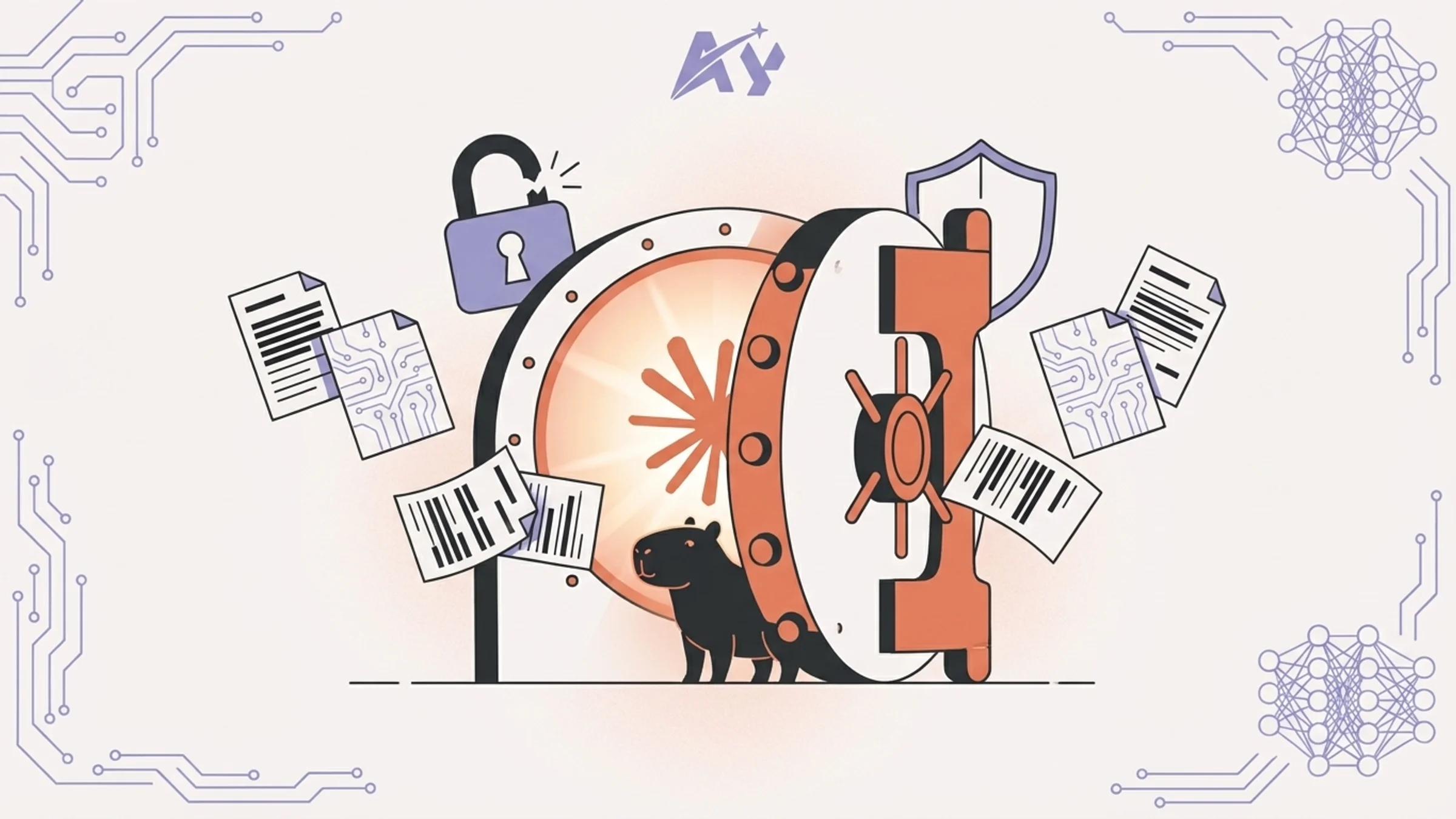
On March 26, 2026, security researchers discovered that a default "public" setting in Anthropic's content management system had accidentally made nearly 3,000 internal unpublished assets searchable online. Among them: a draft blog post describing Claude Mythos, also referred to internally by its product name "Claude Capybara." Our full writeup on Claude Mythos covers everything the leak revealed.
What is Claude Mythos / Claude Capybara?
The leaked draft describes Mythos as a brand-new model tier that sits entirely above Anthropic's current flagship Opus line, making it the most powerful AI model Anthropic has ever built. The current model lineup goes Haiku, Sonnet, Opus. Capybara would sit above all three as a new, fourth tier.
Anthropic confirmed the model exists, stating: "We're developing a general purpose model with meaningful advances in reasoning, coding, and cybersecurity... We consider this model a step change and the most capable we've built to date."
What the benchmarks show
Compared to Claude Opus 4.6, Capybara gets "dramatically higher" scores on software coding, academic reasoning, and cybersecurity benchmarks. The leaked documents describe Claude Mythos as "currently far ahead of any other AI model in cyber capabilities."
| Capability | Claude Opus 4.6 | Claude Mythos (leaked) |
|---|---|---|
| Coding benchmarks | Current flagship | "Dramatically higher" |
| Academic reasoning | 91.3% GPQA Diamond | Exceeds Opus |
| Cybersecurity | Strong | "Far ahead of any other AI model" |
| Long-horizon agentic tasks | Available | Record scores reported |
| Model tier | Top tier (Opus) | New tier above Opus |
| General availability | Available now | Restricted early access only |
The cybersecurity concern
The most alarming detail? The leaked documents warn that Mythos "presages an upcoming wave of models that can exploit vulnerabilities in ways that far outpace the efforts of defenders." Because of these cybersecurity risks, Anthropic is restricting early access to cyber defense organizations only, giving them time to harden their systems before broader release. The draft also notes that the model is expensive to run and not yet ready for general release.
Cybersecurity stocks dropped following the leak, reflecting market anxiety about a model that could fundamentally shift the offense-defense balance in cyber warfare.
Fable 5 (the model Anthropic shipped as the follow-on to Opus) launched June 9, 2026, and is now the current frontier model.
The AI Skills Gap: Why Power Users Are Pulling Ahead
Beyond the Claude vs ChatGPT debate, perhaps the most quietly important AI story right now is the AI skills gap, and it has significant implications for workers everywhere.
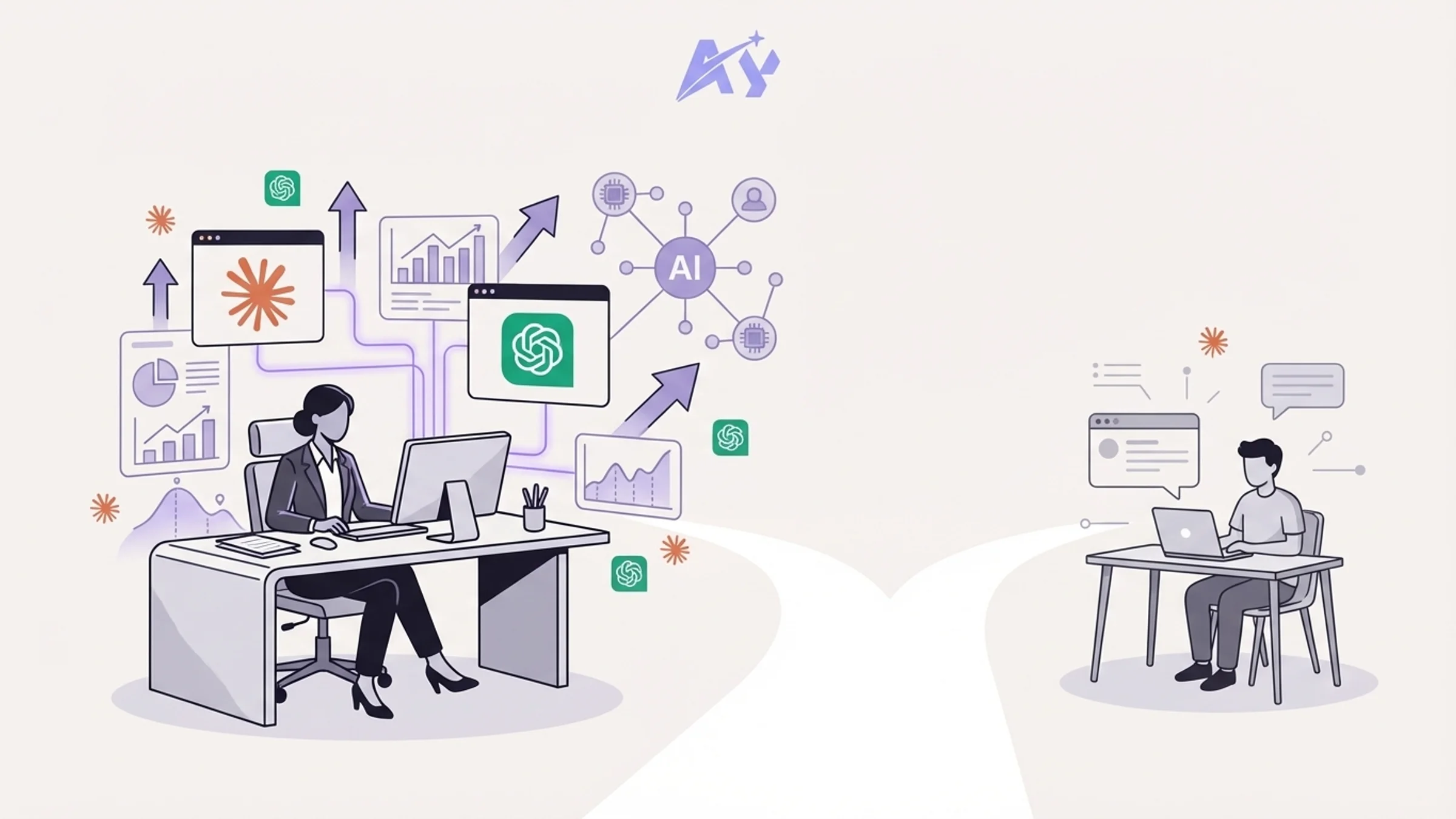
Anthropic's fifth economic impact report, released in March 2026, found that while AI has not yet caused widespread job displacement, early adopters are pulling far ahead. Power users deploy Claude as a "thought partner" for complex, iterative work, while newer users rely on it only for simple, one-off tasks. This growing divide is creating measurable workplace advantages for experienced AI users.
The theory vs. practice gap
The report reveals a striking disconnect. For computer and math workers, large language models are theoretically capable of handling 94% of their tasks, yet Claude currently covers only 33% in observed professional use. The gap between theoretical and observed exposure is consistently 50 to 65 percentage points across occupational categories. This means the real-world impact of AI depends almost entirely on how deeply you learn to use it.
Peter McCrory, Anthropic's head of economics, noted: "This points in the direction of AI being a skills-biased technology. It might potentially reinforce differences in outcomes among those who have higher skills at getting value out of these tools."
Who's at risk?
Anthropic's CEO Dario Amodei has predicted AI could eliminate up to half of all entry-level white-collar jobs, pushing unemployment to 20% within five years. The gap isn't evenly distributed: Claude is used most intensely in high-income countries and high-density knowledge-worker cities, meaning AI may amplify existing economic inequalities rather than flatten them.
| AI skills gap dimension | Current state |
|---|---|
| Theoretical task coverage (computer/math workers) | 94% of tasks |
| Observed actual coverage | 33% of tasks |
| Theory-practice gap | 50-65 percentage points |
| Power user advantage | Measurable productivity gains |
| Geographic concentration | High-income countries, knowledge-worker cities |
| Projected job impact (worst case) | Up to 50% of entry-level white-collar jobs |
For organizations evaluating AI strategy consulting, the message is clear: the companies that invest in upskilling their teams now will compound their advantage. Those that wait risk falling behind permanently. One way to close the gap quickly is through AI engineer placement, bringing in pre-vetted engineers who already have deep experience with these tools and can accelerate your team's adoption.
AI Agents in 2026: The Next Frontier
The single hottest-trending AI search term right now, according to Google Trends, is AI agents. And the market data backs up the hype. The global AI agents market reached approximately $7.8 billion in 2025 and is projected to exceed $10.9 billion in 2026, growing at a compound annual growth rate of 40.5% toward $139 billion by 2034.
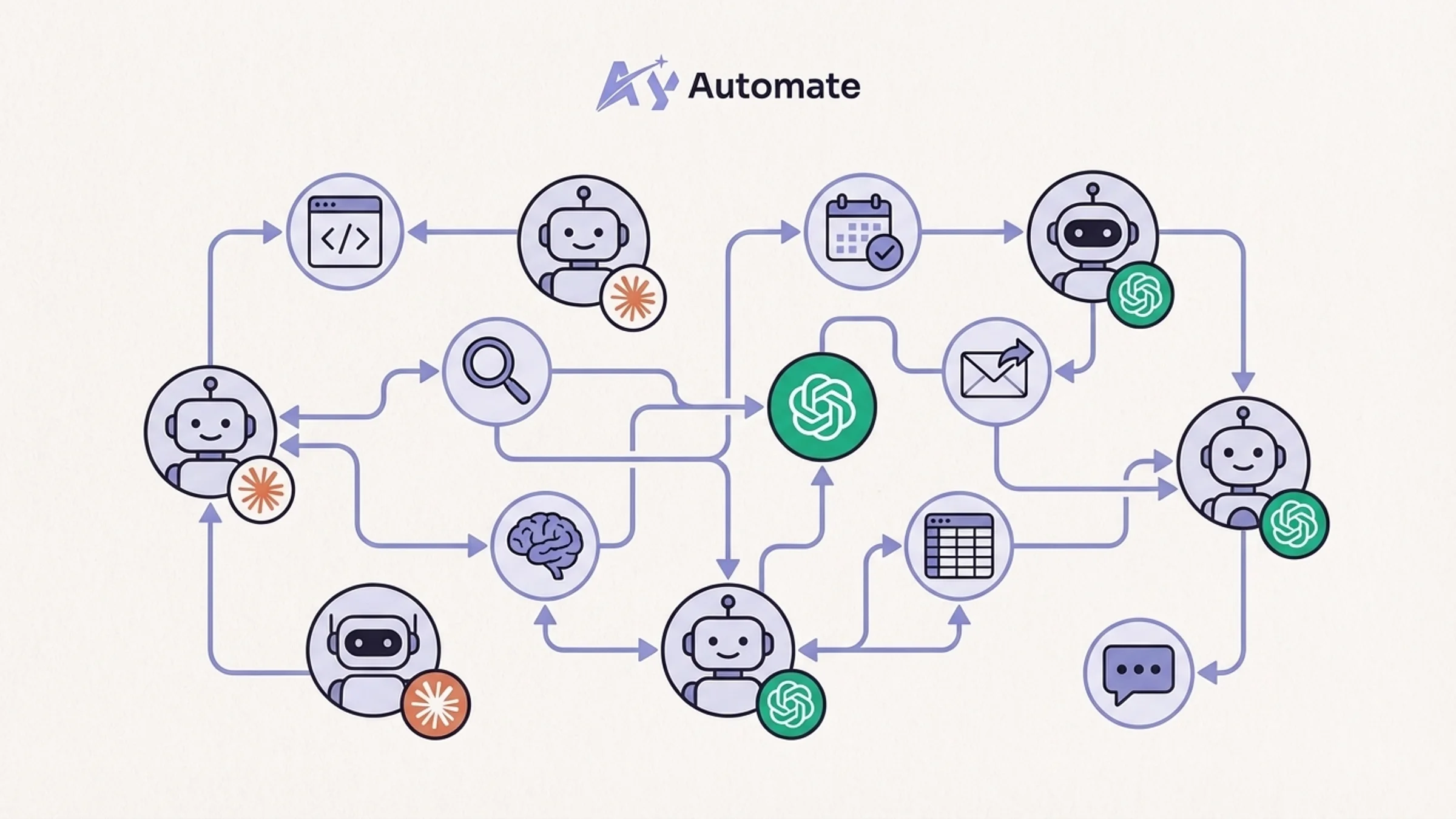
Every major lab is racing to build autonomous systems that can plan, decide, and execute multi-step tasks on their own: booking travel, writing code, managing customer service, filing reports, all without needing a human at every step. Approximately 72% of Global 2000 companies now operate AI agent systems beyond experimental testing phases, and 86% of enterprise respondents said their AI budget will increase in 2026.
Where each platform stands on agents
OpenAI's new Tool Search system in GPT-5.4 lets models look up tools dynamically rather than loading every definition upfront. Anthropic's Computer Use feature, now available in Claude, lets the model autonomously navigate a computer. Claude's Agent Teams splits complex work across multiple specialized agents. And with Claude Mythos reportedly scoring records on "long-horizon" agentic tasks involving complex deliverables like financial models and legal analysis, the agent race is accelerating fast.
| AI agent capability | Claude | ChatGPT (GPT-5.4) | Gemini |
|---|---|---|---|
| Computer use | Yes (72.5% OSWorld) | Yes (75% OSWorld) | Limited |
| Multi-agent orchestration | Agent Teams | Not yet | Not yet |
| Dynamic tool discovery | Yes | Tool Search | Yes |
| Long-horizon agentic tasks | Strong (Fable 5: record scores) | Strong | Moderate |
| Enterprise adoption rate | Growing fast | Largest user base | Google ecosystem |
For businesses, AI agents represent the next major productivity wave. Companies that implement AI agents report revenue increases of 3% to 15% and a 10% to 20% boost in sales ROI. For workers, they represent the next wave of automation risk. Either way, they're arriving faster than most people expect.
For enterprises that need autonomous agents with built-in security and compliance guardrails, OpenClaw and NemoClaw enterprise setup provides a framework for deploying agents that operate safely within corporate infrastructure.
If you're exploring how to build custom AI agents for your business workflows, the technology is mature enough to deploy today, not in some distant future.
Claude vs ChatGPT vs Gemini: Who Wins in 2026?
For the head-to-head comparison: in 2026, the answer is "it depends on your use case," but the competitive landscape has shifted meaningfully.
| Platform | Best for | Biggest weakness | Trust factor |
|---|---|---|---|
| ChatGPT (GPT-5.4) | Broadest integrations, professional research, law, finance | DoD partnership backlash, ad monetization concerns | Mixed |
| Claude (Opus 4.6) | Coding, reasoning, safety-conscious enterprise use | No native image/video generation, higher API cost | High (no ads, no military use) |
| Gemini (Google) | Google ecosystem users, Android, Search integration | Less competitive on coding benchmarks | Moderate |
ChatGPT (OpenAI) remains the biggest consumer platform by subscriber count, with the most brand recognition and the broadest integrations. GPT-5.4 is a formidable tool for professional research, legal work, and finance. But OpenAI's DoD partnership and its ad strategy have caused real trust damage with a segment of users.
Claude (Anthropic) is growing faster right now, and Fable 5, released June 9, 2026, represents that capability leap and is now the current flagship. Anthropic's principled stance on safety and military use is resonating with both individual consumers and enterprise buyers. Claude Code and Agent Teams give developers capabilities no other platform matches.
Gemini (Google) remains a strong contender for users inside the Google ecosystem, with deep integration into Search, Workspace, and Android. Its Nano Banana Pro image generation model is the strongest native multimodal offering.
The best AI model in 2026 is whichever one you learn to use most deeply, because the data is clear: it's not which AI you pick, it's how far you push it.
What This All Means for You
The AI landscape of 2026 is competitive, fast-moving, and increasingly consequential. A forgotten checkbox just revealed the most powerful AI model ever built. A skills gap is already separating those who use AI deeply from those who use it casually. And AI agents are beginning to automate entire categories of knowledge work.
Here's what you should do right now:
- Pick one AI tool and go deep. The data shows that power users who treat AI as a thought partner gain measurable advantages over casual users. Whether you choose Claude or ChatGPT, invest time in learning its advanced features
- Track Fable 5's rollout. It launched June 9, 2026, was briefly restricted on June 12 due to export controls, and returned globally on July 1. Fable 5 is now available on the API and in Claude.ai Pro/Team.
- Start experimenting with AI agents. With 72% of Global 2000 companies already running agent systems in production, this isn't early-adopter territory anymore. It's table stakes
- Close the skills gap before it closes you out. If you're a manager, invest in custom AI training for your team. If you're an individual contributor, dedicate time each week to pushing your AI tool beyond simple prompts
If you're not paying close attention to the Claude vs ChatGPT vs Gemini race, and especially to Fable 5 and what Anthropic's compliance with US export controls reveals about frontier AI risk, now is the time to start.
Sources: Anthropic Economic Impact Report (March 2026), Fortune, TechCrunch, The Decoder, Google Trends (March 2026)
FAQ
What is the difference between Claude and ChatGPT in 2026?
Claude (built by Anthropic) leads in coding benchmarks, PhD-level reasoning, and safety-first policies including refusing military contracts. ChatGPT (built by OpenAI) leads in ecosystem breadth, native image/video generation, and real-world professional task benchmarks. Both cost $20/month for consumer subscriptions, but Claude's API pricing is higher at the Opus tier.
Is Claude better than ChatGPT for coding?
On standard coding benchmarks like SWE-bench Verified, Claude Opus 4.6 scores 80.8% compared to GPT-5.4's 77.2%. However, GPT-5.4 outperforms Claude on harder coding problems (SWE-bench Pro: 57.7% vs ~45.9%). For complex, multi-file software engineering projects, most developers report Claude produces cleaner code and handles architectural decisions better, a gap our [Claude vs ChatGPT for coding](/blog/claude-vs-chatgpt-for-coding) comparison breaks down task by task.
What is Claude Mythos?
Claude Mythos (internal codename: Capybara) is Anthropic's unreleased next-generation model, accidentally revealed through a CMS data leak on March 26, 2026. It sits above the current Opus tier as an entirely new model class, scoring "dramatically higher" than Claude Opus 4.6 on coding, reasoning, and cybersecurity benchmarks. Anthropic has confirmed it exists but hasn't announced a public release date. Update July 2026: Fable 5, released June 9, 2026, is the model that shipped as the successor to Opus. The "Mythos" name refers to the model as described in the March 2026 leak.
Which AI model is best for business use in 2026?
It depends on your use case. ChatGPT (GPT-5.4) is best for teams that need broad integrations, image generation, and professional research tools. Claude is best for engineering teams, safety-conscious enterprises, and organizations that need advanced coding and reasoning. Gemini is best for businesses already deep in the Google ecosystem. For custom AI automation that combines multiple models, working with a specialist agency often delivers better results than picking a single platform.
What is the AI skills gap?
The AI skills gap refers to the growing divide between workers who use AI tools deeply (power users) and those who use them only for simple tasks. Anthropic's March 2026 economic report found that AI can theoretically handle 94% of computer and math tasks, but actual professional use covers only 33%. The gap creates measurable workplace advantages for power users and may amplify existing economic inequalities.
How much does Claude cost compared to ChatGPT?
Both offer consumer subscriptions at $20/month. Claude Max ($200/month) includes unlimited Opus 4.6 with Agent Teams. ChatGPT Pro ($200/month) includes the enhanced GPT-5.4 Pro model. On the API side, GPT-5.4 is significantly cheaper: $2.50/$15 per million tokens (input/output) compared to Claude Opus 4.6 at $5/$25. Claude Sonnet 5 ($2/$10 intro, until Aug 2026) is priced closer to GPT-5.4.
Will AI agents replace jobs in 2026?
Not yet at scale, but the trend is accelerating. Approximately 72% of Global 2000 companies now operate AI agent systems in production. Anthropic's CEO has predicted AI could eliminate up to half of entry-level white-collar jobs within five years. The most immediate impact is in customer service, finance operations, and marketing automation, where AI agents are already handling tasks that previously required human workers.
Is GPT-5.6 available?
As of early July 2026, GPT-5.6 (Sol, Terra, and Luna) is in limited preview, accessible through the API and Codex to approximately 20 vetted partner organizations. OpenAI has indicated general availability is coming in the following weeks but has not published a firm date. The restricted rollout follows the same government-first pattern used for Anthropic's Fable 5 release.
GPT-5.6 vs Claude: which is better?
On TerminalBench 2.1, an agentic command-line benchmark, GPT-5.6 Sol Ultra scores 91.9 compared to Claude Fable 5's 80.4 on that specific task type. On broader benchmarks covering reasoning, long-context work, and coding, the two platforms remain closely matched and results depend on the task. Claude Fable 5 retains advantages in multi-agent orchestration and safety-aligned enterprise deployments. Sol Ultra is priced at $5 input / $30 output per million tokens, higher than Claude Sonnet 5 ($3 / $15) and comparable to Fable 5 at the flagship tier.
What is the best AI model overall in 2026?
As of March 2026, Claude Opus 4.6 and GPT-5.4 are the two leading models, each with distinct strengths. Fable 5, released June 9, 2026, is now the current frontier model and surpasses both on most benchmarks. The honest answer is that the best AI model is whichever one you invest time in learning deeply. Power users consistently outperform casual users regardless of which platform they choose.
Continue Reading
AI agent production-readiness audit: the checklist before you give it real permissions
A framework for checking permission scope, kill switches, and monitoring before an AI agent gets write access to real systems, built around the September 2026 OpenAI-Hugging Face incident and UN safeguards report.
GPT-6 Sol and Luna: What OpenAI's Cheaper Model Tiers Mean for Automation
OpenAI released updated GPT-6 Sol and Luna on September 22, 2026 at half the API cost of their GPT-5.6 predecessors, positioned below GPT-6 Astra. Here is what the three-tier lineup means for routing automation tasks by cost and complexity.
Claude Opus 5.5: What Changed, What It Costs, and Whether to Migrate
Anthropic released Claude Opus 5.5 on September 22, 2026, at $4/$20 per million tokens and a reported 40% lower cost than Opus 5 on typical workloads. Here is what the pricing and breaking changes mean for teams running Claude-based agents in production.
Book a Free Strategy Call
Building this in production?
Walid runs a 30-min call to map your AI engineering team. Free, no slides.
Free weekly brief
Steal our production automations
The exact n8n flows, Claude Code setups, and prompts we ship for clients, broken down step by step. No spam, unsubscribe anytime.

Ex-IBM AI engineer and enterprise architect. Adel owns the technical architecture behind every automation and AI agent system AY Automate ships.


