
Three.js
The JavaScript library that brought 3D to the web
- Best for
- 3D web experiences and visualizations
- Pricing
- Free and open-source (MIT)
- Stack layer
- Frontend Stack
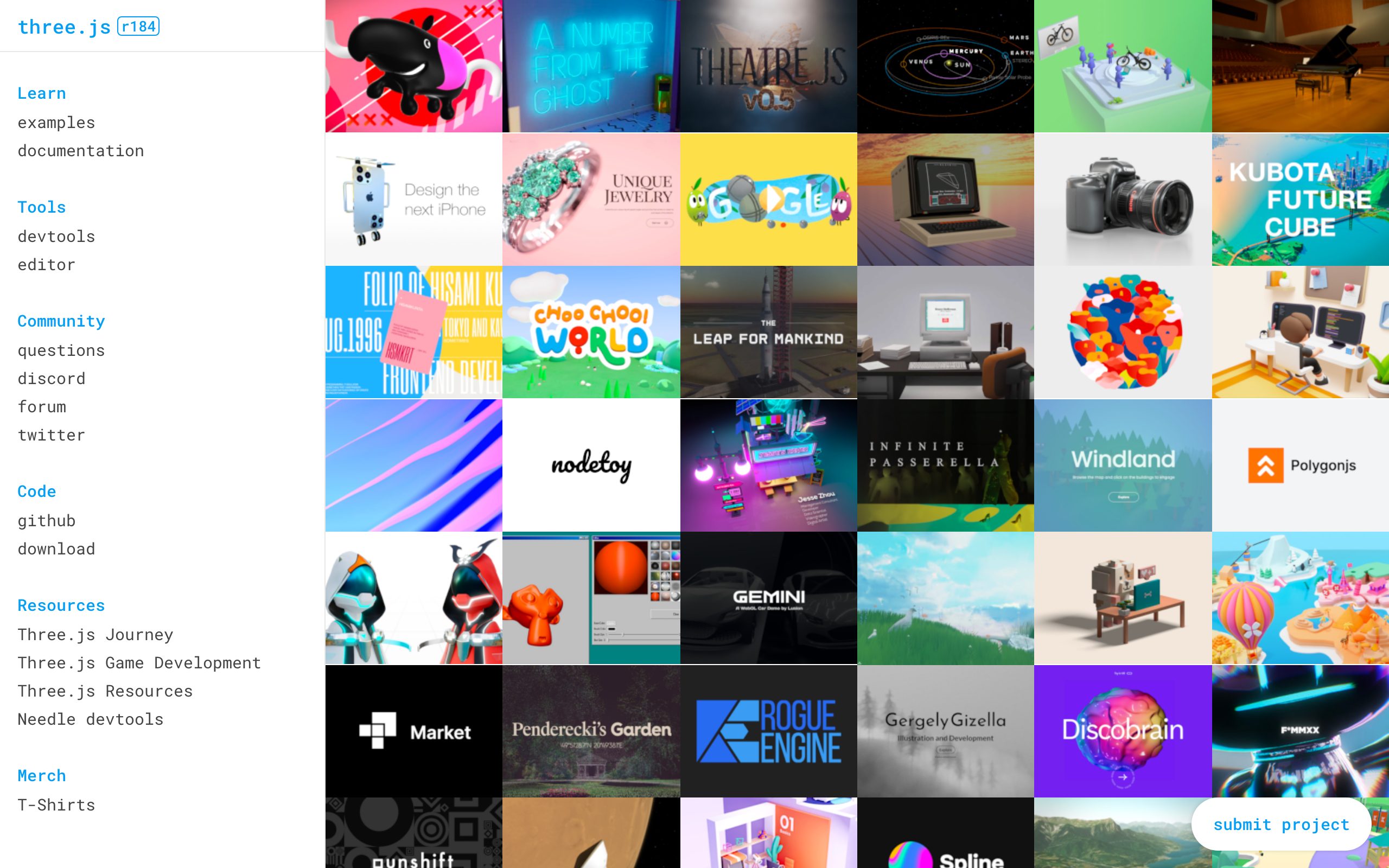
Live preview of threejs.org
Overview
Three.js abstracts the complexity of WebGL into a developer-friendly API, making 3D graphics accessible to web developers without GPU programming expertise. From product configurators to data visualizations to immersive experiences, Three.js powers the majority of 3D content on the web.
The library handles the fundamentals - scenes, cameras, lighting, materials, geometries, and rendering - with sensible defaults that produce good results immediately. As your needs grow, the API scales to support custom shaders, post-processing effects, and physics simulations.
React Three Fiber (R3F) brings Three.js into the React ecosystem with a declarative component API. This combination has made 3D web development significantly more accessible, letting React developers build 3D scenes using the same patterns they use for 2D interfaces.
Key Features
High-Level API
Scenes, cameras, lights, and materials without raw WebGL
Rich Material System
PBR materials, custom shaders, and environment mapping
Geometry & Loaders
Built-in geometries and loaders for glTF, OBJ, FBX models
Post-Processing
Bloom, depth of field, SSAO, and custom shader effects
React Three Fiber
Declarative React components for Three.js scenes
Massive Community
Thousands of examples, tutorials, and helper libraries
Why We Recommend Three.js
When clients need 3D elements on their websites - product visualizations, interactive backgrounds, data visualizations - Three.js with React Three Fiber is our standard approach. The combination of Three.js power and React ergonomics makes 3D development productive.