Book a Free Strategy Call
Skip the read: talk to Walid in 30 min.
Free strategy call. We map your AI engineering team, you keep the notes.
AI powered marketing automation uses agent workflows to run campaign cycles end-to-end: audience segmentation, copy generation, A/B testing, and performance reporting, without a human triggering each step. Teams that implement it correctly reduce campaign cycle time from weeks to hours. This isn't science fiction anymore. It’s the reality of modern AI powered marketing automation, a leap beyond simple trigger-based emails into an era of intelligent AI agents managing complex campaigns.
The New Era of Autonomous Marketing
The whole conversation around marketing automation has changed. We're no longer talking about off-the-shelf software with rigid "if-this-then-that" rules. The game now is all about building custom AI solutions that truly act as an extension of your team, reaching a level of efficiency and growth that was impossible just a few years ago.
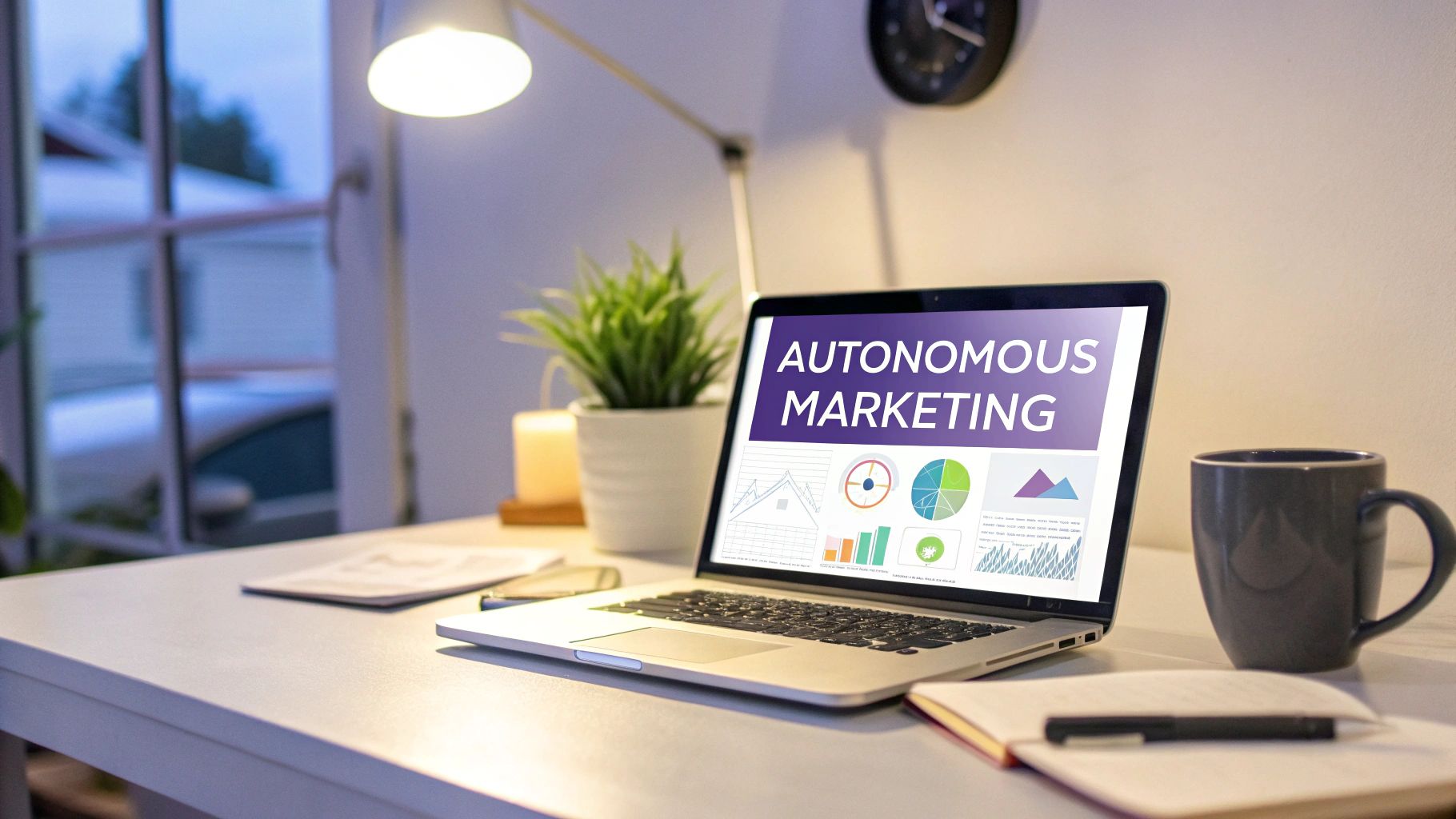
These are more than dumb bots. They’re systems designed to think, adapt, and handle tasks that once required a human marketer's full attention.
The market is exploding because of it. Valued at $6.65 billion in 2024, the global marketing automation space is expected to rocket past $15 billion by 2030. This is more than a small uptick; it's a massive signal that businesses are going all-in on AI to get ahead of the competition.
Building Your AI-Powered Team
But here’s the catch: you can't just buy this kind of advantage off the shelf. Getting these advanced systems up and running requires real expertise. It’s less about the tool and more about the talent you have building and managing it. For founders and CTOs, this makes strategic team-building absolutely critical.
We're seeing two main approaches that work best:
- AI-Adopted Engineer Placements: This is where you bring a dedicated, pre-vetted AI engineer directly into your team. They don't just build your custom solutions; they transfer their knowledge, effectively upskilling your entire internal crew along the way.
- AI Team Augmentation: Need more firepower? This model gives you access to a complete external squad of AI experts. They can take on your entire AI initiative, from high-level strategy and deployment all the way through to ongoing optimization.
The real magic happens when you create a smooth blend of human oversight and machine execution. This ensures your AI-powered marketing is working and is perfectly aligned with your core business goals.
The Importance of Continuous Learning
In this space, if you’re not learning, you’re falling behind. Continuous training isn't a "nice-to-have"; it's non-negotiable.
Specialized AI workshops are how you keep your development teams sharp. For example, getting your engineers hands-on with modern coding assistants like Cursor or powerful LLMs like Claude gives them the skills to build smarter, more reliable automations. Workshops focused on platforms like Weavy.ai or tools like Cursor that speed up code for dev teams are essential investments. You can learn more about how all these processes connect in our guide on what is workflow automation.
This commitment to education is what turns AI from a simple tool into a core engine for scalable growth.
Related Reads
So, How Does This AI Automation Thing Actually Drive Growth?
Let's cut through the buzzwords. What does AI-powered marketing automation really do for your business? In short, it turns mountains of complex data into real-world results. It gives your marketing team superpowers, letting them make smarter decisions faster and execute campaigns at a scale that's flat-out impossible for humans alone.
Think of it as a powerful, data-obsessed engine for your marketing. Instead of running on gut feelings or last year's trends, AI agents are constantly analyzing customer behavior in real time to predict what they'll do next. This flips the script entirely, turning marketing from a reactive, "let's see what happens" function into a strategic growth driver.
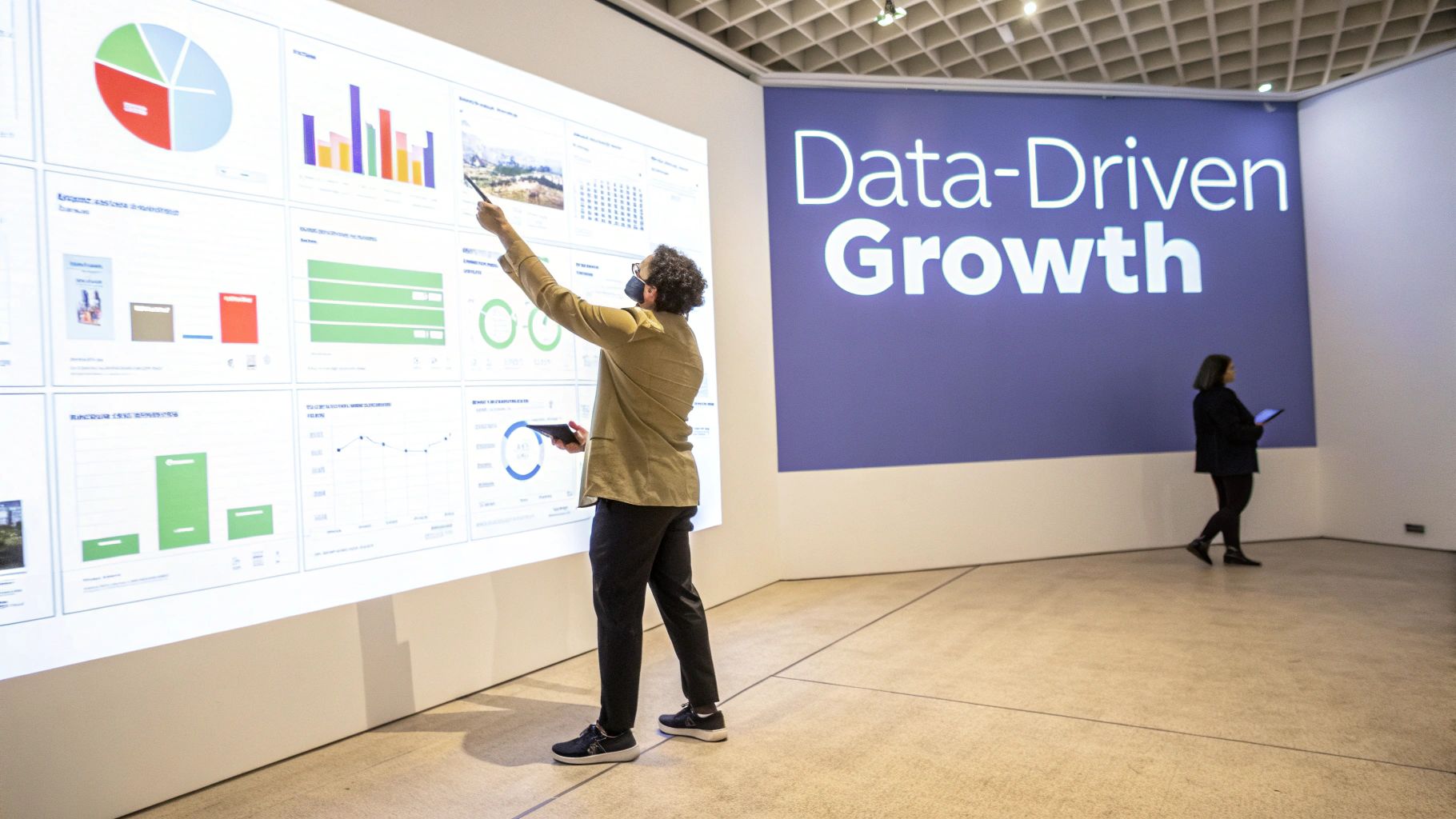
The practical outcome? You can finally move away from broad, one-size-fits-all campaigns. It's about launching laser-focused initiatives that genuinely connect with individual customers, which naturally boosts conversions and slashes what you spend to acquire them.
Predictive Analytics for Cherry-Picking the Best Leads
One of the first places you'll see a massive impact is in lead qualification. Old-school marketing automation might tag a lead as "interested" because they downloaded a whitepaper. AI takes that idea and puts it on steroids.
AI agents use predictive analytics to chew through thousands of data points at once: everything from clicks on your website and social media comments to company size and industry data. By spotting the hidden patterns that your best customers share, the AI can score and prioritize new leads with uncanny accuracy.
What does this mean for your sales team? They stop wasting their days chasing lukewarm prospects. Instead, they get a prioritized feed of red-hot leads who are most likely to buy, delivered instantly. Even better, they get a handy summary of each lead's interests and digital body language.
Hyper-Personalization That Finally Scales
Every marketer preaches the gospel of personalization. The problem has always been doing it for thousands, or even millions, of customers without an army of people. This is the scalability problem that AI was born to solve.
AI makes hyper-personalization a reality by dynamically tailoring every single customer touchpoint based on their unique journey and behavior.
Picture an e-commerce site where the homepage, the product recommendations, and even the discount offers change in real-time for every visitor. That’s not science fiction; it’s what AI automation does. It creates these individualized experiences that make customers feel seen and understood, which is the secret sauce for building loyalty and maximizing lifetime value.
This goes beyond dropping a
{{first_name}}into an email. It’s about orchestrating millions of unique, one-to-one marketing conversations all at once, making sure the perfect message lands with the right person at the exact right moment.
Creative on Demand and A/B Testing at Lightspeed
Creative burnout is real, especially in digital advertising. The ad that killed it last week might be totally ignored today. AI systems tackle this head-on by automating both the creation and testing of ad variations at a frankly ridiculous speed.
Imagine an AI agent spinning up hundreds of unique ad creatives in minutes. It can then run tests on its own, mixing and matching different combinations of:
- Headlines: Writing snappy copy designed for different audience segments.
- Images & Videos: Picking, or even generating, visuals most likely to stop the scroll.
- Calls-to-Action (CTAs): Tinkering with button text to find out what actually makes people click.
A job that would take a human team weeks of painstaking work can be knocked out by an AI in an afternoon. This non-stop optimization cycle means your ad budget is always flowing to the highest-performing assets, pushing your ROI sky-high. When you can test at this volume, you uncover winning formulas much, much faster than your competition.
Free weekly brief
Steal our production automations
The exact n8n flows, Claude Code setups, and prompts we ship for clients, broken down step by step. No spam, unsubscribe anytime.
Building Your AI-Powered Marketing Team
Even the most sophisticated AI-powered marketing automation is just a tool. And like any tool, it’s only as good as the hands that wield it. Technology alone won’t get you across the finish line; you need the right human expertise, a marketing automation agency built for exactly this, to steer the ship and turn powerful platforms into a real competitive advantage.
This is exactly where a lot of companies trip up. They get so focused on the "what" (the AI) that they completely forget about the "who" (the talent needed to make it work).
For founders and CTOs, figuring out how to assemble this talent is a massive strategic decision. You can't just post a job for a "marketing AI person" and hope for the best. The skills you need are a rare mix of marketing intuition, data science chops, and solid engineering. Luckily, a couple of proven models have emerged to help companies get this expertise without years of painful trial and error.
The two main strategies are AI-adopted engineer placements and AI team augmentation. Both solve the same core problem, bridging the talent gap, but they offer very different paths to get there. Which one is right for you depends entirely on your internal resources, your long-term goals, and how fast you need to get things done.
AI Engineer Placements: The Inside-Out Approach
Imagine dropping a pre-vetted AI expert right into your existing marketing or dev team. That’s the big idea behind AI engineer placement. It’s an inside-out strategy focused on building a durable, long-term capability within your own four walls.
This model is about so much more than just outsourcing a single project. It’s a strategic move designed to transfer critical knowledge. The engineer doesn't just build your custom AI workflows and agents; they become a mentor, teaching your team how to think and work with AI. They’ll introduce best practices, bring in new tools, and upskill your staff just by working alongside them.
The ultimate benefit here is creating a self-sufficient team. Over time, your own people get comfortable managing, maintaining, and even expanding your AI systems. This cuts down your long-term reliance on outside consultants and helps you build a powerful, in-house center of excellence.
AI Team Augmentation: The Outside-In Solution
But what if you need to move fast? Or what if you just don't have the internal bandwidth to manage a new AI hire? This is where AI team augmentation really shines. Instead of getting one engineer, you get access to an entire, fully managed squad of external experts who run your AI initiatives for you.
This approach is perfect for companies that want to hit the accelerator on AI without the headache of recruiting, hiring, and managing a whole new team. The augmented team shows up with a diverse skill set (strategists, data scientists, developers, project managers) ready to attack your project from every angle. They take full ownership, from the initial discovery and roadmap all the way through implementation, QA, and ongoing optimization.
"Your job will not be taken by AI. It will be taken by a person who knows how to use AI." This quote nails a critical truth: the real edge is more than having AI, it's knowing how to master it.
The huge advantage here is speed and depth of expertise. You get instant access to a seasoned team that’s already solved similar problems for other companies. That means you can get production-grade solutions live much, much faster than you ever could by building a team from the ground up.
Talent Strategy Comparison: AI Engineer Placement vs. Team Augmentation
Choosing the right talent model is a major decision point. It’s more than about filling a role; it’s about aligning your talent strategy with your business objectives. One approach builds internal muscle for the long haul, while the other delivers immediate results with a fully managed, external powerhouse.
| Factor | AI Engineer Placement | AI Team Augmentation |
|---|---|---|
| Primary Goal | Build long-term internal capability and transfer knowledge. | Rapidly deploy AI solutions with immediate expert oversight. |
| Team Structure | A single expert is embedded within your existing team. | An entire external team manages the project for you. |
| Speed to Results | Slower initial ramp-up but builds sustainable momentum. | Faster initial deployment and immediate impact. |
| Best For | Companies wanting to own their AI roadmap and upskill staff. | Businesses needing to accelerate AI adoption without hiring. |
Ultimately, the best choice hinges on whether your priority is to learn how to fish or to get a truckload of fish delivered tomorrow. Both are valid strategies, but they serve different needs.
The Non-Negotiable Investment: Continuous Training
No matter which talent model you go with, one thing is absolutely non-negotiable: the need for continuous education. The world of AI moves at a blistering pace. The tools that were groundbreaking six months ago are probably standard practice today. In this game, stagnation is the same as moving backward.
Investing in specialized AI workshops isn't a "nice-to-have" anymore; it's essential for keeping your teams ahead of the curve. This is especially true for your developers, who are on the front lines building your custom automations.
The best workshops are all about practical, hands-on application of modern tools. For instance, sessions focused on AI-native code editors like Cursor can give your developers a massive productivity boost. Likewise, deep dives into the capabilities of advanced LLMs like Claude give your team the skills to build far more nuanced and powerful AI agents. This ongoing investment ensures your team is more than using AI; they're truly mastering it.
Designing Your First AI Agent and Workflow
Theory is great, but seeing this stuff in action is where the magic really happens. Let’s get our hands dirty and move from abstract ideas to actual blueprints. We're going to design a couple of high-impact AI agents and workflows that solve real business problems, turning your strategic goals into automated systems that just run.
The real key here is to think bigger than just one-off tasks. A truly powerful workflow stitches multiple tools and AI models together into a single, cohesive system. This is how you build a genuine digital employee, not a simple party trick alone.
Blueprint One: The Autonomous Social Media Manager
Imagine an AI agent that takes over your entire social media operation. I'm more than talking about scheduling a few posts; I mean managing the whole creative and strategic lifecycle from start to finish. This is a perfect example of a workflow that can free up dozens of hours every single week while actually improving your content and engagement.
Here’s a look under the hood:
- Content Ideation: First, the agent gets to work, scouring the web for industry trends, competitor posts, and hot hashtags. It then feeds all that intel into a Large Language Model (LLM) like Claude to brainstorm a fresh list of post ideas that sound just like you.
- Visual Creation: For every approved idea, the agent taps into an image generation API to whip up several on-brand visuals. It can create anything from slick professional graphics to realistic photos that perfectly match the post's vibe.
- Copywriting: At the same time, the LLM is drafting killer copy: catchy headlines, insightful captions, and all the right hashtags for each visual.
- Strategic Scheduling: Finally, the agent peeks at your social media analytics to pinpoint the absolute best times to post for your audience. It then schedules everything automatically to maximize your reach and impact.
You can build this entire process using a workflow platform like n8n or with your own custom code, plugging in different APIs for each step. The payoff is huge. Your marketing team is suddenly free from the daily content grind and can focus on the big-picture strategy. We go a lot deeper into how these autonomous systems work in our guide on AI agents for business.
Blueprint Two: The B2B Lead Generation Engine
For any B2B company, a consistent flow of qualified leads is the lifeblood of the business. This next workflow outlines an AI agent designed to automate your entire top-of-funnel process, from digging up prospects to launching personalized outreach campaigns. It's a seriously powerful engine for scalable growth.
Think of this agent as a tireless sales development rep who works 24/7 to fill your pipeline. It turns a painful, manual slog into an efficient, data-driven machine.
The workflow is straightforward and incredibly effective:
- Prospect Scraping: The agent starts by pulling data from professional networking sites and industry directories, hunting for contacts that match your Ideal Customer Profile (ICP). This builds a massive initial pool of potential leads.
- Data Enrichment: It doesn't stop there. The agent then enriches this raw data, cross-referencing it with company databases to uncover juicy details like company size, funding rounds, and recent news.
- LLM-Powered Lead Scoring: All this enriched data is then fed into an LLM that's been trained on your specific qualification rules. The AI scores every single lead, instantly separating the hot prospects from the duds.
- Personalized Outreach: For the cream of the crop, the agent uses the LLM to draft highly personalized cold emails. These aren't generic templates; they reference the specific data points found during enrichment, making the outreach feel personal and relevant.
By automating these first few touchpoints, you let your sales team focus exclusively on warm, pre-qualified conversations. This radically boosts their efficiency and, more importantly, their closing rates. This is where AI stops being a support tool and starts driving real revenue.
This kind of intelligent workflow also transforms how you interact with customers. For instance, AI chatbots and smart messaging systems have completely changed the game. Businesses using AI chatbots well are seeing a 67% increase in sales, and funnels driven by chatbots are hitting conversion rates 400% higher than old-school methods. You can dig into more of these stats and see how they impact sales funnels in the full report on Flowlyn.com. These blueprints show just how quickly a well-designed AI workflow can turn abstract ideas into cold, hard business results.
A Practical Roadmap for AI Implementation
So, you're sold on the concept. But how do you go from a bright idea to a fully functioning AI system that actually drives results?
For founders and CTOs, rolling out AI-powered marketing automation isn't like flipping a switch. It’s a construction project. You need a solid plan to build a foundation that can support scalable, secure, and genuinely useful AI agents. A phased approach is the only way to do it right; it takes the guesswork out of the equation and makes sure your investment pays off.
Phase 1: Strategy and Discovery
First things first, you need a strategy. This is where you put on your detective hat and identify the biggest, most impactful automation opportunities hiding in your business.
Don't try to automate everything at once. That’s a recipe for disaster. Instead, pinpoint the specific bottlenecks in your marketing and sales funnels that are burning the most cash and man-hours. A tight, focused strategy ensures your first AI projects deliver quick, tangible wins that build momentum.
Phase 2: Data and Infrastructure Readiness
Once you’ve picked your target, it’s time to get your house in order. Powerful AI agents are data-hungry, and they need clean, accessible data to do their jobs well.
This phase is all about auditing your current data sources, cleaning up messy or inconsistent information, and making sure your tech stack can handle the new integrations securely. Think of it as prepping the soil before you plant a garden. The richer the soil, the better the harvest.
Phase 3: Building Your Custom AI Solutions
With a sharp strategy and clean data, you can finally get to the fun part: custom AI agent development. This is where the blueprints and workflows we’ve been talking about become production-grade realities.
Whether it’s a lead generation engine that never sleeps or an autonomous social media manager, the focus is on creating rock-solid automations that are wired directly into your unique business logic.
This is also where having the right talent is non-negotiable. You might need to bring in specialized expertise through AI-adopted engineer placements to build alongside your team. Or, you could opt for AI team augmentation and have an external squad manage the entire build from start to finish. The right call depends on how much internal capability you want to build for the long haul.
To keep your own team at the top of their game, ongoing training via AI workshops is a must. These sessions should be hands-on, focusing on practical tools that boost productivity. Workshops on AI-native code editors like Cursor or advanced LLMs like Claude give your developers the modern skills they need to build smarter, more efficient automations.
For a much deeper dive into this process, check out our full guide on how to implement AI in your business.
Phase 4: Integration, QA, and Optimization
After the build comes the final, and most critical, phase: secure integration, quality assurance (QA), and continuous monitoring.
Getting your new AI agents to talk to your existing CRM, analytics platforms, and other marketing tools is paramount. And it has to be secure. From there, rigorous QA testing ensures the automations run like clockwork and don’t fall apart when they encounter an edge case.
This flow chart shows a classic B2B lead generation workflow, automated from start to finish.
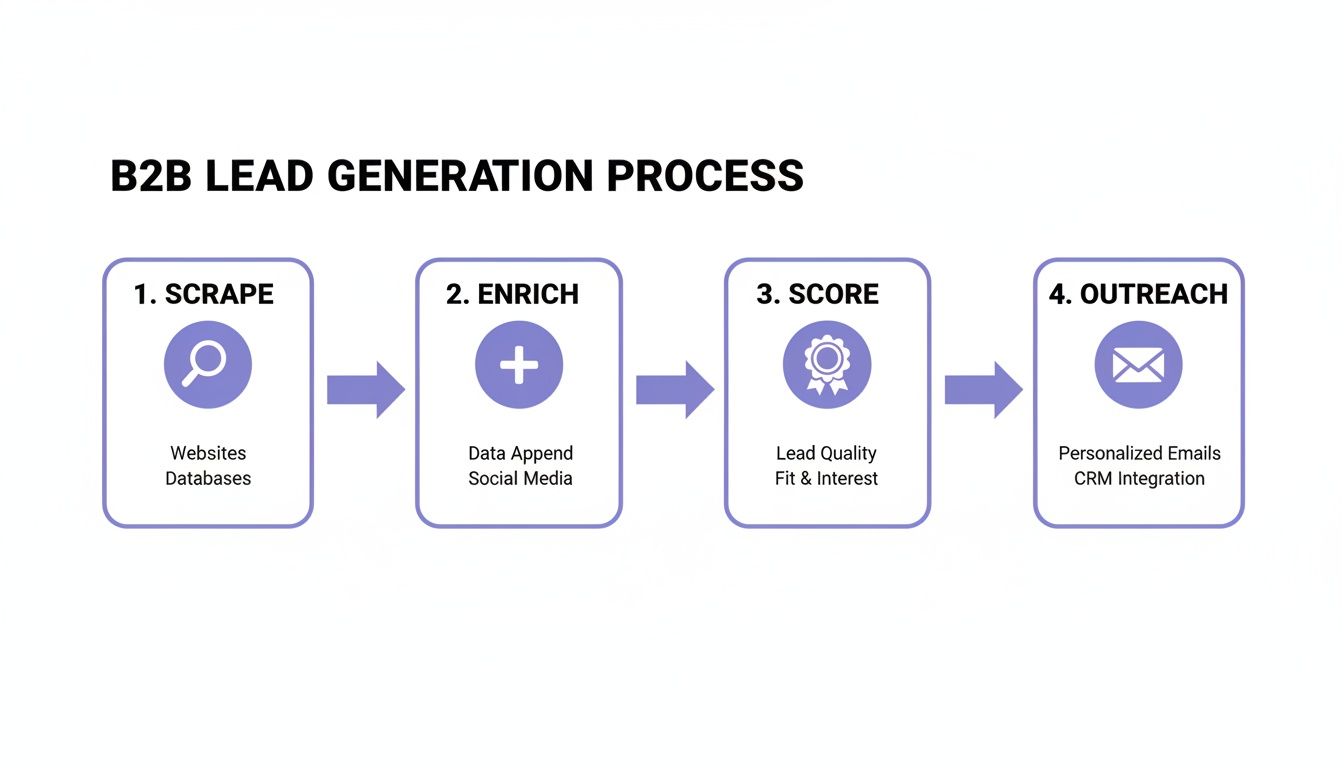
You can see how AI connects what used to be separate manual tasks (scraping, enriching, scoring, and outreach) into a single engine.
But launch day isn't the finish line. The real power of AI-powered marketing automation comes from what happens next: continuous monitoring and optimization. By tracking performance and making data-driven tweaks, you ensure your AI solutions evolve right alongside your business, delivering lasting value and a serious competitive edge.
Bringing Your AI Marketing Vision to Life
Getting AI-powered marketing automation up and running isn't some far-off dream; it's how you get real, scalable growth right now. But let's be honest, going from a cool idea on a whiteboard to a production-grade system that actually works is a huge leap. It takes more than just slick software; it requires a genuine partnership with people who've been in the trenches and know how to make this stuff work.
This is a journey, not a flip of a switch. It all starts by pinpointing the highest-impact opportunities in your business: the places where automation will give you the biggest bang for your buck. From there, you have to think about talent. Building an in-house team from scratch can be slow and expensive, which is why smart companies often look to AI-adopted engineer placements or full AI team augmentation to get the right expertise on board, fast.
Of course, once you have the right people, you need to keep their skills sharp. The world of AI changes in the blink of an eye. This is where targeted AI workshops on practical tools like Cursor for your developers or advanced models like Claude become invaluable. They ensure your team is more than keeping up, but staying ahead.
With the right strategy, talent, and ongoing training, your AI vision stops being a "what if" and becomes a powerful, sustainable advantage that drives real-world growth.
Your Questions, Answered
If you're a founder or CTO, you've probably got a few questions about bringing AI-powered marketing automation into your world. Let's tackle some of the most common ones I hear.
How Do We Even Find the Right AI Talent?
This is a big one. You’ve got a couple of solid paths, and the right one really depends on your long-term vision.
If you're aiming to build a deep, lasting AI capability in-house, then AI-adopted engineer placements are your best bet. We find a vetted AI expert and embed them directly into your team. They don't just build; they teach. The goal is to transfer that critical knowledge to your own people, so you become self-sufficient.
But what if you need to move fast? In that case, AI team augmentation makes more sense. You get an entire external squad that hits the ground running on your AI projects. It's perfect for when you need to accelerate without the headache of recruiting and managing a brand-new, specialized team from scratch.
Are AI Workshops Really Necessary for My Team?
Look, the AI space moves at a ridiculous speed. What's groundbreaking today is table stakes in six months. Continuous learning is more than a "nice-to-have"; it's how you stay in the game.
Specialized AI workshops are the most direct route to keeping your team's skills from going stale. We’re talking practical, hands-on training with the tools that actually matter.
- AI-Native Code Editors: Getting your devs trained on something like Cursor can radically slash the time it takes them to build and debug automations. It's a massive productivity boost.
- Advanced LLM Training: Diving deep into powerful models like Claude gives your team the ability to design AI agents that can handle genuinely complex reasoning and creative problem-solving.
- Workflow Automation Platforms: Training on tools like Weavy.ai or n8n means your team can go from a cool idea to a working prototype in a fraction of the time.
Investing in this kind of training is the difference between simply using AI and truly mastering it. This is how you stop chasing trends and start building a real competitive edge.
Can This AI Stuff Actually Work With Our Current Tools?
Absolutely. In fact, if it can't, it's a non-starter. A well-designed AI automation strategy doesn't rip and replace your tech stack; it enhances it.
Think of AI agents as the ultimate connectors. They use APIs and other integration methods to talk to everything you already use: your CRM, ERP, analytics platforms, even that quirky in-house tool.
The whole point is to create a unified system. An AI agent can pull customer data from your CRM, use it to generate a personalized report in another system, and then trigger a follow-up email, all without a human touching a keyboard. You get to keep the tools you've already invested in while gaining a whole new level of efficiency.
Ready to stop wondering and start building? AY Automate designs and deploys production-grade AI agents that plug right into your existing workflows, securely and reliably.
If this sounds like the right fit, our AI automation agency page covers scope, process, and how an engagement starts.
Book a free automation audit today, and let our ex-IBM architects show you how to scale 10X without ballooning your headcount.
Continue Reading
Best Marketing Automation Agencies (2026)
The best marketing automation agencies in 2026, ranked and compared: HubSpot partners, AI-driven automation, pricing, and how to choose.
AI Agents for Business in 2026: Real Use Cases, Cost, and How to Pick the Right One
Updated June 2026. "AI agents for business" went from buzzword to real category between 2024 and 2026.
Anthropic Conway: Inside Claude's Always-On Agent Platform (2026)
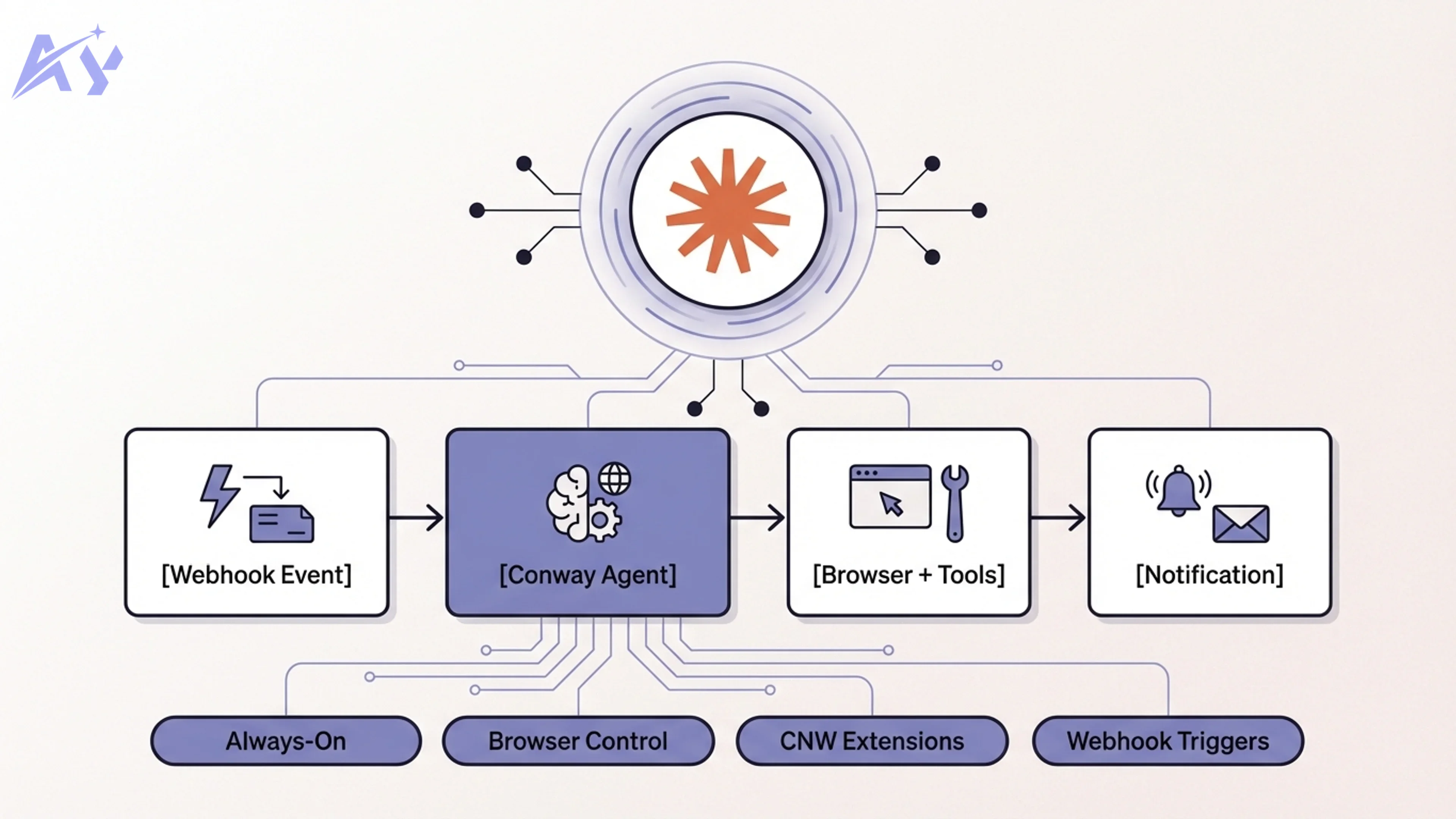
Anthropic is secretly testing Conway, an always-on AI agent for Claude with browser control, webhooks, and a CNW extension ecosystem.
Book a Free Strategy Call
Building this in production?
Walid runs a 30-min call to map your AI engineering team. Free, no slides.
Free weekly brief
Steal our production automations
The exact n8n flows, Claude Code setups, and prompts we ship for clients, broken down step by step. No spam, unsubscribe anytime.

Taha builds and ships custom AI agents and workflow automations for AY Automate clients across SaaS, finance, and professional services.