Book a Free Strategy Call
Skip the read: talk to Walid in 30 min.
Free strategy call. We map your AI engineering team, you keep the notes.
How to Hire a Forward Deployed Engineer
Look for one person who passes two tests, not one: they can write and ship the production code themselves, and they can explain in a sentence why the business cares. Most candidates and most vendors pass exactly one of those tests. The hire only works if they pass both.
That is the whole job. A forward deployed engineer (FDE) embeds inside your team, builds on your actual stack, and is judged on whether the thing works in production, not on whether the deck looked good. Below is what to actually check before you sign anything, where the model comes from, what it costs, and the red flags that show up in the first conversation if you know where to look.
TL;DR
- The two-judgments test: a real FDE has technical judgment (can loop, use tools, evaluate a model, ship structured code) and commercial judgment (can map your actual workflow and explain the outcome to a non-technical stakeholder). Screen for both, separately.
- How to evaluate: ask for a case study that shows the audit, the eval set, and the production result, in that order. If any of the three is missing, you are being sold advice, not a deployment.
- Red flags: a consultant who only produces slide decks and roadmaps, or an engineer who can talk architecture but goes quiet the moment you ask what it saves the business.
- Engagement models: embedded placement (you pay for a person, they work inside your team and stack), outcome-based deployment (paid against a working result), and traditional consulting (paid for time or a report), and they are not interchangeable.
- Cost: we are not going to hand you a fake number. Varick Agents' guide to the role states a range of $150K to $1M depending on scope and seniority. That is their claim, not ours, and we are citing it rather than asserting it.
- Where AY fits: we place AI-native engineers who embed the same way, and our own pricing and timelines are public on our engineer placement page.
Related Reads
The two-judgments test
The role was popularized at Palantir, which embedded roughly 120 forward deployed engineers inside JPMorgan starting in 2009, and OpenAI has since built the same shape into its enterprise practice, growing its FDE team from 2 to 39 people in a single year and later launching a majority-owned deployment arm with adopters including HP, Intuit, Oracle, State Farm, and Uber. The reason the role exists at all: an estimated 95% of enterprise AI deployments never reach production, and closing that gap needs a person who understands both sides of the problem.
That is the test to run in an interview or a vendor call. Ask two separate questions:
- Technical judgment. Can they build an agent loop, use tools reliably, structure and validate outputs, and turn a fuzzy AI system into something measurable with an eval set? This is the part most technical screens already check.
- Commercial judgment. Can they sit with the people who actually do the work, map the real process (not the documented one), and explain to a VP what the system does and why it matters, in plain language? This is the part most technical screens miss entirely.
A candidate who is strong on one axis and weak on the other is not a forward deployed engineer yet. They are either a very good software engineer or a very good business analyst. The FDE is both in one person.
Free weekly brief
Steal our production automations
The exact n8n flows, Claude Code setups, and prompts we ship for clients, broken down step by step. No spam, unsubscribe anytime.
How to evaluate a candidate or a vendor
Do not evaluate an FDE the way you would evaluate a normal engineering hire or a normal consulting pitch. Ask for evidence of the loop itself: audit, evals, deployment.
- Ask them to walk you through a real audit. Not a proposal, an actual audit: what they found when they sat with the people doing the work, what surprised them, what the before-and-after process map looked like. If they cannot describe a specific workflow they mapped, they have not done this before.
- Ask them for the eval set. A credible FDE builds a golden dataset of real queries with hand-labeled ideal outputs and tracks pass rate, failure categories, and escalation. This is how trust gets earned before something goes into production, and it is the single best signal that separates a builder from a demo artist.
- Ask what shipped, and what broke first. Every real deployment has a version that failed in production before it worked. If a candidate or a vendor only describes the polished version, push on what the first attempt got wrong and how they found out.
- Ask who owned the outcome. A consultant hands off a recommendation. An FDE stays accountable until the system is running against real data and the business metric moved. If nobody can point to the metric, you are not looking at a completed deployment.
If you want the full week-by-week version of this loop, including the production-readiness checklist and the eval structure, Varick Agents' FDE-in-30-Days guide is the most complete public walkthrough we have found, and we point our own team to it. We break the same loop down in our own words, and how we run it, in the FDE 30-day roadmap.
Red flags
- The slide-deck consultant. They present a roadmap, an architecture diagram, and a set of recommendations, and the engagement ends there. No code ships, no eval set exists, and "implementation" is quietly left to your own team. That is a legitimate service, but it is not a forward deployed engineer, and paying FDE rates for it is a bad trade.
- The engineer who cannot talk business. They can explain the model, the tool stack, and the architecture in detail, but when you ask "what does this save us" or "who on your team actually uses this," they cannot answer in terms a non-technical stakeholder would understand. That gap is exactly what causes deployments to stall after the demo.
- No audit trail. If the system cannot show you what it did (every prompt, every tool call, every failure) after the fact, nobody involved will trust it enough to expand its autonomy, and the engagement stalls at pilot stage indefinitely.
- A team that scales like a staffing agency. The FDE model works because the team stays small and each person is accountable for a result. If the pitch is "we will assign a large team," you are buying billable headcount, not an embedded outcome owner.
Check their toolchain too, not just their pitch: see what a real FDE toolchain looks like.
Engagement models
Three structures show up under the "forward deployed engineer" label, and they are not the same purchase.
- Embedded placement. You hire an engineer (through your own recruiting or a placement partner) who joins your team, your stack, and your sprint. This is the model AY Automate runs through forward deployed engineers, specifically via engineer placement: the engineer works inside your existing systems rather than standing up a separate vendor project.
- Outcome-based deployment. A smaller team is brought in specifically to ship one system to production, priced against the result rather than hours. This is closer to what Palantir and OpenAI run internally, and it is the model most FDE-in-30-days content describes.
- Traditional consulting. You are paying for a recommendation, an audit, or a roadmap, and your own team (or a separate build team) implements it. Nothing is wrong with this model, it is simply a different purchase than an FDE, and confusing the two is how buyers end up disappointed.
What it costs
We are not going to invent a salary or a day-rate figure. A wave of low-authority sites publish specific FDE compensation numbers with no verifiable sourcing, and repeating them would just add to the noise. What we can point to:
- Varick Agents' guide states a compensation range of $150K to $1M, depending on scope and seniority. That is Vas's claim, stated in his guide, not a number we are asserting ourselves.
- On the AY Automate side, our own pricing is public rather than quoted privately after a call. Our engineer placement page publishes real figures: nearshore engineers starting from $60,000 annually versus $150,000+ for a US in-house hire, an average placement time of 2 to 4 weeks against an industry standard of 3 to 6 months, and a 90-day replacement guarantee if the placement does not work out.
If a vendor will not put a number, a timeline, or a guarantee in writing before the first call, that alone is worth asking about. For a fuller, honestly-sourced breakdown of what the role pays and why estimates vary so much, see our forward deployed engineer salary guide.
Where AY Automate fits
We provide exactly this through forward deployed engineers: the placement mechanism is engineer placement, the engineer embeds inside your team, works on your actual stack, and is accountable for shipping, not just advising. Our engineers work from a team of 30+ specialists, and the placement process runs on a public timeline rather than a black box. For the full breakdown of what the role is and when to use it, see our forward deployed engineer guide.
FAQ
How do I hire a forward deployed engineer?
Screen for both technical and commercial judgment separately, ask for a real audit and a real eval set (not just a portfolio of finished demos), and confirm who is accountable for the production outcome. If you would rather not run that search yourself, an embedded placement partner like AY Automate's engineer placement can match you with an engineer who already works this way.
What does a forward deployed engineer cost?
There is no verified, universal number. Varick Agents' guide states a range of $150K to $1M depending on scope and seniority; treat that as their estimate, not a fact. If you engage through a placement model, ask for a published number and timeline rather than a quote that only appears after a sales call.
What questions should I ask when hiring an FDE?
Ask them to describe a real audit they ran, show you an eval set from a past deployment, explain what the first version got wrong, and name the business metric a deployment moved. If they cannot answer at least three of those with specifics, they have not done the job before.
Is a forward deployed engineer full-time, contract, or embedded through a vendor?
All three exist under the label. Some companies hire FDEs directly as full-time staff, some run project-based outcome engagements, and some use an embedded placement model where the engineer works inside the client's team without being a direct employee. None of these is more legitimate than the others; the structure should match how long the problem needs sustained attention.
Do I need a forward deployed engineer or a consultant?
Hire a consultant when you need an outside opinion, a feasibility study, or a roadmap before committing engineering time. Hire an FDE when the plan is clear enough and what you actually need is someone to build, ship, and own the result.
Sources: OpenAI's forward deployed engineering practice and team growth, via a ZenML LLMOps case study; OpenAI's deployment arm and named adopters, via reporting relayed by officechai.com; Palantir Technologies on the origin of the FDE model at JPMorgan; Varick Agents' FDE-in-30-Days guide on the method and compensation range; and AY Automate's engineer placement page for our own published pricing and timelines.
Continue Reading
AI QA Testing Agents: What to Automate, Where QA Judgment Leads (2026)
What an AI QA testing agent does well (test generation, regression testing, cross-browser checks), where QA judgment still leads, and how this differs from agent evals.
GPT-6 Astra vs Claude Fable 5.1 vs Opus 5.5: Why Model Routing Wins
GPT-6 Astra and Claude Fable 5.1 both list at $10 and $50 per million tokens. Claude Opus 5.5, GPT-6 Sol and GPT-6 Luna, all released September 22, cost far less. Verified prices, one independent index and a task-by-task routing table, prices checked September 26, 2026.
Your AI pilot isn't broken. Your deployment infrastructure is.
IDC finds 88% of enterprise AI pilots never reach production. McKinsey finds only 6% of companies see real ROI. Forkast finds 41% of the ones that do ship lose money within a year. None of it is the model's fault.
Book a Free Strategy Call
Building this in production?
Walid runs a 30-min call to map your AI engineering team. Free, no slides.
Free weekly brief
Steal our production automations
The exact n8n flows, Claude Code setups, and prompts we ship for clients, broken down step by step. No spam, unsubscribe anytime.
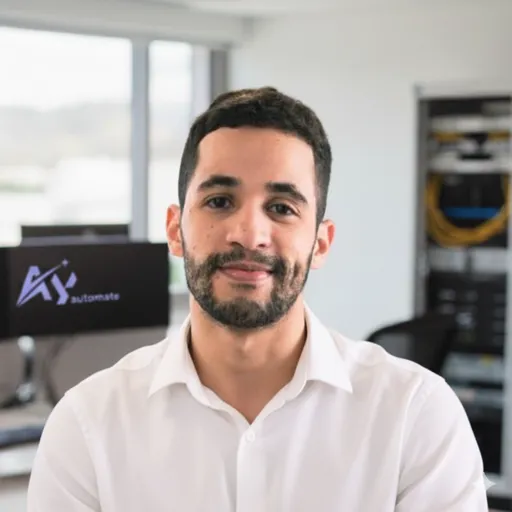
Walid founded AY Automate to help businesses ship AI workflows that actually move revenue. He leads strategy and oversees every client engagement end-to-end.
Full Bio →