Book a Free Strategy Call
Skip the read: talk to Walid in 30 min.
Free strategy call. We map your AI engineering team, you keep the notes.
OpenClaw Enterprise Setup in 2026: Deploy NemoClaw Agents Securely
OpenClaw enterprise setup means taking the free, open-source agent framework your team has been experimenting with and turning it into something you can safely run inside a business: locked-down permissions, vetted skills, hardened gateways, and a deployment target you actually control. The person who needs help right now has seen OpenClaw work in a demo, wants it running against real company data and real customer messages, and does not want to be the next supply-chain incident. This post is written for the buyer deciding who should build that, not for someone learning what an agent is.
Here is the short version. You have two credible paths, self-host OpenClaw yourself or run agents inside NVIDIA's NemoClaw sandbox, and the whole game is security and scoping. We do this end to end. If you would rather skip to a conversation, book a setup call.
What is an OpenClaw enterprise setup, really?
An OpenClaw enterprise setup is the gap between a working demo and a system you can put in front of a security review. The framework part is genuinely easy. The hard part is everything that stops a helpful agent from becoming an open door into your business.
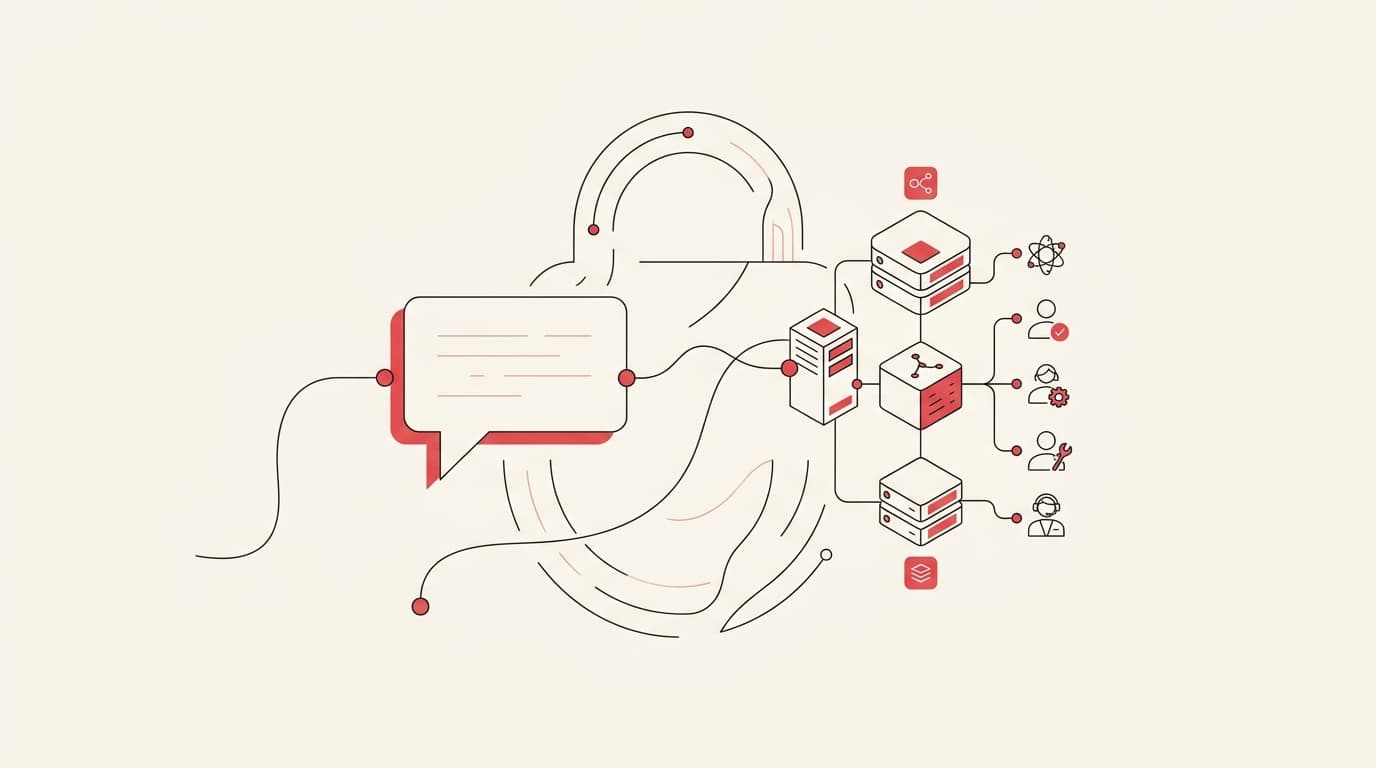
At the center of OpenClaw are two pieces. The Gateway is the front door that receives messages, decides who is allowed to talk to the agent, and passes work through. The ReAct loop is the reasoning engine that reads a request, decides which tool to call, acts, observes the result, and repeats until the task is done or it hits a boundary you set.
Everything that makes an enterprise setup safe wraps those two pieces. You decide who reaches the Gateway. You decide which tools the loop can touch. You decide what happens when a skill does something it should not. Get those decisions right and OpenClaw is a productive teammate. Get them wrong and it is a fast, tireless attacker with your credentials.
Why are enterprises deploying OpenClaw now?
OpenClaw is an autonomous agent framework that uses messaging apps as its interface. Instead of another dashboard nobody logs into, your team talks to the agent over WhatsApp or Telegram, and the agent runs its Gateway plus a ReAct loop to do the work: pull data, call tools, take actions, and report back in the same thread.
For most companies the appeal is obvious. Your staff already lives in messaging apps, so adoption is close to free. The agent can absorb the long tail of "can you just check X and update Y" requests that never justified building a custom internal tool.
The traction is not hype. OpenClaw went from roughly zero to 247K GitHub stars in under 60 days, became an NVIDIA product, and its creator was hired by OpenAI. That kind of momentum is why enterprise buyers are moving now: the framework is credible, the ecosystem is real, and the automation is genuinely useful.
The catch is that "free and open-source" is where the work starts, not where it ends. A framework that reads your messages and takes actions on your behalf is only as safe as the boundaries around it. For the broader picture of where AI agents pay back for a business, see our writeup on OpenClaw as an open-source AI agent and our core AI agent development practice.
Key takeaway: OpenClaw earns its adoption because it meets your team where they already work, but the value only survives contact with production if the security layer is built first.
Free weekly brief
Steal our production automations
The exact n8n flows, Claude Code setups, and prompts we ship for clients, broken down step by step. No spam, unsubscribe anytime.
Should you self-host OpenClaw or use the NemoClaw sandbox?
The first real fork in an OpenClaw enterprise setup is where the agents run. There is no universally correct answer, only tradeoffs across control, security, effort, and cost.
Self-host OpenClaw. You run the framework on your own infrastructure: your cloud account, your VPC, your secrets manager. OpenClaw is MIT-licensed and free, so there is no license cost, and you keep total control over data residency, network egress, and which model providers the agent can reach. The tradeoff is effort and responsibility. You own the gateway hardening, the update cadence, the isolation between the agent and the rest of your systems, and the skill vetting. Self-hosting is the right call when you have compliance requirements, sensitive data, or a platform team that wants agents to live next to everything else they operate.
NemoClaw sandbox. NemoClaw is NVIDIA's enterprise sandbox, built on OpenShell and announced at GTC 2026 in March, for running OpenClaw agents. It gives you a managed, isolated environment without standing up all of the containment yourself, which lowers the effort and puts a vendor-backed boundary around agent execution. The tradeoff is that you are adopting NVIDIA's environment and its assumptions, so you trade some flexibility for a faster, safer starting point. NemoClaw fits when you want a sandbox security posture on day one and you do not want to hand-roll isolation.
The table below is the version of this comparison we walk clients through.
| Dimension | Self-host OpenClaw | NemoClaw sandbox | Managed setup (with us) |
|---|---|---|---|
| Control over data and network | Full | Shared with NVIDIA | Full, shaped to your policy |
| Security work you own | All of it | Isolation handled, config still yours | We build and document it |
| Effort to go live | High | Medium | Low for your team |
| Direct license cost | None (MIT) | Vendor environment cost | None for the framework |
| Best when | Compliance, sensitive data, strong platform team | Fast, isolated start with less setup | You want it defensible without hiring for it |
In practice the decision comes down to three questions. How sensitive is the data the agent will touch? How much platform capacity do you have in-house? And how fast do you need to be live? We help you answer those honestly and then build on whichever path fits, rather than steering you toward the one that is easier for us. Both paths are covered on our OpenClaw and NemoClaw enterprise setup service page.
Key takeaway: Self-host buys control at the cost of effort, NemoClaw buys a safer default at the cost of some flexibility, and the right pick is driven by your data sensitivity, your team, and your timeline.
What are the non-negotiable security must-dos for OpenClaw?
This is where an enterprise setup is either done right or quietly dangerous. An agent that reads your messages and takes actions is a high-value target, and the OpenClaw ecosystem has already had real security failures. Four controls are non-negotiable.
ClawHub skill vetting and provenance. ClawHub is the community skill registry, with 700-plus skills that extend what an agent can do. It is also where the risk concentrates. ClawHub has had malicious-skill incidents, where hostile code shipped as an installable skill. That is a classic supply-chain attack: you think you are adding a capability, and you are actually granting an attacker a foothold inside an agent that already has access to your systems. The rule is simple. No skill enters a production agent without provenance and review. We pin exact versions, read the code, check the publisher, and maintain an allowlist rather than pulling skills live. The same "verify before you trust" discipline drives our free AI models directory, where every listed model is checked rather than assumed.
Permission scoping. The agent should have the narrowest possible access to do its job and nothing more. That means scoped API tokens, per-tool permissions, read-only where writes are not required, and hard boundaries on which systems it can reach at all. An agent that only needs to read a calendar should never hold a token that can also send email.
Secrets handling. Credentials never live in prompts, skill files, or chat history. They live in a secrets manager, get injected at runtime, and rotate on a schedule. Messaging apps are convenient, and that convenience is exactly why a leaked secret becomes very hard to claw back once it is sitting in a thread.
Gateway hardening. The Gateway is the front door between the messaging app and the agentic loop. It has to authenticate who is allowed to talk to the agent, rate-limit requests, log every action for audit, and enforce the permission model above. A hardened gateway is the difference between "our staff uses the agent" and "anyone who finds the number can drive it."
Key takeaway: Skill vetting, permission scoping, secrets handling, and gateway hardening are not optional add-ons, they are the entire reason an OpenClaw enterprise setup is safe to run.
How risky is ClawHub, and how do you mitigate it?
ClawHub is the most valuable and the most dangerous part of the ecosystem at the same time. It is where the 700-plus skills that make OpenClaw powerful come from, and it is where malicious code has already reached real users. You do not solve that by avoiding ClawHub. You solve it by treating every skill as untrusted third-party code, because that is exactly what it is.
| ClawHub risk | What it looks like | How we mitigate it |
|---|---|---|
| Malicious skill published | Hostile code shipped as a normal, installable skill | Read the source before install, verify the publisher, allowlist only |
| Silent update swaps behavior | A pinned capability changes under you on the next pull | Pin exact versions, review every version bump manually |
| Over-broad permission request | A skill asks for more access than its job needs | Grant least privilege, deny by default, scope tokens per tool |
| Secret exposure through a skill | Credentials passed into or logged by skill code | Inject secrets at runtime, never in skill files, rotate keys |
| No audit trail | You cannot prove what the agent did or with what | Gateway logs every action for review and incident response |
The pattern across every row is the same. Assume nothing about a skill until you have verified it, give it the minimum it needs, and keep a record you can defend. That posture is boring on purpose, and boring is what stops a single bad skill from turning into a breach.
How does our OpenClaw enterprise setup process work?
We keep the process boring on purpose, because boring is what secure looks like.
- Scope and threat model. We map what the agent should do, what data and systems it touches, and what the blast radius is if a single skill or token is compromised. That drives the self-host versus NemoClaw decision.
- Deploy the environment. We stand up the runtime, your infrastructure for self-host or the NemoClaw sandbox, configure the Gateway, and wire the messaging interface with authentication in front of it.
- Vet and install skills. Every skill is reviewed, version-pinned, and added to an allowlist. Nothing gets installed live from ClawHub without provenance.
- Scope permissions and secrets. We set least-privilege tokens per tool, move all credentials into a secrets manager, and turn on audit logging.
- Test and hand over. We run the agent against realistic scenarios, confirm the guardrails hold, and hand you documentation plus a runbook so your team can operate it.
What you get is an agent that does real work in the tools your team already uses, with a security posture you can put in front of a review, and a clear record of what it can and cannot touch. No invented uptime numbers, no theater. Just a deployment you can defend.
FAQ
Is OpenClaw free? Yes, OpenClaw is free and open-source under the MIT license. There is no license fee for the framework itself. Your costs come from the infrastructure it runs on, the model providers it calls, and the work of setting it up securely, which is where a proper OpenClaw enterprise setup earns its keep.
What is NemoClaw? NemoClaw is NVIDIA's enterprise sandbox for running OpenClaw agents, built on OpenShell and announced at GTC 2026 in March. It gives businesses a managed, isolated environment to run agents without building all of the containment themselves.
Is OpenClaw safe for business use? It can be, with the right setup. The framework is credible, having become an NVIDIA product and grown to 247K GitHub stars in under 60 days. The risk sits in the ecosystem: ClawHub, the community skill registry with 700-plus skills, has had malicious-skill incidents. Safe business use depends on skill vetting, permission scoping, secrets handling, and gateway hardening.
OpenClaw vs NemoClaw, what is the difference? OpenClaw is the open-source agent framework, and NemoClaw is NVIDIA's sandbox for running OpenClaw agents securely. You self-host OpenClaw when you want full control on your own infrastructure. You use NemoClaw when you want a managed, isolated environment with less setup effort. Many enterprises evaluate both before choosing.
How much does an OpenClaw enterprise setup cost? The framework is free, so the cost is infrastructure plus the engineering work to make it secure. Self-hosting adds cloud and platform time, NemoClaw adds a vendor environment cost, and both need permission scoping, skill vetting, and gateway hardening. We size the build to your use case rather than quoting a flat number that ignores your risk profile.
What is ClawHub and why does it matter? ClawHub is the community skill registry that gives OpenClaw agents most of their power, with 700-plus installable skills. It matters because it has had malicious-skill incidents, so every skill has to be treated as untrusted third-party code, reviewed, version-pinned, and allowlisted before it reaches production.
Can you deploy it against our existing tools? Yes. The point of an agent is to act inside the systems you already use, over the messaging apps your team already lives in. We scope access to your specific tools with least-privilege permissions rather than granting broad access.
Deploy OpenClaw the right way
If you are evaluating who should set up OpenClaw or NemoClaw for your business, the deciding factor is not who can get an agent talking in a demo. It is who will scope the permissions, vet every skill, lock down the gateway, and hand you something you can defend in a security review. That is the work we do.
Book a setup call and we will map your use case, recommend self-host or NemoClaw, and give you a clear plan to deploy securely. You can also read the full OpenClaw and NemoClaw enterprise setup service breakdown first.
Sources: innfactory OpenClaw ecosystem guide and the OpenClaw 2026 timeline.
Book a Free Strategy Call
Building this in production?
Walid runs a 30-min call to map your AI engineering team. Free, no slides.
Free weekly brief
Steal our production automations
The exact n8n flows, Claude Code setups, and prompts we ship for clients, broken down step by step. No spam, unsubscribe anytime.

Ex-IBM AI engineer and enterprise architect. Adel owns the technical architecture behind every automation and AI agent system AY Automate ships.