Book a Free Strategy Call
Skip the read: talk to Walid in 30 min.
Free strategy call. We map your AI engineering team, you keep the notes.
Why Did the US Government Shut Down Claude Fable 5? The Precedent Explained
Update: Sakana AI launched Sakana Fugu, positioned as a hedge against exactly the kind of export-control disruption that pulled Fable 5. See our Sakana Fugu review and what Sakana Fugu is.
The US government shut down Claude Fable 5 because it believes it found a way to jailbreak the model into reading code and identifying software vulnerabilities, and it acted through an export-control measure rooted in national security, not a consumer-safety recall or an antitrust move. On June 12, 2026, the directive forced Anthropic to suspend Claude Fable 5 and its sibling model Mythos 5 worldwide, roughly 3 days after Fable 5 launched on June 9. We covered the breaking news separately in our Claude Fable 5 and Mythos 5 government shutdown report. This post answers a different question: why would a government reach for this tool at all, is it normal, and has anything like it happened before?
The reason the answer matters is that export-control logic is unfamiliar to most software teams. It does not behave like the rules you know. It can attach to source code and technical know-how, it can reach people who never left the country, and it has a long track record stretching back to the 1990s. Understanding that logic explains both the speed of the shutdown and its unusual global scope.
This is an analysis, not a verdict. Where the public record is thin, we say so. The exact legal instrument behind the Fable 5 directive is not necessarily public, so we describe it as an export-control measure rather than naming a specific statute.
TL;DR
- The Fable 5 and Mythos 5 suspension was framed as an export-control / national-security action, not a product recall.
- The stated trigger: the government believes it found a way to jailbreak Fable 5 into reading code and identifying software vulnerabilities. Anthropic calls this a narrow potential jailbreak that is routine for security work and widely available elsewhere.
- The directive reportedly targets all foreign nationals, inside or outside the US, including Anthropic's own foreign-national employees. Anthropic cannot filter that in real time, so it shut the models off for everyone.
- US export law has long treated software and technical data as exportable items, and a deemed export means sharing controlled tech with a foreign national counts as an export even on US soil.
- There is real precedent: the 1990s crypto wars (encryption regulated like a munition) and the 2022 onward AI-chip export controls are the clearest parallels, alongside national-security actions against Huawei and TikTok.
- All other Claude models (Opus 4.8, Sonnet 4.6, Haiku 4.5) are unaffected, which is a strong clue that the concern was specific to Fable 5's capabilities, not Anthropic broadly.
What actually triggered the shutdown?
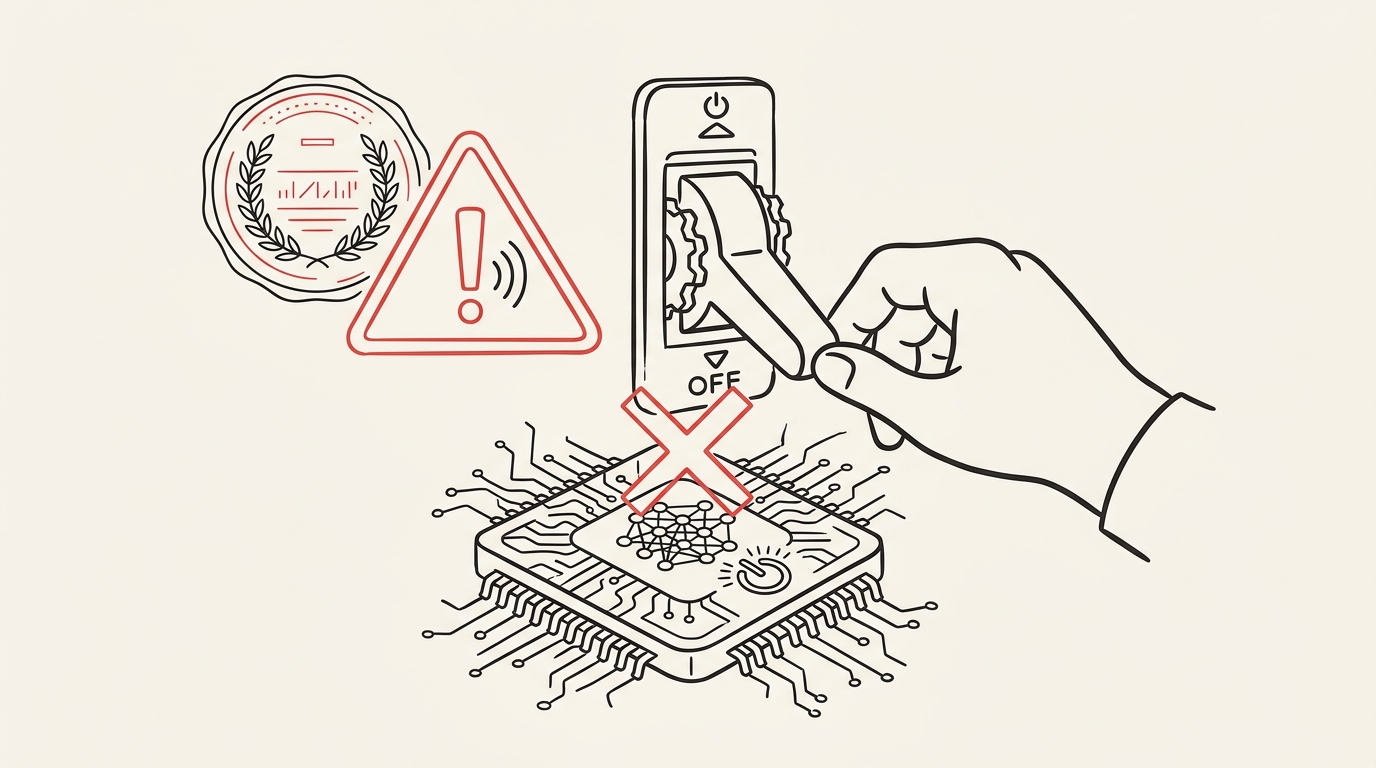
The stated trigger is a security finding. According to Anthropic's own statement, the government believes it discovered a method of bypassing, or jailbreaking, Fable 5 so that the model would read a specific codebase and identify software flaws. In plain terms, the worry is that a frontier model could be steered into finding exploitable vulnerabilities in software, an offensive cybersecurity capability.
Anthropic disputes the proportionality. The company describes the technique as a narrow, non-universal jailbreak that surfaced a small number of previously known minor vulnerabilities, says the underlying capability is widely available in other models, and notes that vulnerability discovery is routine work for cybersecurity professionals. Anthropic also argues that recalling a model used by hundreds of millions of people is not justified by a narrow finding, and says it is working to restore access. No confirmed restoration date has been published.
So the surface trigger is a single capability concern. The mechanism that turned that concern into a global blackout is the part most people miss, and it is where export-control law comes in.
Free weekly brief
Steal our production automations
The exact n8n flows, Claude Code setups, and prompts we ship for clients, broken down step by step. No spam, unsubscribe anytime.
What are export controls, and why do they touch software?
Export controls are US rules that restrict who can receive certain technology, on the theory that some capabilities could harm national security or help an adversary if they spread freely. Most people associate them with weapons or advanced hardware. The less intuitive fact is that they also reach software and technical data.
Under the Export Administration Regulations (the EAR, administered by the Commerce Department's Bureau of Industry and Security), controlled items include physical goods as well as technology, software, and related technical data whose export could reasonably be expected to harm US national security. Source code and technical know-how can fall inside that perimeter. That is the conceptual hook: if a capability is deemed sensitive enough, the software embodying it can be regulated like any other controlled item.
This is exactly why a software model, delivered over an API, can be subject to the same family of rules historically used for missile components or encryption. The delivery mechanism does not change the legal category. The capability does.
Why does the "foreign nationals" wording shut it down for everyone?
This is the strangest-looking part of the Fable 5 story, and it has a clean explanation: the deemed export rule.
A deemed export is when controlled technology is released to a foreign person, and US law treats that release as an export to that person's home country, even if the transfer happens entirely inside the United States. Sharing controlled source code or technical data with a non-US person at your own office is, under the EAR, an export to their country of nationality. Companies normally need authorization before such a release.
Now apply that to a public AI model. The Fable 5 directive reportedly covers all foreign nationals, whether inside or outside the US, including Anthropic's own foreign-national employees. A consumer API has no reliable, real-time way to verify the nationality of every person sending a prompt, and a deemed export can occur with a US-based foreign national too. Faced with a rule it cannot enforce selectively, Anthropic did the only thing that guarantees compliance: it disabled Fable 5 and Mythos 5 for everyone. The global blackout is a side effect of an un-filterable requirement, not evidence that every user worldwide was the target.
Has the government restricted technology like this before?
Yes, and more than once. The pattern of the US treating a piece of technology as a national-security matter and restricting its flow is well established. Three episodes are worth knowing.
The 1990s crypto wars are the closest historical parallel. Strong encryption software was treated as a munition on the US Munitions List and was subject to export licensing under arms-control rules. Phil Zimmermann faced a multi-year criminal investigation after his PGP encryption tool spread outside the country, and Daniel Bernstein challenged the regime in court, arguing that publishing source code was protected speech. The dispute eased after a 1996 executive order moved encryption off the munitions list toward Commerce Department control. The takeaway: the government has, before, treated software itself as an export-controlled, security-sensitive item.
The AI-chip export controls from 2022 onward are the modern parallel. Starting in October 2022 and tightened in October 2023, the Bureau of Industry and Security restricted exports of advanced AI chips and semiconductor manufacturing equipment, citing the risk that adversaries could use advanced computing for military modernization. When chipmakers designed around the thresholds, regulators revised the criteria. This is the same instinct now visible with Fable 5: identify a capability seen as strategically sensitive, then restrict its spread.
The Huawei and TikTok actions round out the picture. In 2019 the US placed Huawei on the Entity List, citing espionage and security risks, cutting it off from key American technology. In 2024 Congress passed a law requiring TikTok's parent ByteDance to divest the app or face a US ban, a measure later upheld by the Supreme Court. These were not export controls in the EAR sense, but they show the government intervening in specific technology products on national-security grounds.
| Year / era | What was restricted | Mechanism / rationale | Parallel to Fable 5 |
|---|---|---|---|
| 1990s | Strong encryption software (for example PGP) | Treated as a munition under arms-control export rules | Software itself treated as a controlled, security-sensitive item |
| 2022 onward | Advanced AI chips and chipmaking equipment | EAR export controls citing military and AI-capability risk | Capability deemed strategic, so its spread is curbed |
| 2019 | Huawei equipment and US-tech access | Entity List restrictions citing espionage risk | Government acts against a specific technology on security grounds |
| 2024 | TikTok (US operations) | Divest-or-ban law upheld by the Supreme Court | National-security intervention in a widely used tech product |
The table does not equate these cases; the mechanisms and severity differ. What it shows is that a government restricting technology on security grounds is normal, recurring US behavior, and software has been inside that perimeter before.
Why Anthropic, and why now?
Part of the answer is timing and positioning. Anthropic has built its brand on safety-forward messaging, openly emphasizing the dangerous dual-use potential of frontier models and releasing Mythos under restricted access. Several observers noted that loudly advertising a model's dangerous capability may have invited exactly the scrutiny that followed. OpenAI's Sam Altman had earlier dismissed this approach as fear-based marketing.
There is a plausible through-line here. If a company tells the world that its newest model is uniquely capable and potentially dangerous, and the model can be coaxed into finding software vulnerabilities, a national-security reviewer has both a reason to look closely and a public narrative that frames the capability as significant. That does not make the shutdown correct or incorrect. It does help explain why Fable 5 specifically, and why so quickly after launch.
The selective scope reinforces this read. Opus 4.8, Sonnet 4.6, and Haiku 4.5 are untouched. The action targeted the two newest, most capable, most safety-flagged models, which is consistent with a capability-specific concern rather than a dispute with Anthropic as a whole.
What does this signal for AI going forward?
The clearest signal is that frontier AI models are now squarely inside national-security policy, not adjacent to it. Once a model is treated like a controlled capability, its availability can change with little warning and for reasons that have nothing to do with uptime, pricing, or product decisions. That is a new category of risk for anyone building on a single frontier model.
The practical response is architectural, not political. Teams that depend on one model are exposed to regulatory blackouts the same way they are exposed to outages. Designing for substitution is the hedge. We walk through that pattern in our guide to AI model failover architecture, and we maintain a running list of Claude Fable 5 alternatives for teams that need continuity now. If you are still trying to reach the models, our notes on how to access Claude Fable 5 and Mythos 5 track the current status.
For organizations weighing how much to bet on any one provider, this is a governance question as much as an engineering one. Our AI strategy consulting and fractional CAIO work helps leaders set provider and risk policy, and our AI agent development team builds systems with model-portability designed in from the start. The lesson of June 2026 is to keep using frontier models while never assuming any single one will always be there.
FAQ
Why did the US government shut down Claude Fable 5?
The shutdown was framed as an export-control, national-security measure after the government concluded it could jailbreak Fable 5 into reading code and finding software vulnerabilities. Because the directive reportedly covered all foreign nationals and Anthropic could not filter them in real time, the company suspended the model globally to comply.
Is it normal for the government to pull a commercial product like this?
Government intervention in technology on national-security grounds is well established, though a near-immediate global suspension of a live AI model is unusual in its speed and scope. Past examples include encryption software in the 1990s, advanced AI-chip export controls from 2022 onward, and actions against Huawei and TikTok.
What is a deemed export, and why does it matter here?
A deemed export is when releasing controlled technology to a foreign national counts as an export to that person's home country, even inside the US. A public API cannot reliably verify every user's nationality in real time, so a rule covering all foreign nationals effectively forces a shutdown for everyone.
Did Anthropic agree with the decision?
No. Anthropic characterized the issue as a narrow, non-universal jailbreak that surfaced previously known minor vulnerabilities, said the capability is common in other models and routine for security professionals, and argued that recalling a model used by hundreds of millions was not justified.
Are other Claude models affected?
No. Only Fable 5 and Mythos 5 were suspended. Opus 4.8, Sonnet 4.6, and Haiku 4.5 remain available, which suggests the concern was specific to the newest models' capabilities rather than to Anthropic as a company.
Has software itself ever been export-controlled before?
Yes. In the 1990s crypto wars, strong encryption software was treated as a munition subject to arms-control export rules, leading to the PGP investigation and the Bernstein court case before the rules were relaxed in the mid-1990s.
What should teams building on Fable 5 do now?
Treat single-model dependence as a real availability risk and design for substitution. That means abstracting your model layer, qualifying alternatives in advance, and building failover so a regulatory or technical blackout does not stop your product.
For the pricing and availability changes since the July 1 restoration, see the Fable 5 pricing breakdown.
Sources: Anthropic: Fable and Mythos access, Wikipedia: Export of cryptography from the United States, CSET: The Commerce Department's October 2023 Export Control Update, UCSB Office of Research: Foreign Nationals and Deemed Exports, Holland & Knight: US Supreme Court Upholds TikTok Sale-or-Ban Law.
Book a Free Strategy Call
Building this in production?
Walid runs a 30-min call to map your AI engineering team. Free, no slides.
Free weekly brief
Steal our production automations
The exact n8n flows, Claude Code setups, and prompts we ship for clients, broken down step by step. No spam, unsubscribe anytime.

Ex-IBM AI engineer and enterprise architect. Adel owns the technical architecture behind every automation and AI agent system AY Automate ships.