Book a Free Strategy Call
Skip the read: talk to Walid in 30 min.
Free strategy call. We map your AI engineering team, you keep the notes.
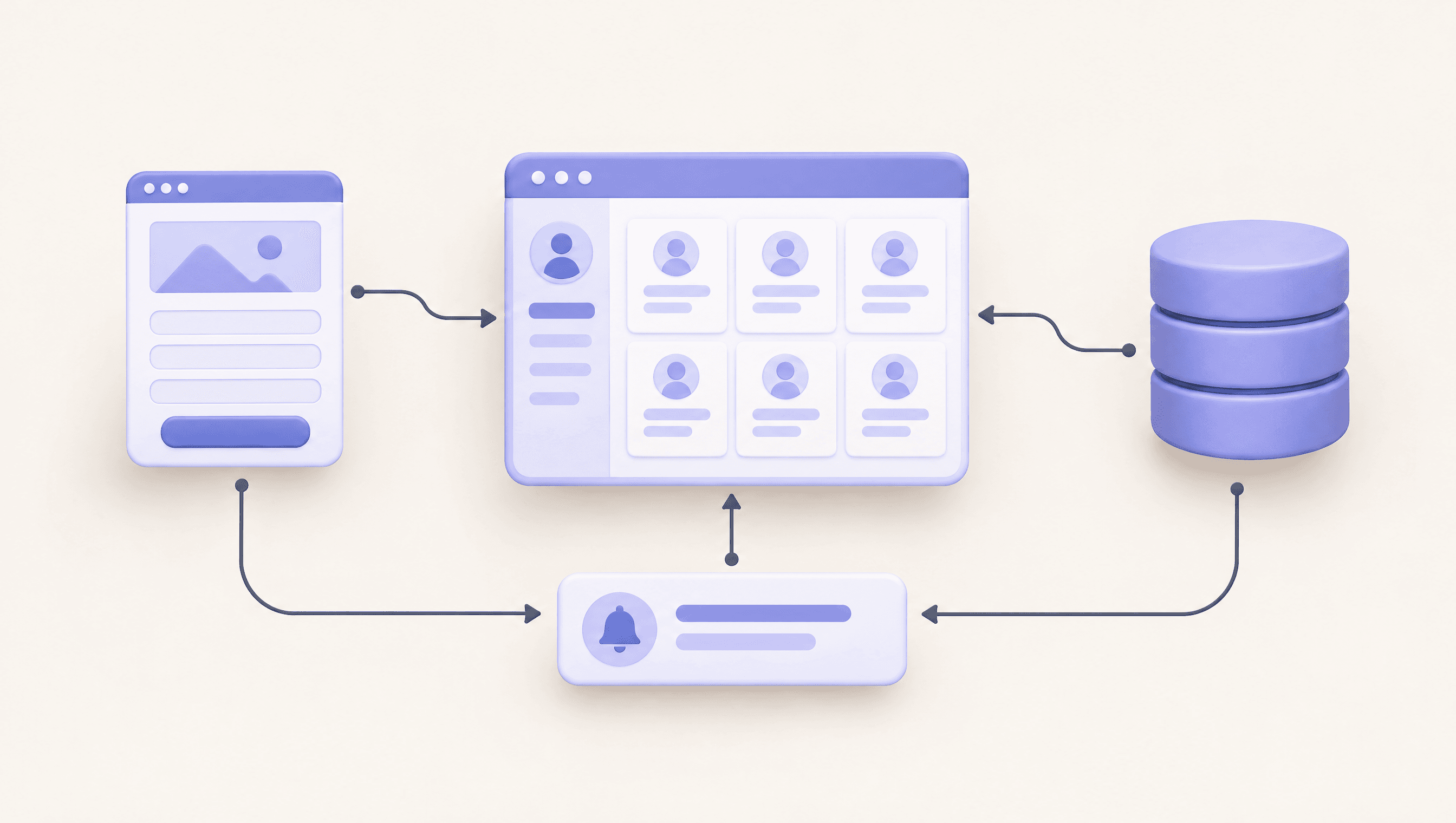
GTM engineering is the practice of building and maintaining the data flows, integrations and automations that support a go-to-market team.
A GTM engineer turns a sales or marketing process into a working technical system. They connect business tools, define how data moves, automate repeatable steps and monitor what happens after launch. The role sits between commercial operations and technical delivery rather than belonging entirely to either side.
This matters when your team has a workable growth process but spends too much time moving information between tools. For example, a SaaS team might manually research accounts, copy details into its customer relationship management system and assign each account to a sales representative. GTM engineering can turn that sequence into a controlled workflow while leaving people responsible for judgment, messaging and exceptions.
How does GTM engineering work?
GTM engineering starts with a real sales or marketing process, then turns its repeatable parts into a connected system. The engineer maps the decisions, chooses where each piece of data belongs, connects the relevant tools, tests the workflow with real cases and maintains it as the business process changes.
Watch "The Most Valuable GTM Engineering Training You’ll Ever Watch" on YouTube
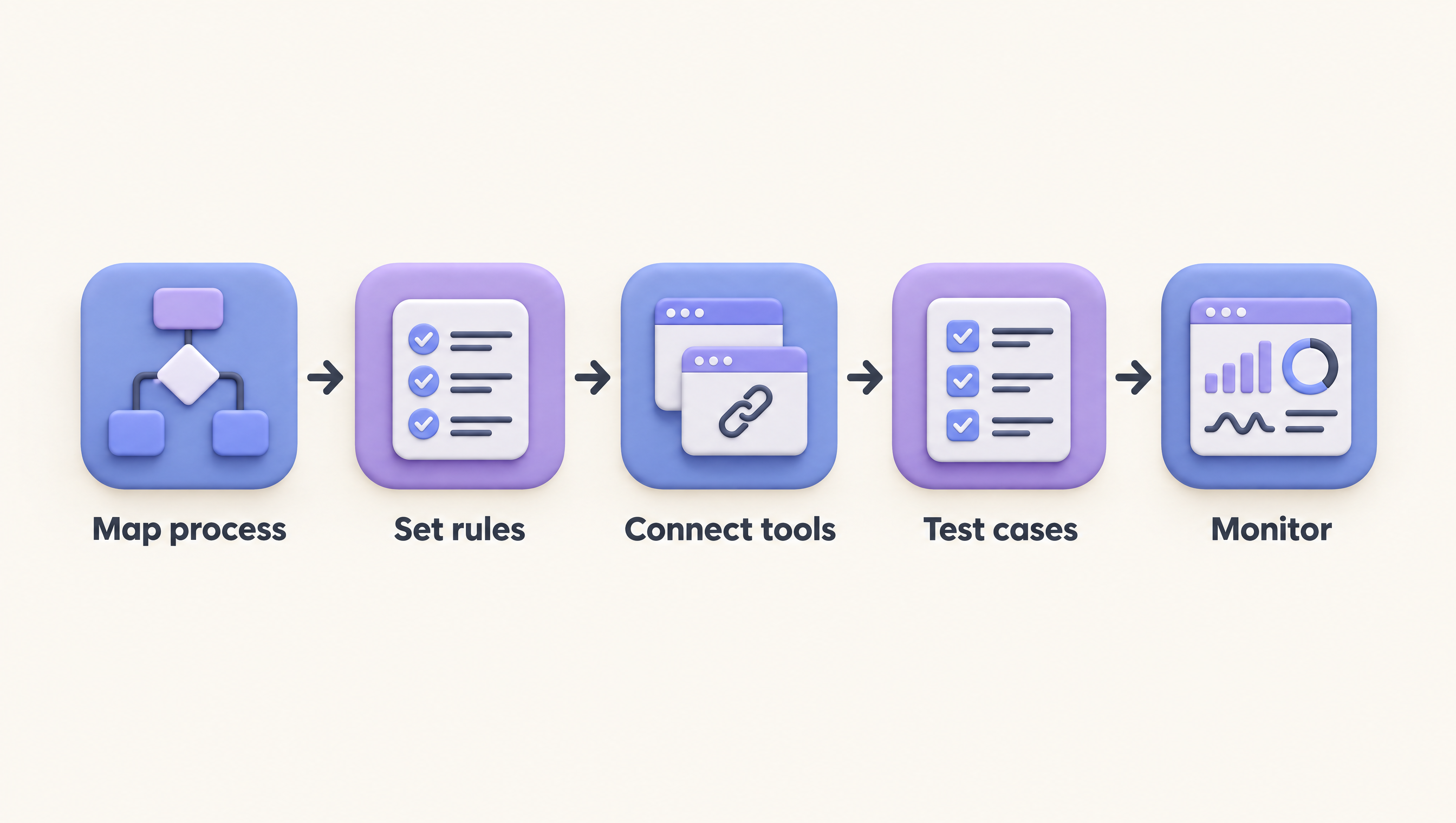
A typical project follows these steps:
- Map the process. Write down the trigger, required information, decisions, actions and owner. For example, an ecommerce team might map what should happen when a wholesale buyer submits an enquiry.
- Set the data rules. Decide which system owns each field and what counts as valid input. The wholesale workflow might require a business email, company name, market and expected order size before routing the enquiry.
- Connect the tools. Use direct integrations, application programming interfaces (APIs) or workflow software to pass information between systems. This can replace manual copying between a form, database and sales system.
- Test real cases. Check common inputs, missing information, duplicate records and failed connections. A useful test includes ordinary enquiries as well as cases that should stop for human review.
- Monitor and maintain. Review failures and update the workflow when tools, fields or commercial rules change. A workflow is production software, even when it was built with a visual automation tool.
The video below shows GTM engineering training and how practitioners approach this kind of work.
GTM engineering is therefore more than selecting software. The main work is translating a business process into explicit rules without automating poor decisions. If nobody can explain who should receive an account or when a lead is ready, connecting more tools will not resolve that uncertainty.
AY Automate applies a related process through its AI automation agency. We audit workflows, build with n8n, Claude Code and the client's existing stack, test on real data and maintain systems after launch. That is one delivery model for GTM engineering, particularly when a team needs implementation work rather than another software subscription.
What parts make up a GTM engineering system?
A GTM engineering system has a trigger, trusted data, decision rules, connected actions and a way to inspect failures. Each part needs a named owner. If the system cannot explain why a record moved, stopped or changed, the team will struggle to correct mistakes safely.
| Part | What it does | Example from a B2B team |
|---|---|---|
| Trigger | Starts the workflow after an event | A prospect submits a demo request |
| Data | Provides the facts needed for a decision | Company, role, territory and account status |
| Rules | Decide what should happen next | Existing customers go to their account owner |
| Integration | Passes information between tools | The form sends a structured record to the sales system |
| Action | Performs the approved next step | Create a task and notify the assigned representative |
| Monitoring | Shows failures and unusual cases | Flag a record when required information is missing |
The distinction between data and rules is important. Data describes the account, while a rule decides what to do with that account. For example, "country is France" is data. "Send French accounts to the European sales queue" is a business rule that can be reviewed and changed.
Monitoring also needs a practical response. A failure alert without an owner only creates another unattended queue. The system should identify where an item stopped, preserve the original information and give someone a safe way to retry or correct it.
Free weekly brief
Steal our production automations
The exact n8n flows, Claude Code setups, and prompts we ship for clients, broken down step by step. No spam, unsubscribe anytime.
What does GTM stand for in the context of digital marketing?
GTM stands for go-to-market. In digital marketing, it describes how a business reaches its intended buyers, communicates its offer and moves interested people toward a commercial outcome. GTM engineering focuses on the technical workflows that help marketing and sales execute that plan consistently.
A go-to-market strategy defines the audience, offer, channels and commercial approach. GTM engineering implements selected parts of that strategy as systems. If a B2B team decides to contact companies showing a certain buying signal, the engineer can build the data flow that captures the signal, checks the account and creates the appropriate task.
The engineer should not decide the strategy alone. Marketing still owns campaign choices and positioning. Sales leaders still define qualification and routing policies. GTM engineering makes those decisions executable and exposes gaps that were hidden inside manual work.
This is also why GTM engineering and growth tactics are not the same thing. A tactic might be sending a particular campaign. The engineering work establishes how the audience is selected, how consent and exclusions are applied, where responses go and how the team can inspect the result.
What are the top 10 GTM tools?
There is no useful universal list of ten GTM tools because the right stack depends on the workflow, existing systems, data requirements and team ownership. Choose tools by function first. A smaller set with clear data ownership is usually easier to operate than overlapping products that perform similar jobs.

Common GTM tool categories include:
- Customer relationship management systems for account and opportunity records
- Marketing systems for campaigns and audience management
- Data providers and enrichment tools for adding approved account details
- Product analytics tools for recording relevant customer actions
- Workflow automation tools for moving data and applying rules
- Communication tools for approved messages and internal notifications
- Scheduling tools for booking meetings
- Data warehouses or databases for shared reporting data
- Artificial intelligence services for bounded classification or drafting tasks
- Monitoring tools for failures, logs and alerts
These are categories, not a shopping list. Start with the process and the systems your team already trusts. For example, if a SaaS company already has a reliable customer relationship management system, the immediate need may be a workflow layer that validates incoming records rather than a replacement database.
For teams assessing powerful GTM engineering tools, looot.ai is one option to evaluate against your workflow, data requirements and existing systems.
AY Automate builds custom n8n workflows and agents connected to tools a business already uses. We also provide API integration and workflow engineering for manual handoffs. Teams considering that route can review our approach to embedded engineering and how an engineer works inside an existing operation.
Is GTM engineering the same as RevOps?
No. GTM engineering concentrates on designing and building technical systems, while revenue operations (RevOps) generally owns wider commercial processes, governance, reporting and operational policy. The two functions can work closely, and the exact boundary depends on how a company assigns responsibility.
Consider lead routing. A revenue operations team might define territories, response expectations and ownership rules. A GTM engineer can implement those rules across the form, database, customer relationship management system and notification channel. Revenue operations decides what the process should achieve, while engineering makes the technical path work.
At a smaller company, one person may perform both kinds of work. The title matters less than explicit ownership. Someone must own the policy, someone must own the implementation and someone must decide what happens when an exception does not fit the rule.
The role can also overlap with automation engineering and AI engineering. Our fractional AI engineer guide explains a related model for teams that need technical capacity without defining a permanent role first.
What are the top 3 hardest engineering majors?
GTM engineering is not an academic engineering major, so rankings of difficult university engineering subjects do not explain this role. It is a commercial systems discipline that combines process design, data handling, integrations and automation. You do not need to compare academic majors to understand whether the work fits your team.
The word "engineering" refers to building dependable systems under constraints. In a GTM context, those constraints include imperfect source data, changing sales rules, tool permissions and human review. For example, an engineer must decide what happens when an account appears twice or when an integration cannot update a required field.
A person can enter this work through software development, marketing operations, sales operations, data work or automation. The practical requirement is being able to understand a commercial process and implement it safely. Our guide to what a GTM engineer is explores the role in more detail.
When does GTM engineering not fit?
GTM engineering does not fit when the underlying process is unknown, changes without an owner or relies almost entirely on human judgment. It also cannot repair weak positioning, create buyer demand by itself or guarantee revenue. Automation makes defined processes faster, including bad ones, so process clarity must come first.
Do not begin with a large build when the team cannot agree on the trigger, input, rule and intended action. Run the process manually and document the exceptions first. For example, a new sales team should learn why representatives accept or reject accounts before encoding those choices into automated routing.
GTM engineering is also a poor fit for one-off work with no repeated pattern. A person can often handle an unusual account migration or a single campaign faster than a production workflow can be designed, tested and maintained. Engineering becomes more useful when the process repeats and errors create operational cost.
Artificial intelligence has limits here as well. A model can classify or draft within a defined workflow, but it should not silently make sensitive commercial decisions without review, monitoring and a clear fallback. AY Automate develops agents for multi-step work and private retrieval pipelines that ground answers in a client's own information, but those systems still need boundaries and maintenance.
FAQ
What degree do you need to be a marketing engineer?
You do not need one specific degree to become a marketing or GTM engineer. Useful experience can come from software development, marketing operations, sales operations, data work or automation, provided you can map commercial processes and build dependable technical workflows.
What are examples of GTM tools?
Examples include customer relationship management systems, marketing platforms, data enrichment services, workflow automation tools, scheduling software, databases and monitoring systems. The relevant tools are the ones that support a defined go-to-market process and have clear ownership.
Is Salesforce a GTM tool?
Salesforce can be a GTM tool when a team uses it to manage accounts, contacts, opportunities or related commercial workflows. Its place in the system depends on the team's process, integrations and data ownership rather than the product name alone.
Is a GTM Engineering course required?
No, a GTM Engineering course is not required. A structured course may help you learn concepts, but practical work such as mapping a workflow, connecting test systems, handling failures and documenting decisions is also important.
What should a GTM Engineer roadmap include?
A GTM Engineer roadmap should cover process mapping, data structure, APIs, workflow automation, testing, monitoring and commercial operations. Build small projects that start with a real trigger and end with an observable action before attempting multi-system automation.
Where can I find GTM engineering jobs?
Look for titles such as GTM engineer, growth engineer, revenue systems engineer, marketing engineer and automation engineer. Read the responsibilities carefully because companies may use different titles for similar integration and workflow work.
If you want GTM workflows designed, built and maintained for your team, talk to AY Automate about embedded engineering.
Sources
Sources: AY Automate, AY Automate AI automation agency, Factors.ai on GTM engineering, Sloane Staffing on types of GTM engineer, and The Most Valuable GTM Engineering Training You'll Ever Watch by Michael Saruggia, GTM Engineering.
Last checked: 2026-10-26
Book a Free Strategy Call
Building this in production?
Walid runs a 30-min call to map your AI engineering team. Free, no slides.
Free weekly brief
Steal our production automations
The exact n8n flows, Claude Code setups, and prompts we ship for clients, broken down step by step. No spam, unsubscribe anytime.

Walid founded AY Automate to help businesses ship AI workflows that actually move revenue. He leads strategy and oversees every client engagement end-to-end.
Full Bio →